

xAI's Colossus Cluster: A Gigawatt of AI Data Centers, Built Off the Grid
An xAI compute cluster built along the Tennessee and Mississippi border — 3 brownfield data centers, 2.6 million square feet, 770,000 GPUs, and a 1.2 GW gas plant — stood up in months off the grid.

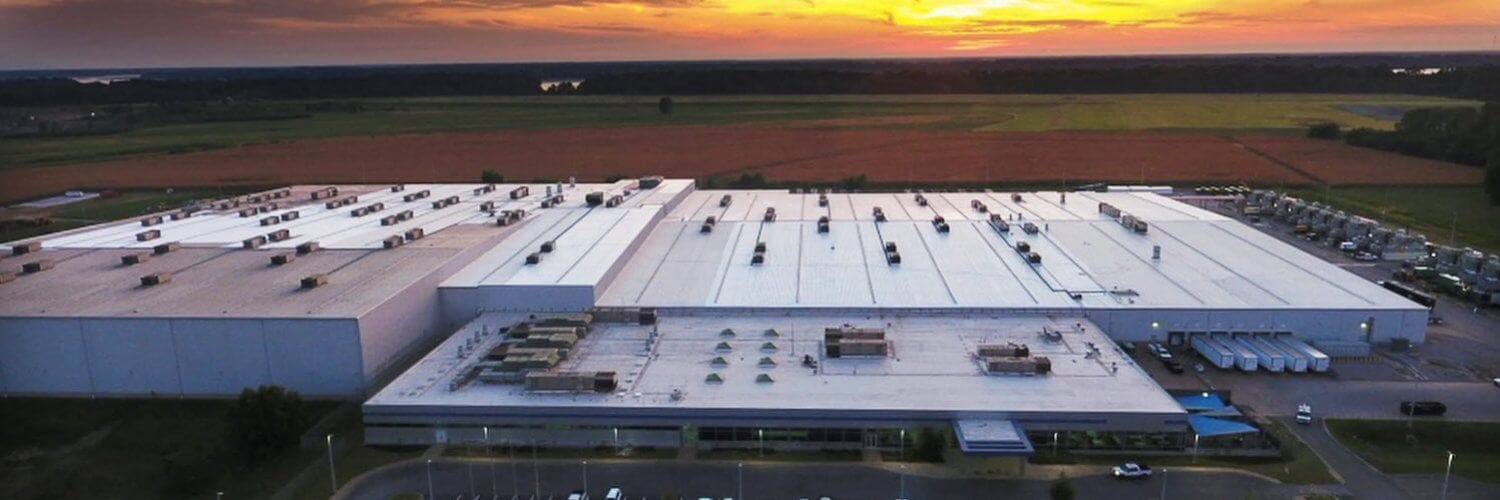
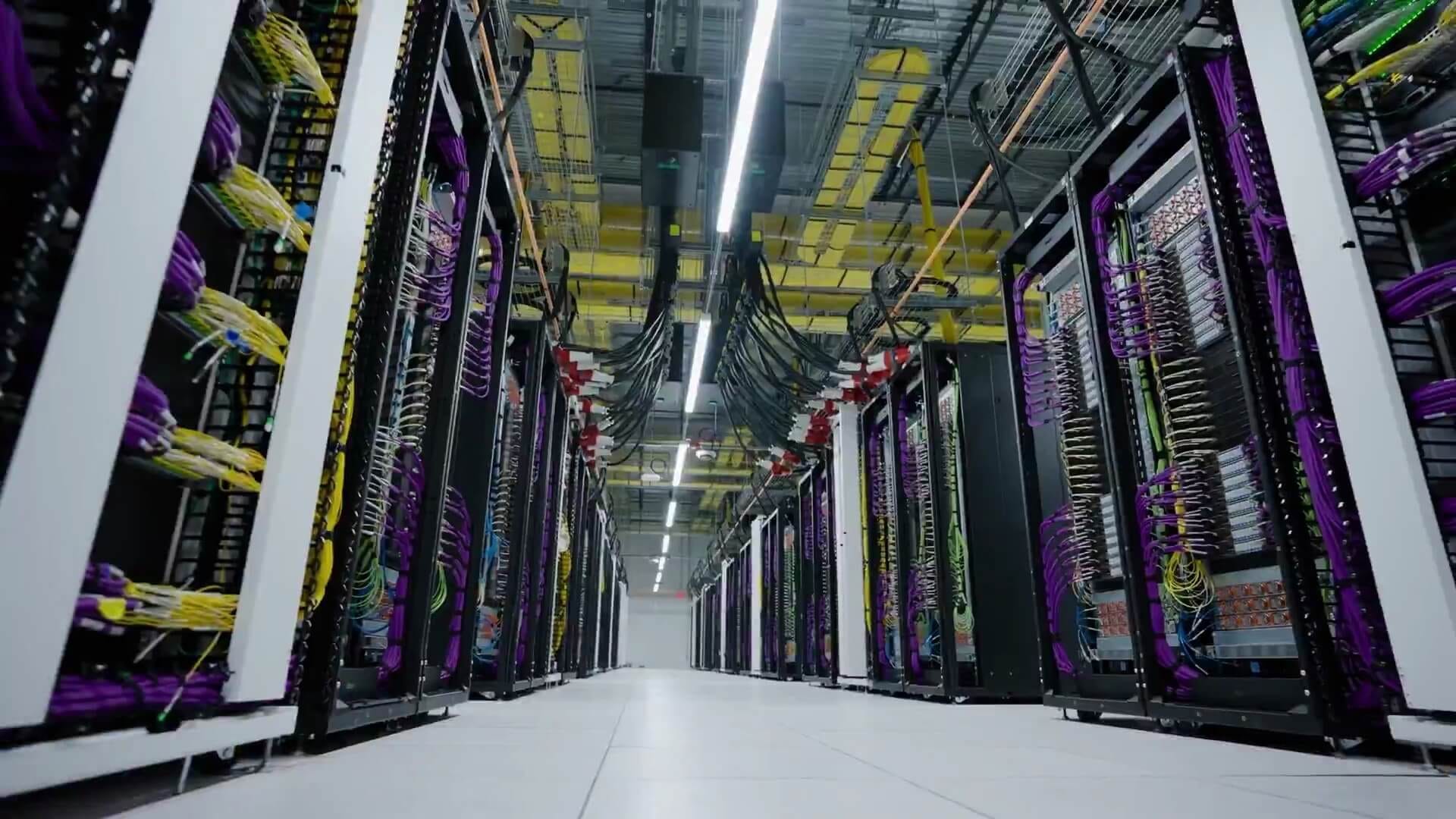
In the summer of 2024, xAI took a shuttered Electrolux appliance factory in southwest Memphis and, in 122 days, filled it with 100,000 NVIDIA H100 GPUs — a build NVIDIA CEO Jensen Huang called “superhuman.” The result, Colossus 1, came online that July as what xAI and NVIDIA described as the largest fully operational, single coherent AI training cluster on Earth.
By early 2026 — eighteen months later — the bet had tripled. Colossus is now a three-building cluster straddling the Tennessee–Mississippi line — about 2.6 million square feet, roughly 770,000 GPUs, and about 1 GW of IT compute that Elon Musk projects will reach 2 GW in the coming years.
Source: X, @xAIMemphis.
What makes Colossus unlike the other gigawatt-class campuses Measured AI has covered is how it is powered. Amazon’s New Carlisle and Microsoft’s Fairwater bet everything on the utility grid; xAI did the opposite. Only one of its three data centers draws firm power from the grid. The other two run entirely off-grid, behind the meter, off a 1.2 GW natural gas plant xAI built for itself across the state line in Mississippi.
That self-supplied power is the engine of the cluster’s defining trait — speed. xAI retrofits existing industrial shells rather than building greenfield, stands up its own generation rather than waiting years for a grid connection, and leases rather than buys much of the equipment in between. It built the machine for its own Grok models, then turned it into a merchant utility: Claude developer Anthropic now leases roughly 325,000 GPUs at $1.25 billion a month, Google has contracted about 110,000 more, AI coding editor Cursor trains on it, open-source startup Reflection rents GB300s at Colossus 2, and the U.S. government runs classified workloads on it. The same off-grid choice that bought the speed has also drawn a federal Clean Air Act suit — and a Department of Justice intervention to keep the gas plant running.
This primer walks the bet layer by layer: the strategy and the tenants, the SpaceX-scale money behind it, the brownfield sites and the speed they bought, the compute that behaves as one machine, the self-built power that feeds it, the cooling and water it consumes, the two-state fiscal bargain, and the litigation now testing it.
I. The Bet: Build Your Own Grid, Rent the Speed
Most frontier AI capacity is tethered to the utility. The developer waits in an interconnection queue, signs an Energy Service Agreement (ESA), and builds around the date the grid says power will arrive. Colossus inverts that model. xAI treats the grid as too slow, generates its own electricity behind the meter, drops its hardware into buildings that already exist, and races competitors to capacity measured in months rather than years. Then it rents the result.
Source: X, @xAIMemphis.
Every layer of the cluster expresses the same wager — the shells, the turbines, the megawatts, the tenants, the deal terms, and the lawsuits all trace back to a single choice to own the schedule by self-supplying the power.
The Inversion — Off-Grid by Design
The cluster’s signature is what it refuses to wait for. Rather than tether its data centers to the utility, xAI generates its own electricity behind the meter — only Colossus 1 draws firm grid power at all — and that choice is what lets it build at a pace with no real peer (Section V traces the per-site split and the plant behind it). When you do not wait on a utility, you build at the speed of the building and the turbines.
The Tenants — Rivals and the Pentagon
xAI built Colossus for itself — it runs its own frontier Grok models on the cluster, including Grok-4.3 (April 2026) and Grok-5, now training at Colossus 2 and 3 — but the machine is no longer xAI’s alone. It has become a merchant compute utility whose customers include xAI’s most direct rivals and the Pentagon. xAI is simultaneously the landlord and an anchor tenant.

The lead customer is Anthropic. In May 2026, xAI and SpaceX signed Cloud Services Agreements giving Anthropic access to roughly 325,000 NVIDIA GPUs across the Colossus data centers to run its Claude models, with Anthropic paying $1.25 billion per month through May 2029; after an initial three-month period either party may terminate on 90 days’ notice. The May 6 announcement first framed it as “all the compute capacity at Colossus 1” — over 220,000 GPUs / more than 300 MW — but that was the capacity live within the first month; 325,000 is the full contracted scope across Colossus 1 and Colossus 2.
A second customer is a competitor too. On June 5, 2026, xAI signed a Cloud Service Agreement with Google for about 110,000 NVIDIA GPUs at $920 million per month from October 2026 through June 2029 to expand capacity for its Gemini models. The deal carries a delivery-milestone gate: if SpaceX fails to deliver the committed GPUs by September 30, 2026, Google may terminate after a one-month grace period, and after December 31, 2026 either party may exit on 90 days’ notice.
The third commercial tenant is Cursor (Anysphere, Inc.), which signed a compute agreement with SpaceX on April 19, 2026 — structured as a compute-for-data/IP collaboration rather than a cash compute lease — and ran reinforcement-learning mid-training of its Composer model on the Colossus 2 cluster. On June 16, 2026, SpaceX announced an all-stock acquisition of Cursor at a $60 billion equity value, expected to close in Q3 2026.
The fourth customer is an open-source challenger. On June 22, 2026, SpaceX signed a computing-power agreement with Reflection AI — a startup last valued at $25 billion, building American open-source models to rival OpenAI, Anthropic, and Google — giving it immediate access to NVIDIA GB300 chips at Colossus 2. Reflection pays $150 million per month from July 1, 2026 through 2029, roughly $6.3 billion over the term, with either party able to exit on 90 days’ notice after the first three months.
The fifth customer is the U.S. government. Per the U.S. Department of Justice’s national-security filing and a Department of War declaration, the Colossus 2 and 3 campuses run classified workloads for the military. A Department of War Chief Digital and AI Office declaration describes a Grok Gov model running in Maven Smart Systems that “enabled U.S. forces to deploy over 2,000 munitions to 2,000 distinct targets within 96 hours during Operation Epic Fury,” consumes roughly 2 billion tokens per day on the Top-Secret network, and is one of only four frontier models cleared for national-security use — and one of three cleared for Secret and Top-Secret networks. That national-security role becomes the fulcrum of the litigation in Section VIII.
Read together, the roster says something about Grok itself. xAI built Colossus to train its own frontier models, yet Grok has trailed its rivals by a wide margin: xAI’s own IPO filing counts about 117 million monthly users of Grok’s AI features as of March 2026, against roughly 1 billion monthly users for ChatGPT. In March 2026 Musk posted that xAI “was not built right first time around, so is being rebuilt from the foundations up.” A data center developer whose own models were absorbing a machine this size would have little of it left to lease; instead xAI rents more than half the cluster — all of Colossus 1 among them — to rivals it set out to beat. The merchant-utility model, in that light, is as much a concession that Grok underperformed as the deliberate business line xAI presents.
The customers explain the urgency; the next layer explains how a company posting a $2.5 billion operating loss in Q1 2026 alone can underwrite a gigawatt of compute at this speed.
II. Ownership and the Money: Underwritten at SpaceX Scale
Colossus exists at this scale because SpaceX absorbed xAI and put a rocket company’s balance sheet behind it. The cluster is financed with bridge-loan and IPO capital, built across a layered stack of single-purpose entities spanning two states, and underwritten by purchase commitments that dwarf current revenue.
SpaceX Owns xAI — the Entity Map
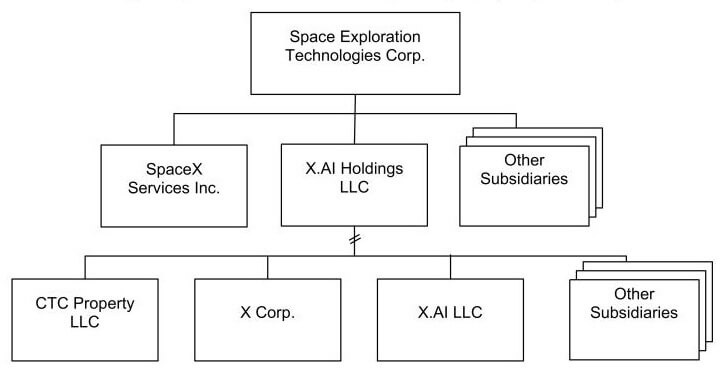
On February 2, 2026, SpaceX completed the “xAI Merger,” making xAI a wholly-owned subsidiary. The consideration was 321.7 million Class A plus 121.7 million Class B shares plus $2.95 billion cash (pre-split), valuing the deal at $125 billion. xAI is now SpaceX’s “AI segment“ — AI compute, Grok, and X.
Source: Space Exploration Technologies Corp.
Beneath the parent, three entities carry the assets:
CTC Property LLC, a wholly-owned xAI subsidiary organized as a Nevada LLC, operates the Tennessee data centers — Colossus 1 (3231 Paul R. Lowry Road) and Colossus 2 / MACROHARD (5420 Tulane Road) — plus the future Colossus Water Recycling Plant.
MZX Tech LLC, a wholly-owned xAI subsidiary organized as a Wyoming LLC, holds the Mississippi assets — the Southaven Gas Plant (2875 Stanton Road South) and Colossus 3 / MACROHARDRR (2400 Stateline Road West).
Stateline Power LLC is the turbine-owning joint venture between Solaris Energy Infrastructure and xAI.
The ground and buildings, unlike the equipment, xAI mostly owns outright:
xAI, via SpaceX, bought the 785,000-square-foot Colossus 1 building in Memphis — two parcels of land totaling 217 acres — for $185 million (May 23, 2026) from Phoenix Investors, having leased it since March 22, 2024.
xAI’s CTC bought the Colossus 2 building at 5420 Tulane Road in Memphis and two adjacent Tulane sites (5414 Tulane and 5408 Tulane) for $79.9 million (February 26, 2025).
In Mississippi, MZX owns both the Colossus 3 building at 2400 Stateline Road West (the former GXO warehouse, acquired December 19, 2025) and the Southaven Gas Plant at 2875 Stanton Road South (the former Duke plant, acquired July 16, 2025).
How the Build Is Financed
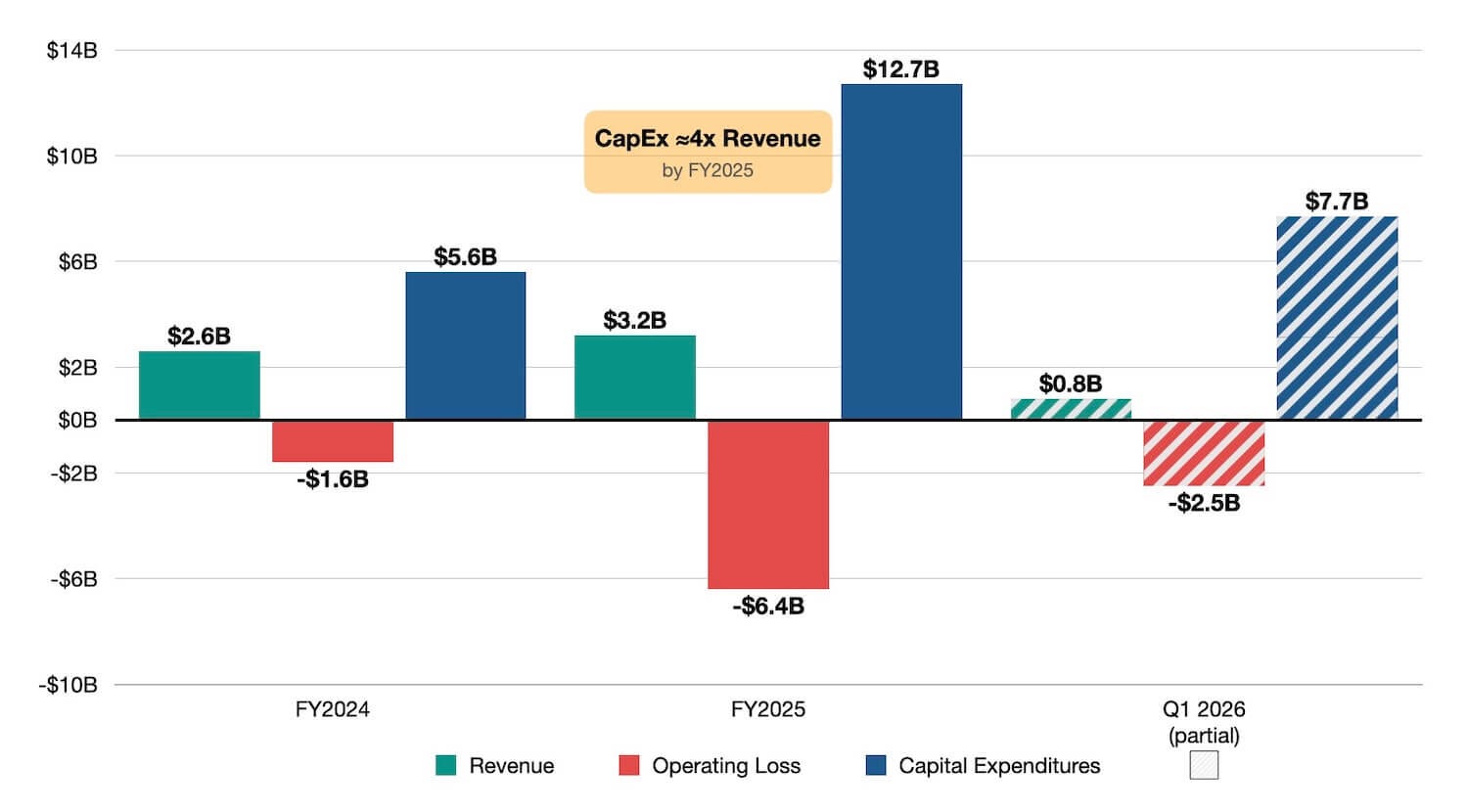
The financial backdrop is a company spending far ahead of its revenue. AI-segment capital expenditure ran $12.7 billion in FY2025 plus $7.7 billion in Q1 2026, against FY2025 segment revenue of $3.2 billion and an operating loss of $6.4 billion.
Source: Space Exploration Technologies Corp.
That gap is bridged at SpaceX scale, chiefly by the June 2026 IPO — priced at $135.00/share and closed June 15, 2026 (over-allotment exercised in full) for roughly $86.2 billion gross ($85.7 billion net), its first stated use of proceeds “the expansion of our AI compute infrastructure.” Those proceeds must also repay, within six months, a $20 billion unsecured bridge loan a Goldman Sachs-led syndicate extended in March 2026 to refinance legacy X/xAI debt. Total unconditional purchase obligations stand at $25.6 billion, $21.5 billion of it concentrated in 2027 — several times current segment revenue.
What the spend is racing to meet is contracted demand: the Anthropic and Google leases alone commit a forward run-rate of roughly $26 billion a year at full ramp (about $15 billion and $11 billion respectively), with the Reflection lease adding about $1.8 billion a year more — a recurring annual figure many times the segment’s FY2025 revenue, and one that arrives only as capacity is delivered.
Off the Books — and On
The gas turbines that power the off-grid sites are not owned by xAI; they are rented through a joint venture structured to keep them off SpaceX’s balance sheet. Stateline Power, formed in April 2025, is owned 50.1% by Solaris Energy Infrastructure and 49.9% by xAI. Each side contributed $86 million (Solaris in-kind via Solar Turbines purchase orders; xAI in cash).
The Stateline Power JV supplies up to ~900 MW off-grid under a seven-year commercial/rental contract “underpinned by a 15-year JV,” with revenue beginning in 2026. Despite the near-even split, Solaris consolidates Stateline as the primary beneficiary of a variable-interest entity and operates it, while SpaceX carries the stake at equity method ($80 million by March 31, 2026) — so xAI rents, rather than owns, the permitted Southaven turbines.
The turbine financing is layered on top. A Stonebriar Commercial Finance delayed-draw term loan funds the fleet — a maximum of $550 million or 80% of equipment cost, 9.85% fixed over 6 years with $324 million drawn by April 28, 2026 — and the equipment is rented to CTC and MZX. Separately, SpaceX agreed on April 30, 2026 to buy mobile gas turbines for about $2.0 billion, atop $925 million of forward turbine commitments through 2029.
The same lease-don’t-buy logic reaches the most expensive layer inside the buildings — GPU accelerators: Valor Equity Partners, whose founder Antonio Gracias has sat on SpaceX’s board for over 15 years, raised a $5.4 billion fund (Apollo $3.5 billion, with NVIDIA itself a backer) to “buy and lease” NVIDIA GB200 GPUs to xAI under a “triple net lease structure.”
Source: Space Exploration Technologies Corp.
But where the turbines stay off the balance sheet, the GPUs do not: SpaceX records the Valor deals as sale-leasebacks — financings that keep the chips in its own PP&E against about $9.0 billion of related-party debt by March 31, 2026, the latest tranche (April 24, 2026) booked as a five-year lease worth $6.6 billion in undiscounted payments.
III. Site and Speed: Brownfield Shells, Stood Up in Months
The money buys speed only because of how xAI builds. Every site in the cluster is a retrofit of an existing industrial building, not a greenfield construction project — and that single choice is the mechanism behind build times no competitor matches.
The Retrofit Model
xAI’s playbook is a brownfield retrofit strategy leveraging existing industrial sites with direct-to-chip liquid cooling. Each Colossus building began as something else: Colossus 1 an Electrolux home-appliance factory, Colossus 2 a logistics/distribution warehouse, Colossus 3 a GXO Logistics warehouse/distribution center, and the Southaven Gas Plant a former Duke Energy natural gas power station.
Speed rests on three legs — the retrofit itself, on-site gas-plus-Megapack power, and equipment leasing (servers from Dell and Supermicro; turbines via Solaris and VoltaGrid). To move at permit-speed, xAI used Darana Hybrid, a midsize Ohio-based general contractor, as a primary permit-submitting contractor for electrical, mechanical, plumbing, and related work on the Memphis buildings.
The construction implication is that each new GPU generation (NVIDIA H100, H200, GB200, and GB300) lands in a building that already stands, rather than triggering a fresh greenfield build.
The payoff is cost as well as speed: by xAI’s own accounting, building Colossus 2 ran about $2.7 million per megawatt, against an industry benchmark of roughly $12.3 million per megawatt — a more than four-fold cost advantage from dropping hardware into a standing shell rather than building from scratch.
The Cluster at a Glance
Together the three data centers span Memphis (Shelby County, Tennessee) and Southaven (DeSoto County, Mississippi).
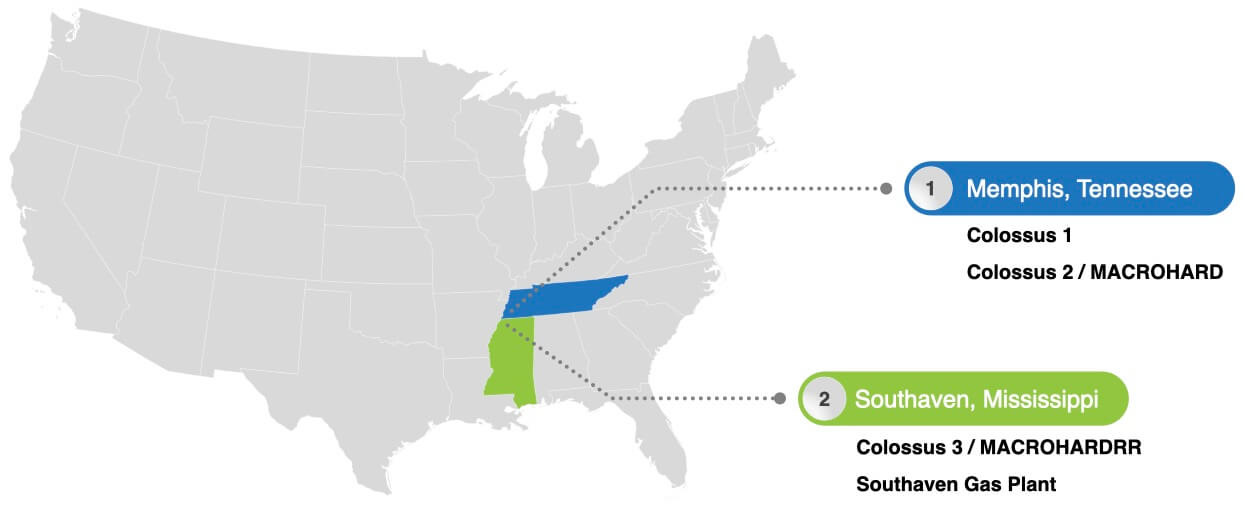
These three Colossus data center buildings occupy roughly 207 acres (excluding adjacent land) and about 2.6 million square feet of building area, and together hold roughly 770,000 GPUs. As of March 31, 2026, the cluster’s combined IT compute power was about 1 GW, with Musk projecting roughly 2 GW once the Colossus cluster is fully scaled. The table below is the cluster’s data spine; the sections after it unpack each layer.
Colossus 1 — the Flagship
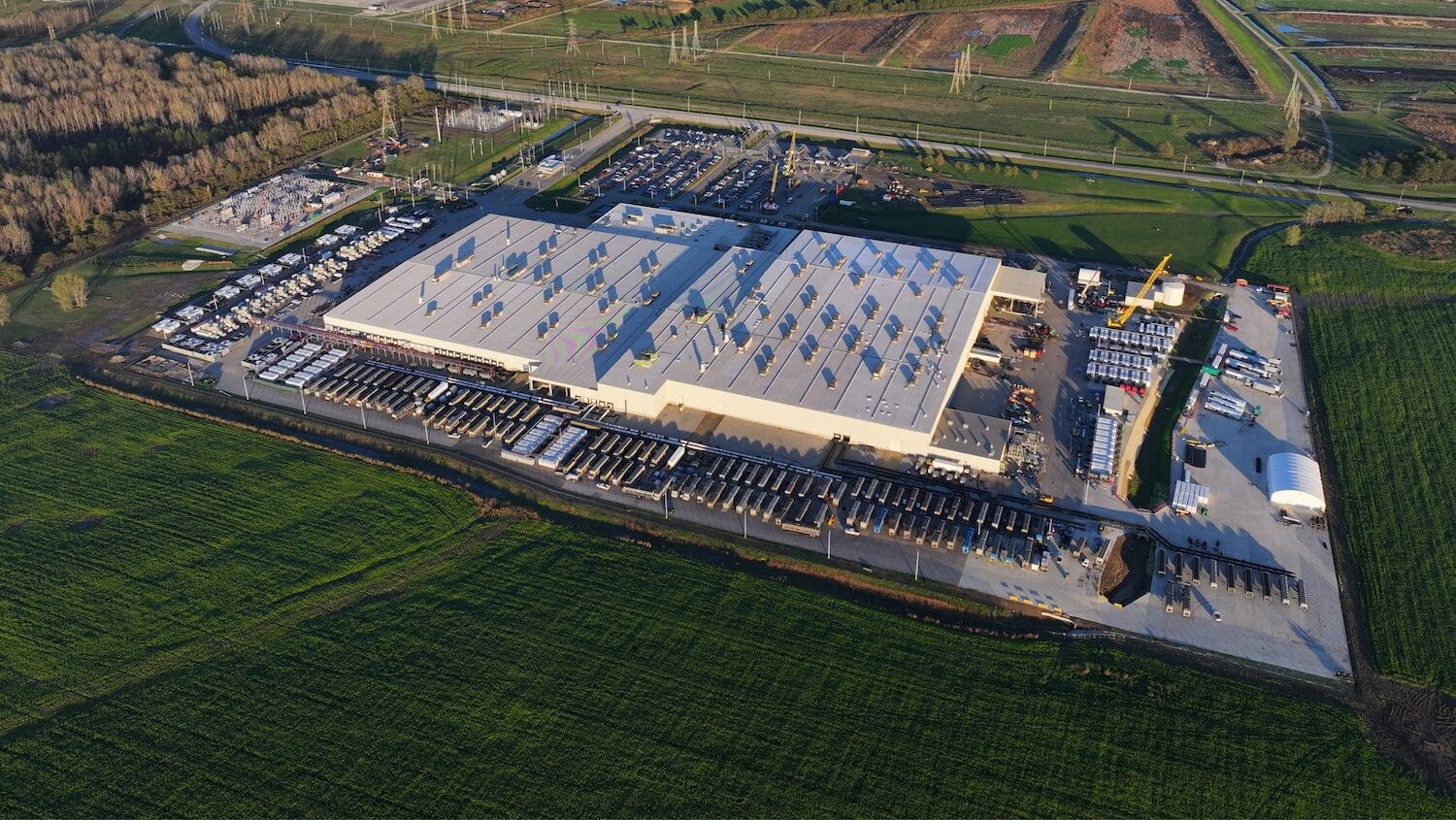
Colossus 1 is where xAI proved the model — the founding site, occupying the former Electrolux home-appliance factory at 3231 Paul R. Lowry Road in the Frank C. Pidgeon Industrial Park of southwest Memphis. The decommissioned plant was converted into a single data center building of 785,000 square feet on an 81-acre site, operated by CTC Property LLC, the utility customer of record.
Source: Space Exploration Technologies Corp.
Operational since July 2024, its first cluster of 100,000 H100 GPUs (about 130 MW) was built in 122 days — the build Jensen Huang called “superhuman” — and xAI then doubled it to 200,000 GPUs in a second phase of about 92 days.
Source: Supermicro.
Today the site holds over 220,000 GPUs — a mix of NVIDIA H100, H200, and GB200 accelerators — delivering more than 300 MW of IT compute, and it is the only site in the cluster that draws firm power from the grid (Section V).
Colossus 2 — MACROHARD
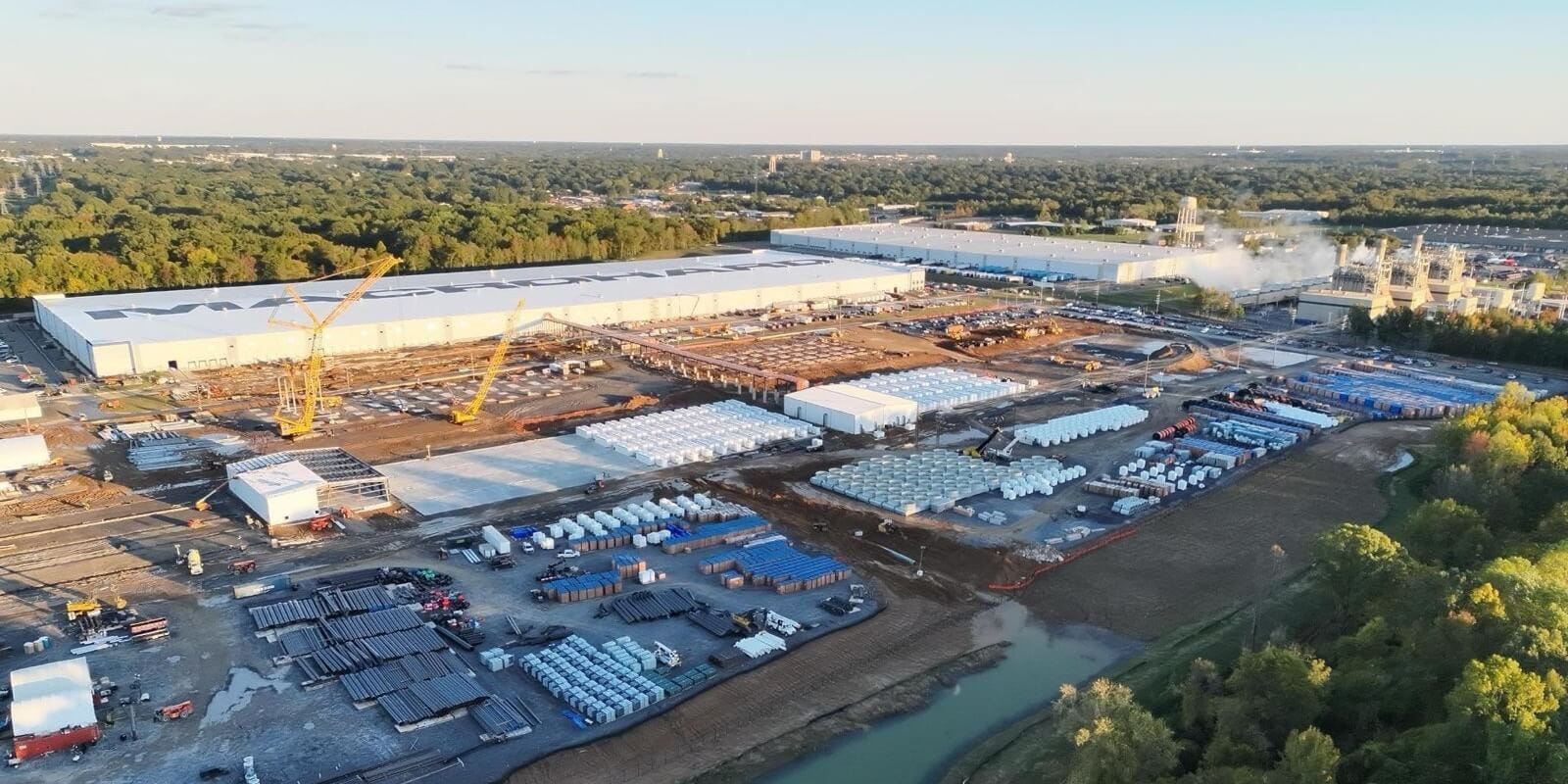
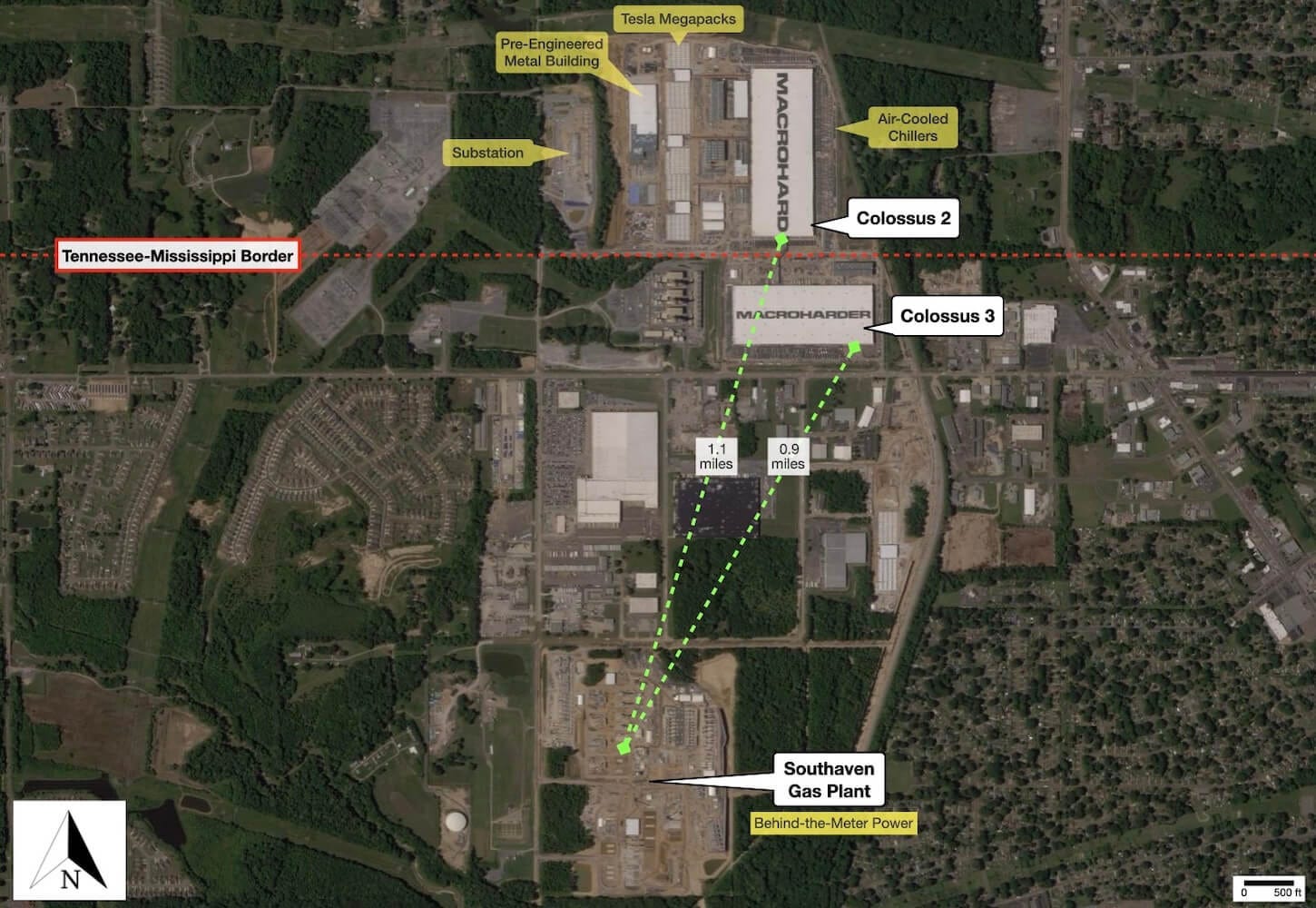
Colossus 2 is the cluster’s largest building and its fastest to stand up — branded MACROHARD in giant rooftop lettering, it sits at 5420 Tulane Road in the Whitehaven district of Memphis. The site spans 78.6 acres and a single converted warehouse of 1,007,838 square feet.
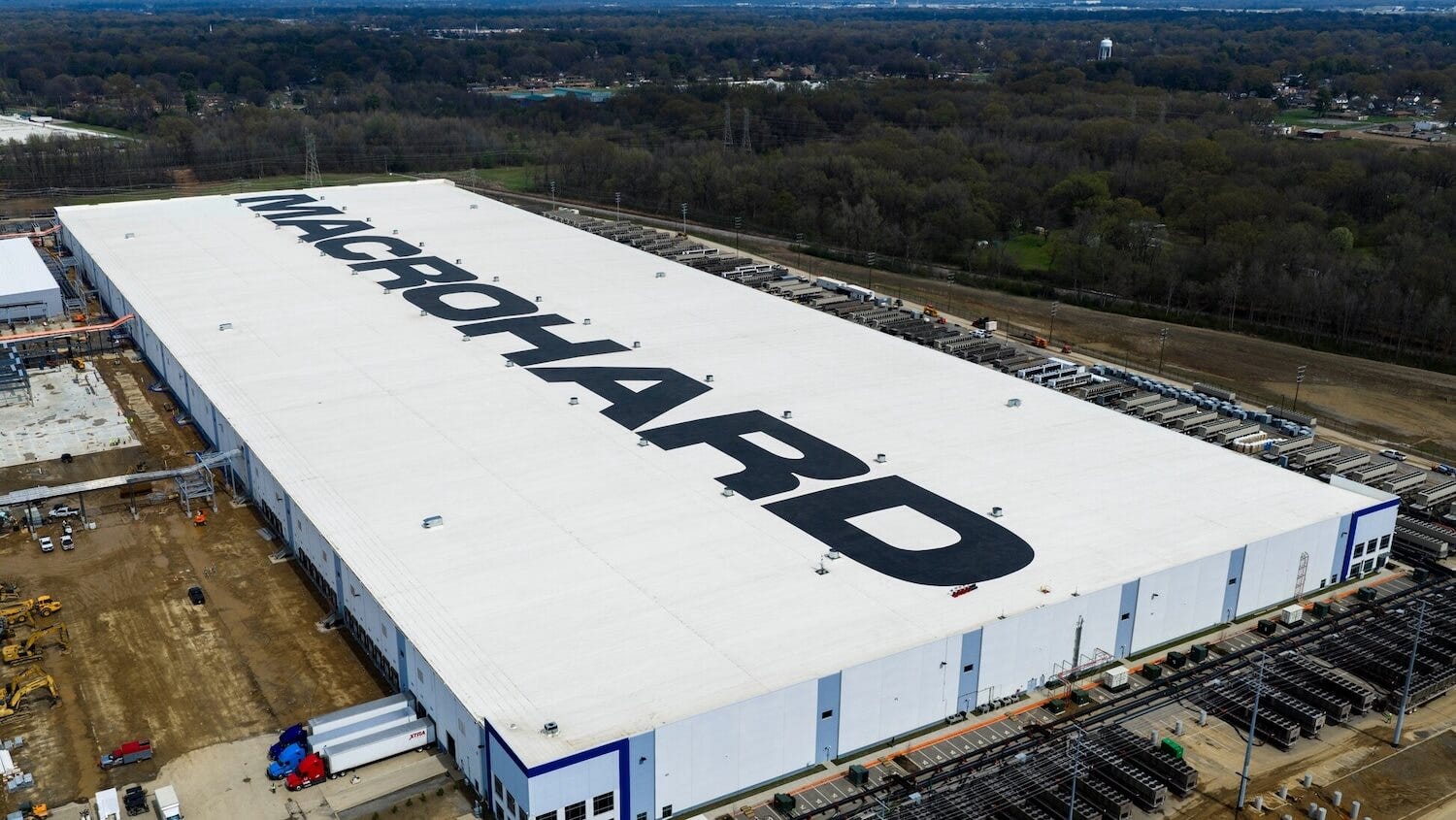
Source: Space Exploration Technologies Corp.
xAI kicked off the project on February 26, 2025, acquiring the warehouse and two adjacent sites, and brought the building online in January 2026 — its first cluster of about 110,000 GB200 GPUs (~210 MW) in 91 days.
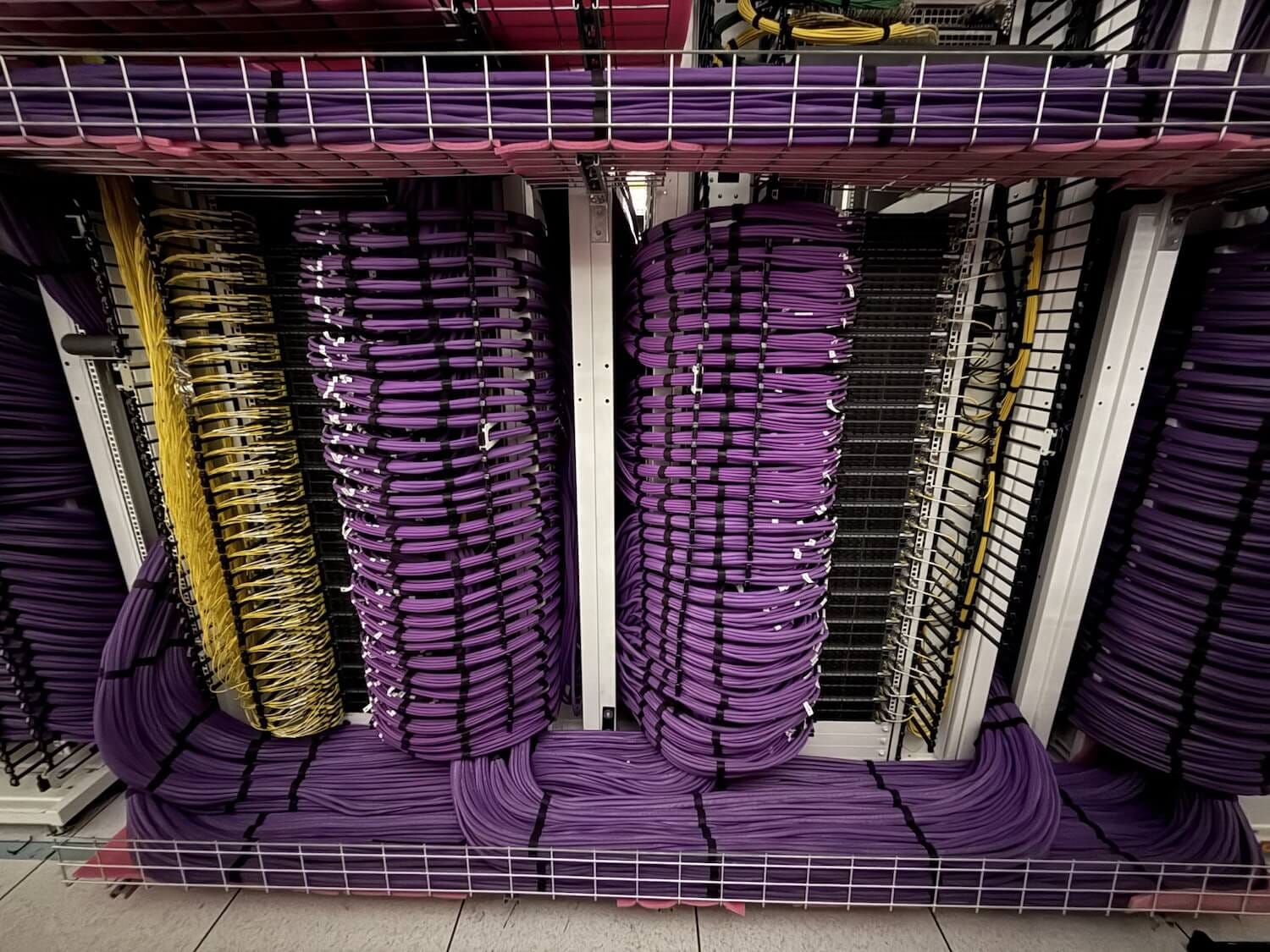
Source: X, @elonmusk.
This was followed by a second cluster of about 110,000 GB300 GPUs (220 MW) in 64 days. Colossus 2 now holds approximately 350,000 GPUs (NVIDIA GB200 and GB300) and delivers about 450 MW of IT compute.
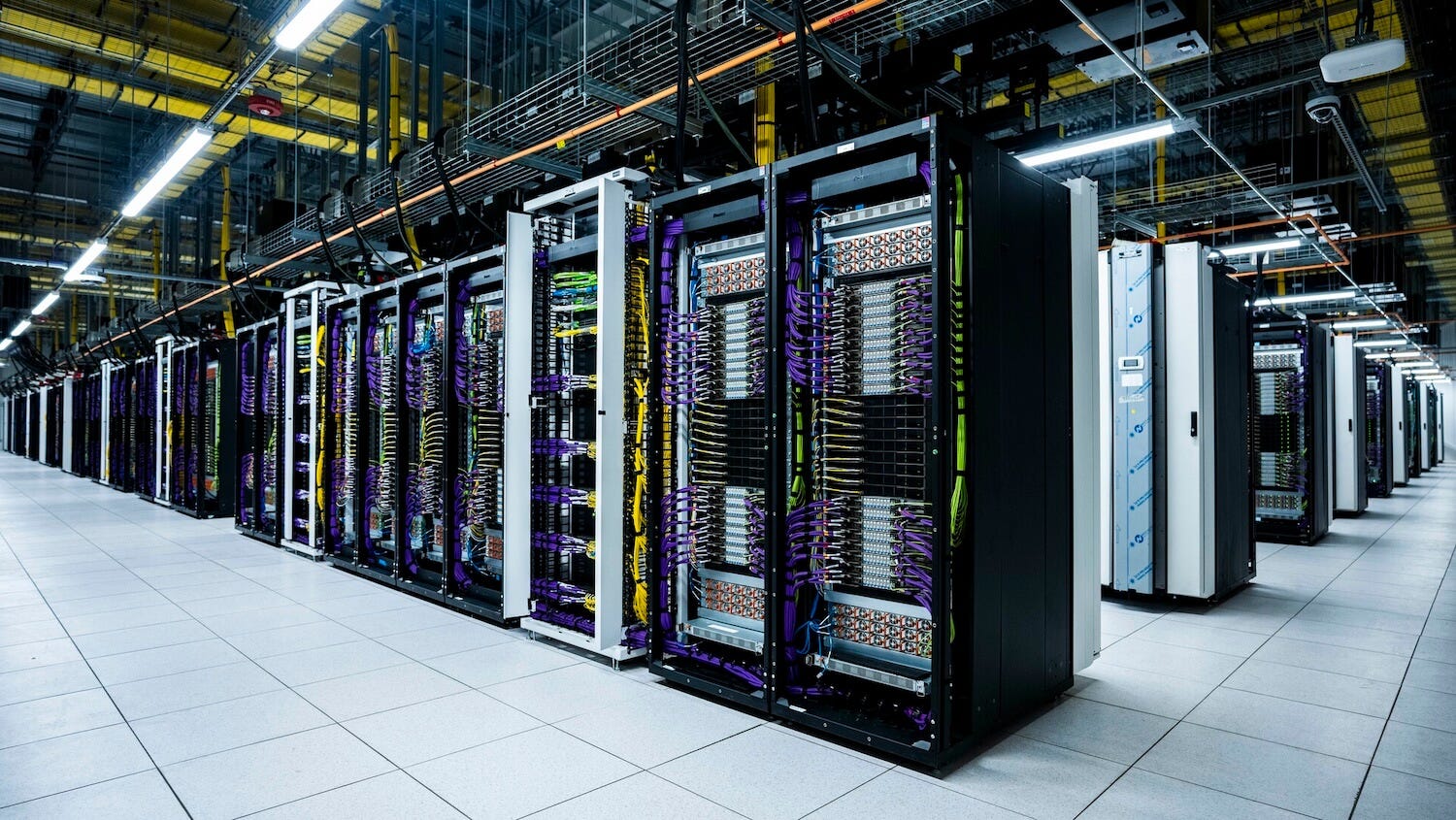
Source: Space Exploration Technologies Corp.
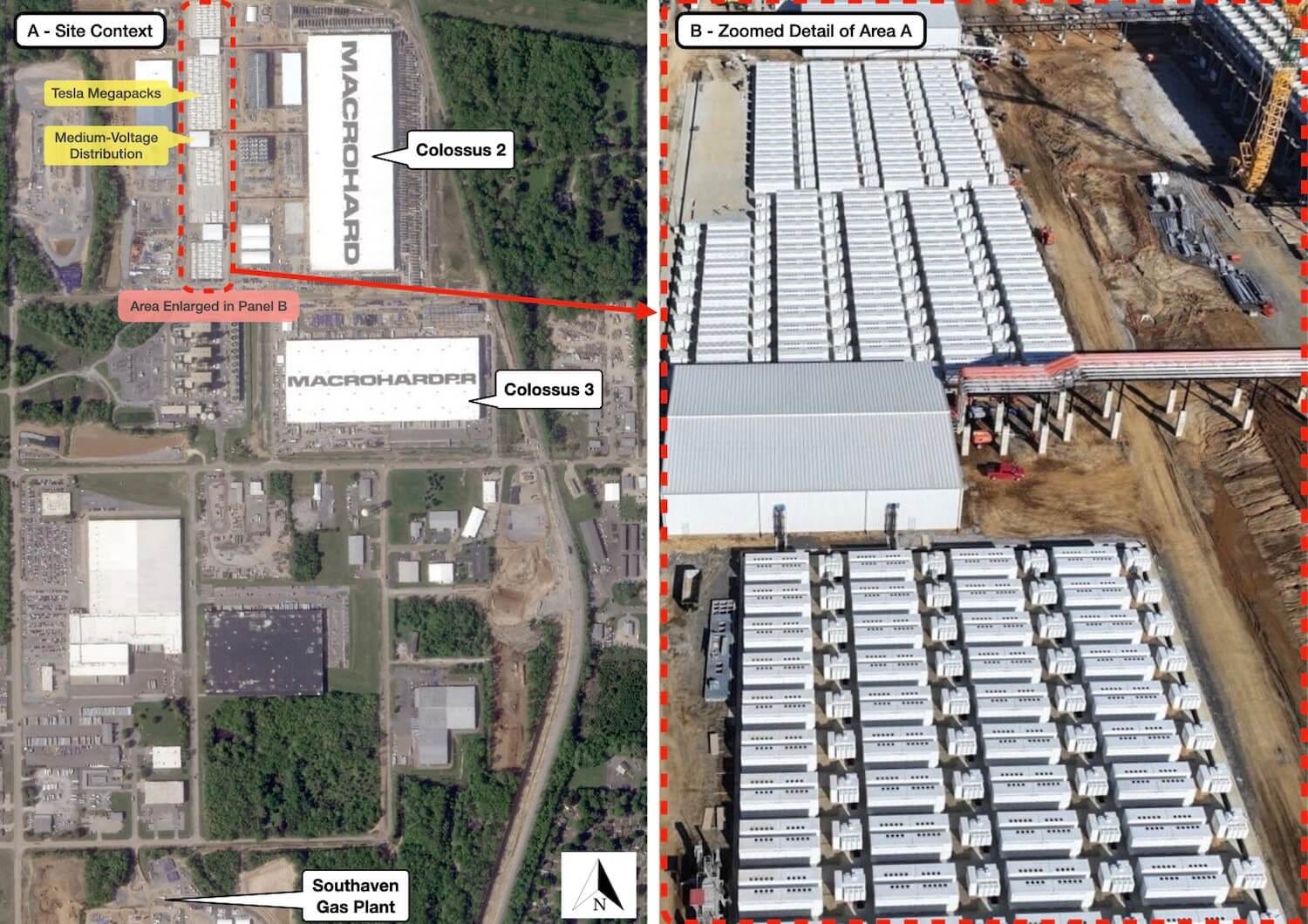
Colossus 2’s supporting build sprawls across neighboring parcels: a 312,365-square-foot pre-engineered metal building (with a 131,040-square-foot expansion permitted) plus Megapack pads at 5414 Tulane; three central utility chiller plants and electrical buildings on the 5420 Tulane parcel itself; and a 230 kV–500 kV gas-insulated substation in a 16,000-square-foot building on a 27.3-acre parcel at 5408 Tulane, distributing behind-the-meter power.
Colossus 3 — MACROHARDRR
Colossus 3 carried the playbook across the state line — brought online in Q1 2026 as MACROHARDRR, it sits at 2400 Stateline Road West in Southaven, DeSoto County, Mississippi, about 0.9 miles from the Southaven Gas Plant. The site is a former GXO Logistics warehouse built in 2001, retrofitted to host data center operations on roughly 47 acres in a single building of 810,225 square feet.
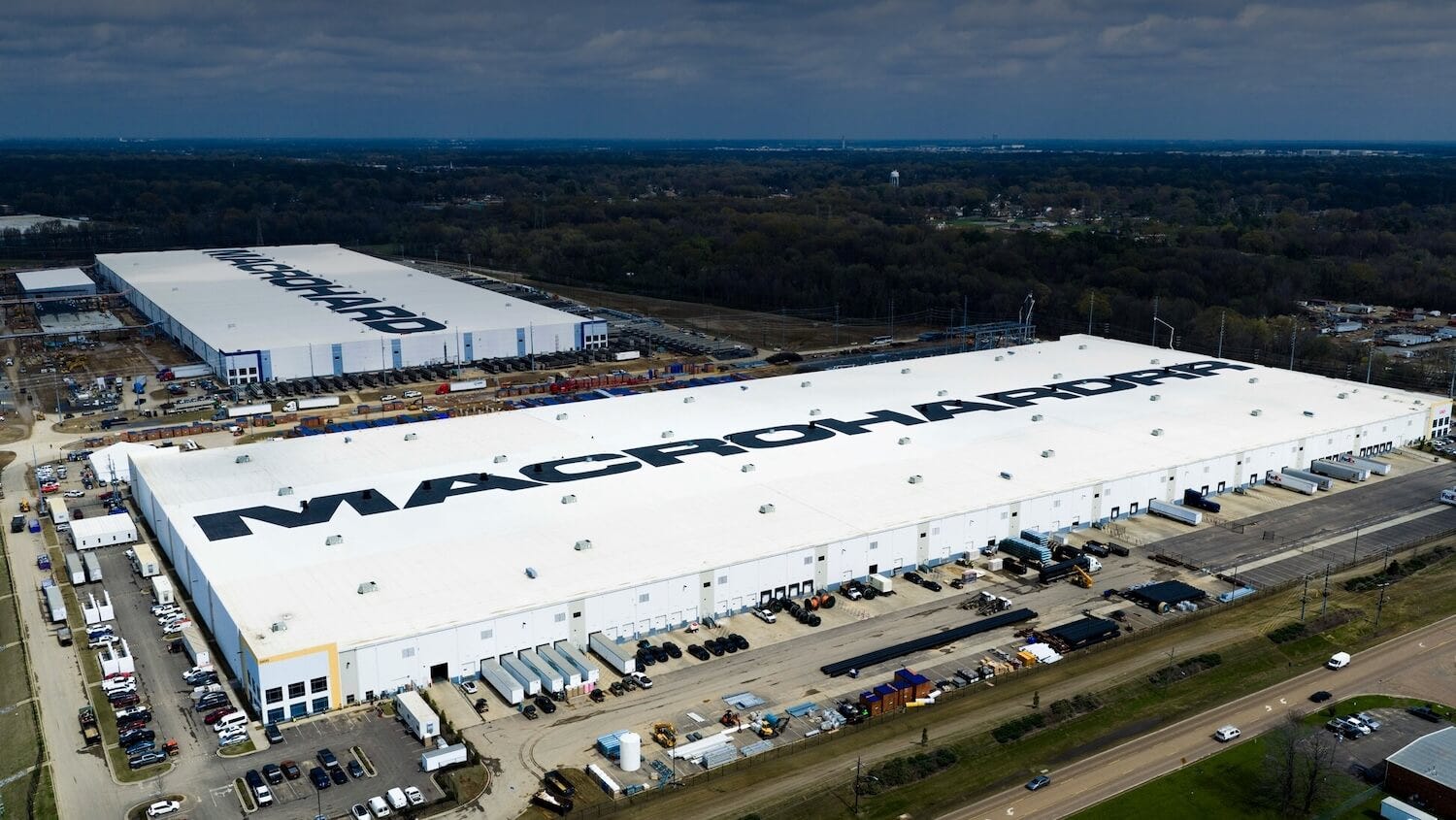
Source: Space Exploration Technologies Corp.
It holds approximately 200,000 GPUs and delivers about 250 MW of IT compute. Like Colossus 2, it runs off-grid and serves the multi-tenant roster set out in Section I, with xAI training its own Grok-5 there.
The shells and the speed are only half the bet. What goes inside them — and binds the buildings into one machine — is the compute.
IV. Compute and Network: Hundreds of Thousands of GPUs as One Machine
The reason xAI concentrates all of this hardware in a few enormous buildings is architectural: the cluster is engineered to behave as a single coherent machine, not a collection of server halls. Every accelerator deployed to date is merchant NVIDIA silicon, fused by an Ethernet fabric that is itself the cluster’s most distinctive technical choice — with custom silicon held in reserve as the forward bet. The layers below build from the smallest unit upward: the chip and the rack, then the fabric that links racks, then the cluster that behaves as one computer.
The Chip, the Server, and the Rack
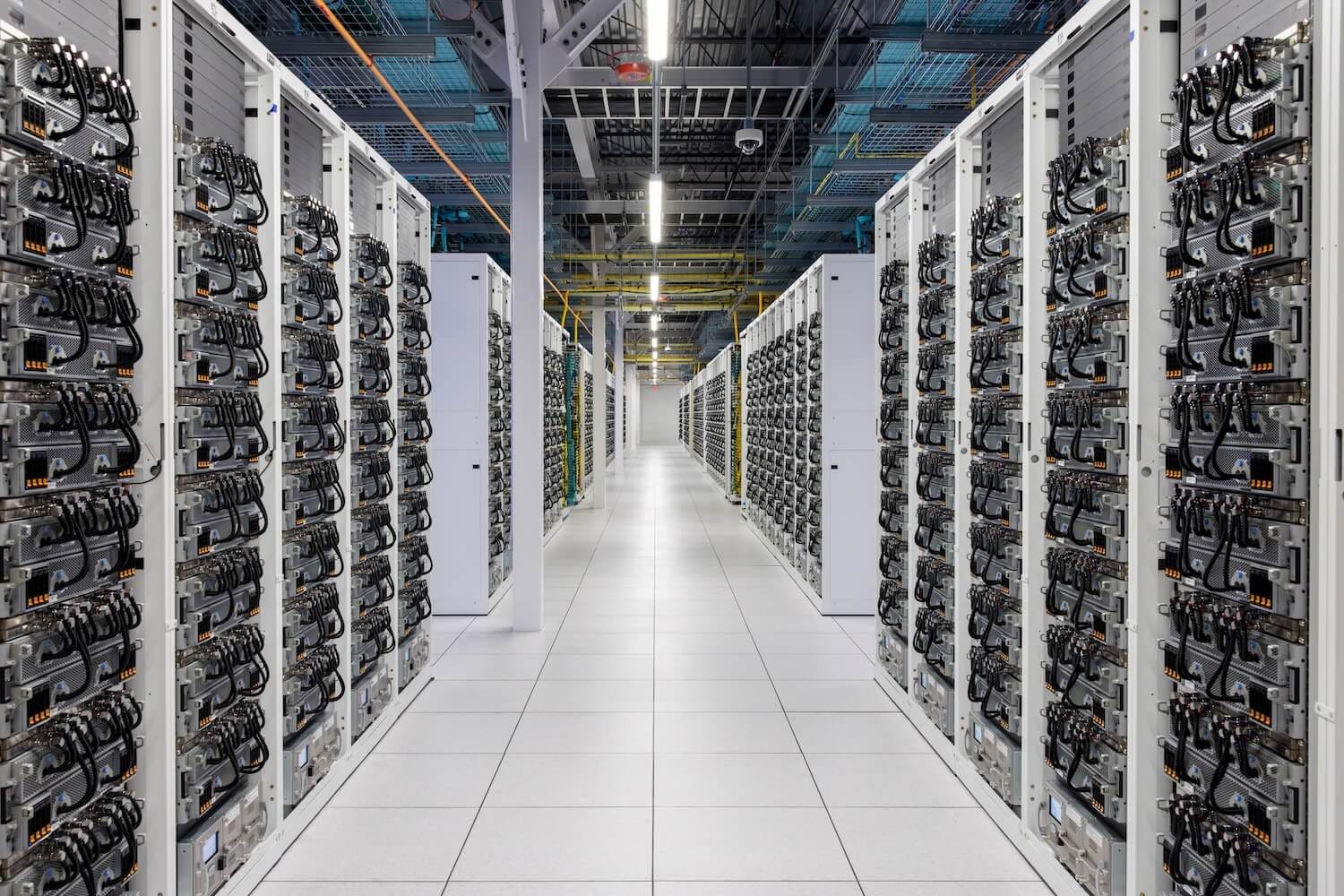
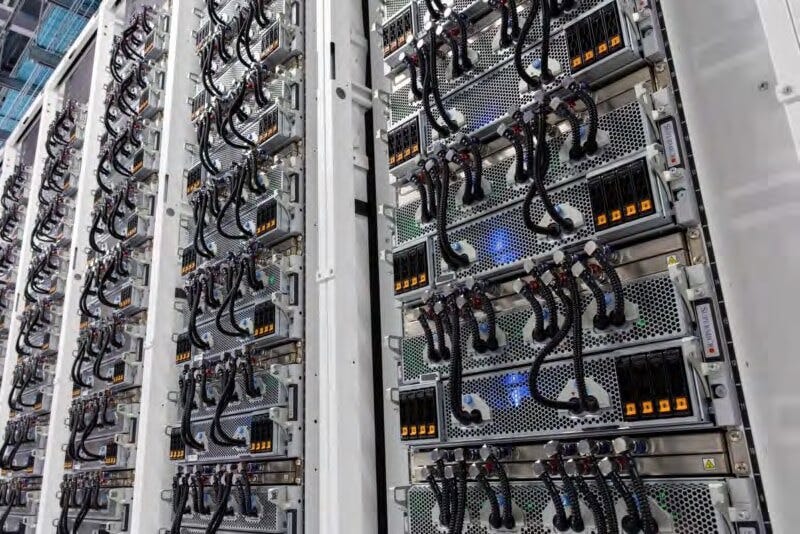
The smallest coherent unit is the rack, and its design changed with the GPU generation. In the H100 generation, a rack holds 64 GPUs as 8 HGX H100 NVL8 servers — but there is no rack-wide coherent scale-up domain; the NVLink domain spans only 8 GPUs per server.
Source: Supermicro.
The GB200/GB300 generation collapses that limit: NVL72 racks create 72-GPU coherent NVLink domains at roughly 130 kW per rack. These appear in limited numbers at Colossus 1 (about 30,000 GB200) and as Colossus 2’s building block, and they raise the coherent scale-up domain from 8 to 72 GPUs in a single generational step.
Source: Space Exploration Technologies Corp.
The Fabric — Spectrum-X, Not InfiniBand
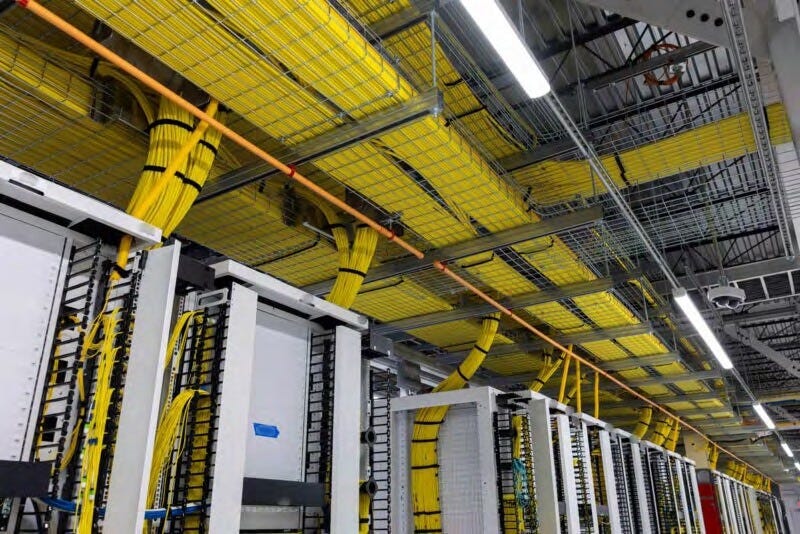
Above the rack, at Colossus 1, the scale-out fabric is NVIDIA Spectrum-X Ethernet, not InfiniBand — a defining networking decision, used in xAI’s 200,000-GPU H100/H200 deployment.
Source: Supermicro.
Each GPU connects through one 400GbE NVIDIA BlueField-3 SuperNIC into Spectrum-X SN5600 switches (64-port, 800 Gbps, 128×400G links), a design for which NVIDIA claims 95% data throughput. The fabric has a ceiling: the reference architecture (v1.2) supports up to 100,000 GPUs, and “up to 512,000 GPUs with a non-reference custom design“ — still short of the 1-million-GPU cluster Musk has said he is targeting.
Colossus Is One Computer
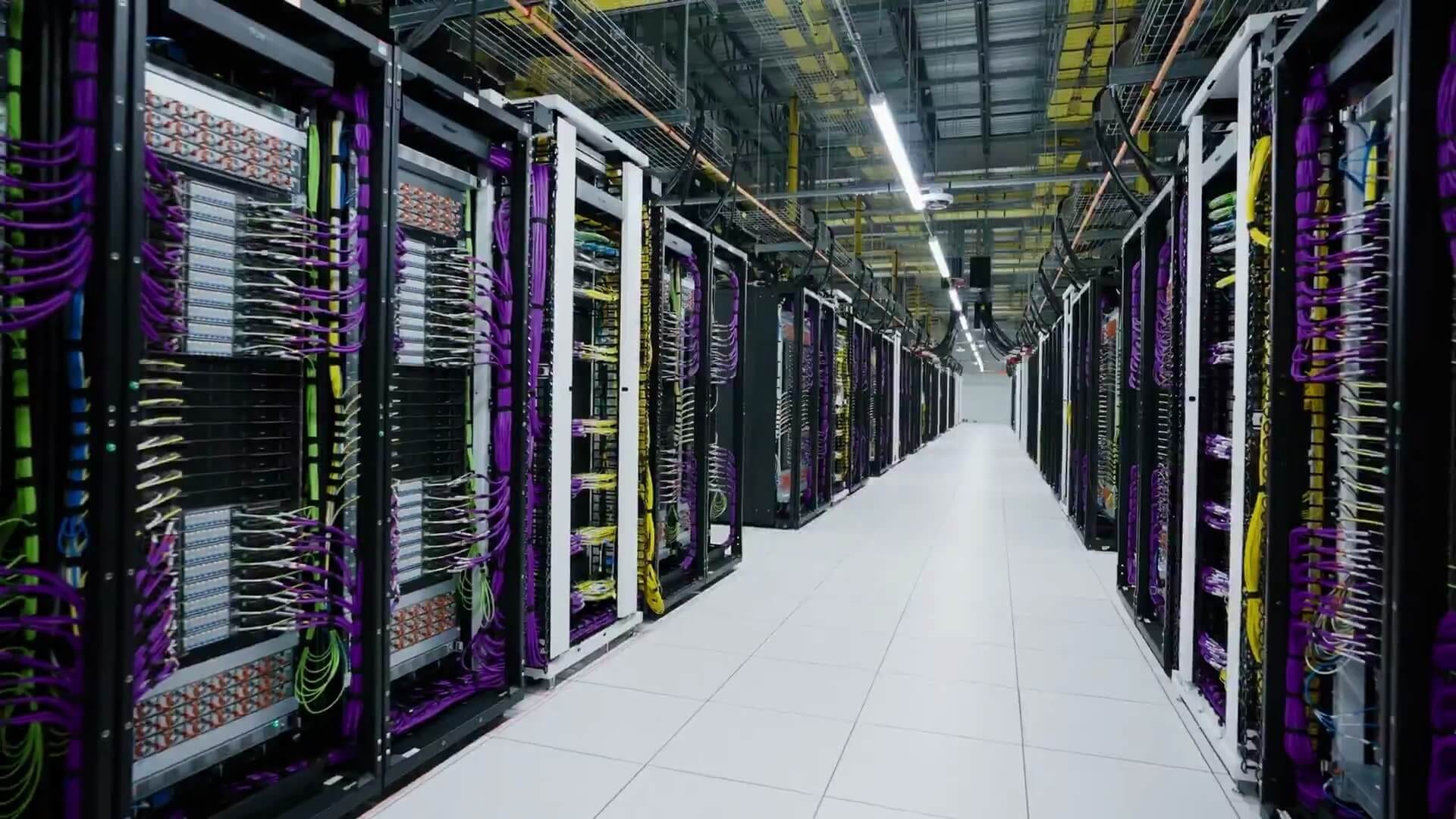
xAI frames itself as unique among AI labs in keeping all of its GPUs in one location, and its Anthropic-access statement describes Colossus 1 as “one of the world’s largest and fastest-deployed AI supercomputers … [featuring] over 220,000 NVIDIA GPUs.” Across the Colossus cluster, the GPUs are tied together by thousands of miles of high-bandwidth fiber so that training jobs can run across hundreds of thousands of accelerators without the communication bottlenecks of geographically dispersed systems.
Source: Google Earth.
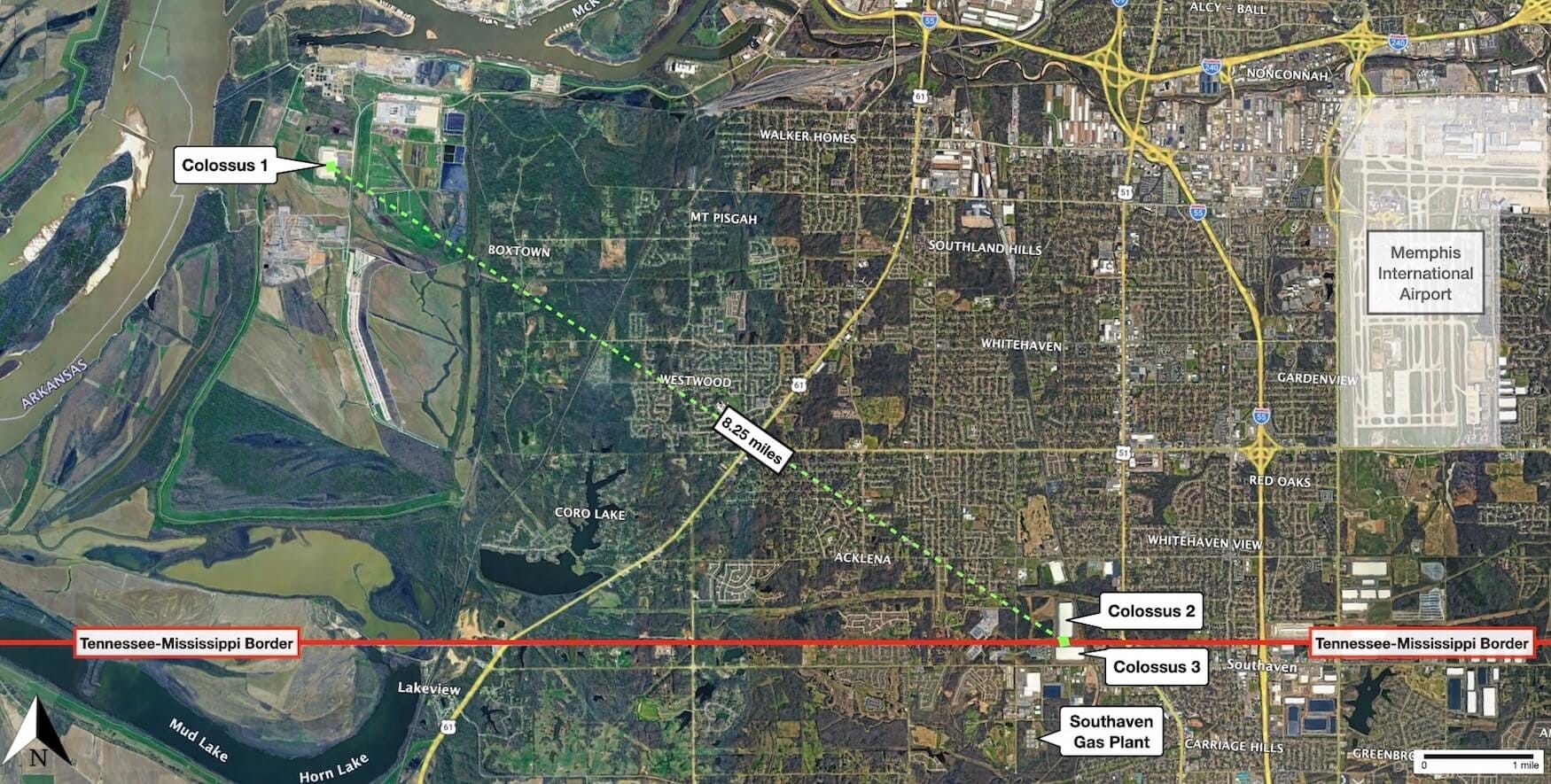
Proximity is key. Colossus 1 sits just over 8 miles from Colossus 2 and Colossus 3, which themselves stand only a few hundred feet apart — directly across the road from one another, with the Tennessee–Mississippi border running between them.
Source: Google Earth.
The Forward Bet — Vera Rubin and Custom Silicon
The forward roadmap keeps the brownfield logic intact: merchant NVIDIA now, with Vera Rubin (VR200) flagged as the next generation, and custom silicon later.
Whatever the silicon, the construction model holds: each generation drops into an existing industrial shell. And those shells have to be fed — which brings the bet to the layer xAI chose not to outsource.
V. Power and the Grid: The Layer xAI Builds Itself
Power is the layer every other hyperscaler outsources to the utility, and the layer xAI chose to build itself. The split is clean, and it is the cluster’s defining electrical fact: only Colossus 1 draws firm power from the grid; Colossus 2 and Colossus 3 run entirely off-grid, behind the meter. What follows traces the supply from the thin grid tie that feeds the flagship, through the curtailment terms that came with that tie, to the self-built plant that powers everything else, and the battery layer that lets none of it go dark.
The Thin Grid Tie — Colossus 1 Only
Colossus 1’s grid power runs through a federal-wholesale / municipal-retail chain. The Tennessee Valley Authority (TVA) is the wholesale generation-and-transmission provider; Memphis Light, Gas and Water (MLGW) is the local distribution utility that contracts with the customer. MLGW is TVA’s largest customer, serving about 440,000 electric customers and accounting for roughly 9% of TVA’s 2025 operating revenue, and the contracting entity is CTC Property LLC, its retail customer of record. Because TVA Board approval is required to make available firm power exceeding 100 MW, the grid tie advanced in board-sized increments: 150 MW approved November 7, 2024 and energized May 1, 2025 through a newly constructed substation (#63), then up to 150 MW more approved February 11, 2026, bringing the site’s ceiling (once energized) to as much as ~300 MW.
Who pays for the connection follows one principle: xAI fronts the cost, and MLGW ends up with the asset. xAI builds the substations and covers the transmission upgrades they require — a system-impact study flagged $1.7 million of improvements to a 161 kV transmission line that had to be completed before service could begin. It then recovers the outlay through monthly rebates against its utility bill until the build cost — about $35 million for the first substation, plus another $20 million for a second 200 MVA substation — is recouped, after which MLGW takes ownership. So if xAI ever leaves, “a brand new substation … at their cost“ stays with the utility.
On-Site Gas and Solar — Colossus 1
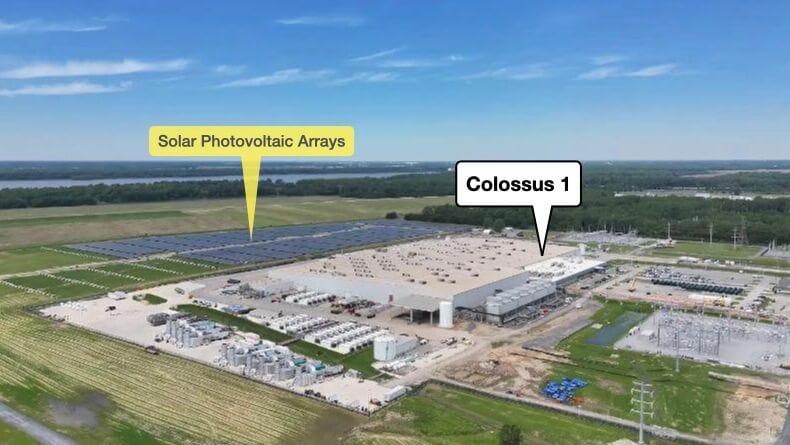
Colossus 1 also generates on-site. It is permitted for 15 Solar SMT-130 turbines, each rated 16.5 MW, for about 247 MW, each unit fitted with an oxidation catalyst, DLE/SoLoNOx, and selective catalytic reduction to a NOx limit of 2 ppmv, with the fleet capped at 87.14 tons of NOx per year. The combined generation total of nearly 400 MW — comprised of ~247 MW of on-site gas turbines plus the 150 MW utility feed — supports the site’s more than 300 MW of IT compute described earlier.
xAI is layering on renewable generation as well: an 88-acre ground-mounted solar array — the “xAI Photovoltaic Generation Station” — is going in on the adjacent 136.4-acre parcel at 3223 Paul R. Lowry Road. It was issued a $25.5 million construction permit in May 2026 and feeds power through medium-voltage switchgear into the data center.
Source: Space Exploration Technologies Corp.
Mandatory Curtailment — the Price of the Grid Tie
The grid tie came with a condition xAI’s other off-grid sites avoid entirely: xAI must agree to be cut. Both TVA approvals were “contingent on the new customer’s agreement to certain demand response terms,” and MLGW’s CEO was blunt — “I do not support 150 megawatts unless they are enrolled in an aggressive demand response program.” By February 2026, xAI’s current load was enrolled in a TVA Demand Response program, distinct from TVA’s standard voluntary program. The terms are deep but bounded: cuts of between 50% and 80% of xAI’s demand when the grid is stressed, “maybe four to five times a year,” in events “only between 2-4 hours,” against TVA notice windows of 5 minutes, 30 minutes, 60 minutes, 4 hours, and 12 hours — and an annual interruption total of 24 to 96 hours. Non-compliance is penalized financially, with the ultimate sanction that the utility can just not provide the power.
The point of the off-grid architecture is that none of this takes the Colossus data centers offline. When the grid is curtailed, Colossus 1 rides through on behind-the-meter generation and Megapacks — over 240 batteries let the Electrolux facility go completely offline during emergency situations or times of peak demand, and xAI’s Memphis executive Brent Mayo has said the company would go 100% off TVA’s grid and rely on Megapacks when the grid is stressed. That interruptibility was the enabler: demand-response participation was key to accessing grid power faster than typical timelines, letting xAI draw 150 MW less than a year after requesting it, precisely when TVA was at risk of not meeting “planning reserve margin” targets over the next five years.
Critics flag the catch — curtailing the grid draw can simply mean running the on-site gas turbines instead, so it need not cut local emissions.
The Self-Built Grid — the 1.2 GW Southaven Gas Plant
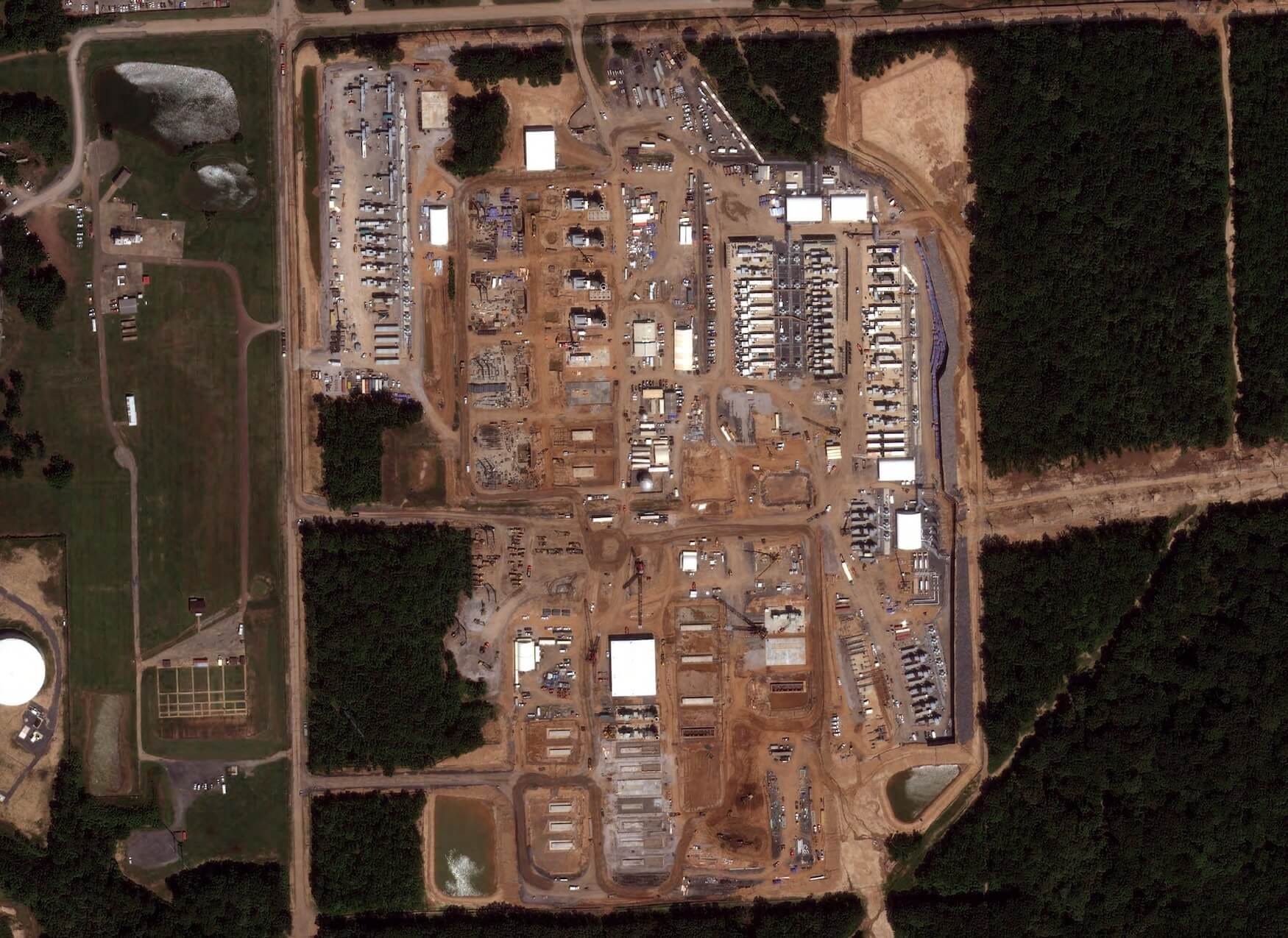
The defining electrical infrastructure sits across the state line. Colossus 2 and Colossus 3 are powered behind the meter by the Southaven Gas Plant at 2875 Stanton Road South in Southaven, Mississippi — a former Duke Energy facility, now a self-built simple-cycle combustion-turbine plant operated by MZX Tech LLC, with approximately 1.2 GW of continuous generating capacity.
Source: Google Earth.
The plant will not export power to the grid — it is the cluster’s private generation source, not a grid draw. A gas turbine is, in essence, a jet engine bolted to the ground — it burns natural gas to spin a shaft that drives an electrical generator, rather than producing thrust to push a plane. The 41 turbines themselves are rented by xAI, not owned, through the Stateline JV described in Section II.
The roster above is the plant’s permitted, permanent configuration. The turbines physically running at Southaven today are a larger, temporary fleet of portable units bridging the load until that permanent plant is built — and it is that portable fleet, not the permitted one, that the Clean Air Act suit in Section VIII contests.
The arrangement is set down in the plant’s own tax agreement, which defines its purpose as generating electricity for xAI’s own use, consumed directly by data centers that sat, at signing, outside Mississippi — the Tennessee buildings — and delivered across the line by “temporary transmission lines and permanent below ground transmission pipelines.” It is the off-grid, cross-state architecture written into a primary legal document, down to the buried lines that carry the power over the border.
The off-grid posture is documented on the Tennessee side by what xAI did not request. MLGW supplies the Colossus 2 site only around 0.5 MW of general service and has stated flatly that “MLGW is not supplying power to their supercomputer, Colossus 2.“ An initial 260 MW request for the Colossus 2 site was not studied, and a “260 MW to 1.1 GW“ range was discussed, but no final request was ever filed or studied. Colossus 2 runs off the Southaven Gas Plant, and Colossus 3 shares the same supply.
Batteries — the World’s Largest Megapack Deployment
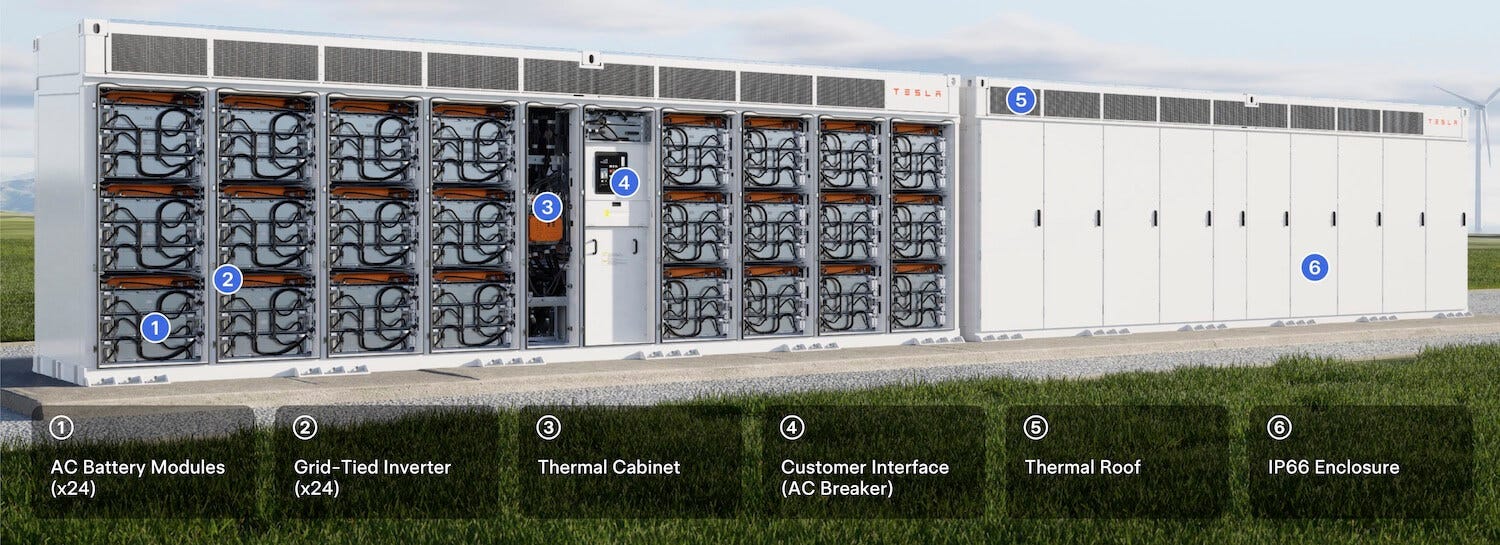
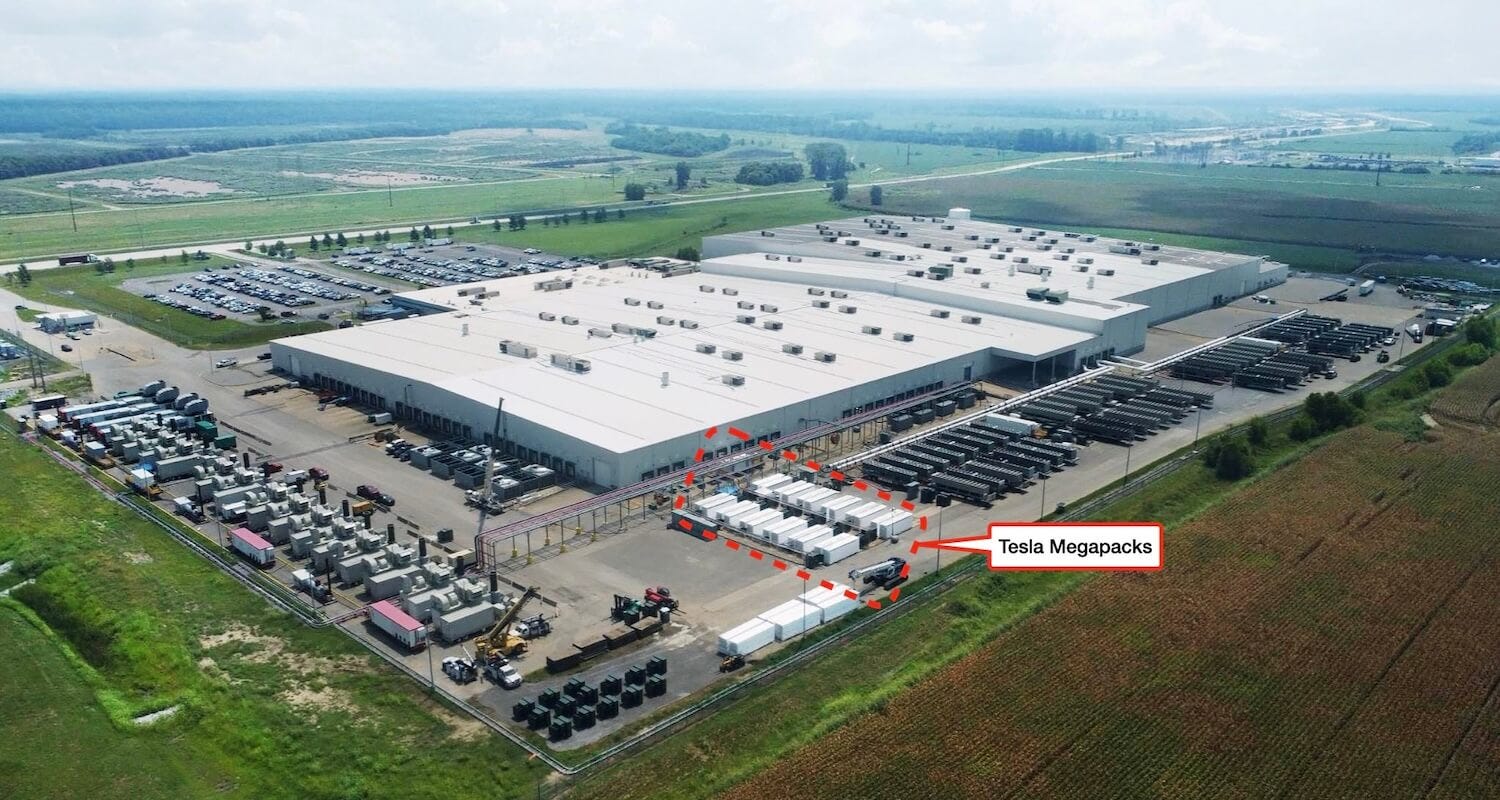
The layer that lets the whole arrangement ride through disturbance — and absorb the violence of the AI load itself — is storage, not generation. Across the cluster, Tesla Megapacks valued at around $1 billion provide battery backup, peak shaving, and load smoothing.
Source: Tesla Inc.
SpaceX calls the Colossus cluster the “world’s largest Megapack deployment” and the “first gigawatt-scale Megapack battery installation.” Colossus 1 grew from 168 Megapacks (installed May 22, 2025) to over 240.
Source: Tesla Inc.
Colossus 2 holds more than $375 million worth of Tesla Megapacks. They connect into the building’s medium-voltage distribution — wired through the switchgear and step-down transformers that take in the Southaven Gas Plant’s behind-the-meter power.
Source: X, @xAIMemphis.
Each grid-forming Megapack 2 XL pairs roughly 2 MW of power with more than 3.9 MWh of storage. Across the fleet, that storage does two distinct jobs — riding through outages and demand-response events, and smoothing the load before it ever reaches the generation.
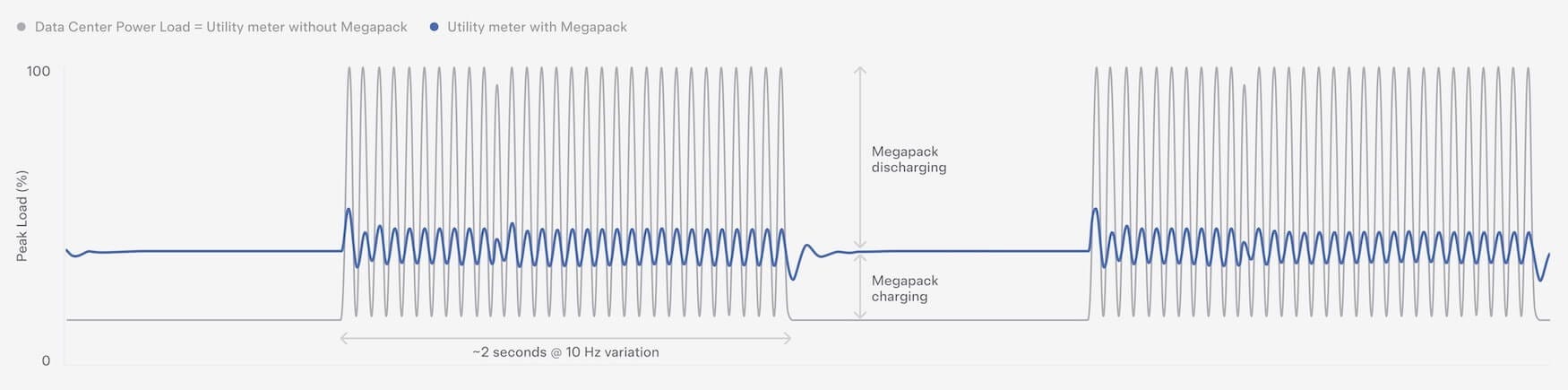
That second job — load smoothing — is the key advantage of using Megapacks for AI data centers, and it is the rationale most specific to a cluster like Colossus. Synchronized AI training does not draw power evenly: hundreds of thousands of GPUs step in and out of computation in lockstep, producing what Elon Musk has called “extreme power jitter” — “like having an orchestra [that] can go loud to quiet very quickly, at the sub-second level,” with “10–20 MW shifts several times per second.” A Megapack wired in parallel counter-cycles against that load, discharging on the spikes and charging on the dips so the source sees a smooth draw.
Source: Tesla Inc.
Megapack’s grid-forming control is credited with stripping out 70%+ of the variability while holding enough charge to do it around the clock. For a data center cluster that generates its own electricity, that is closer to a requirement than a refinement. Field data from Tesla on the Megapack shows the same jitter destabilizing generator power, frequency, and even mechanical vibration when the batteries are switched off — so the Megapacks are part of what lets the Colossus cluster’s private gas-turbine fleet serve a load that can swing by tens of megawatts in a second.
VI. Cooling and Water: The Mitigation That Isn’t Running
If power is where the bet succeeds, water is where it strains. The Colossus cluster’s cooling is retrofitted into buildings that were never designed for it, and it draws today on the Memphis Sand Aquifer — the region’s drinking-water source — because the flagship mitigation engineered to offset that draw, the Colossus Water Recycling Plant, is permitted, partly built, and on indefinite pause.
Cooling Architecture
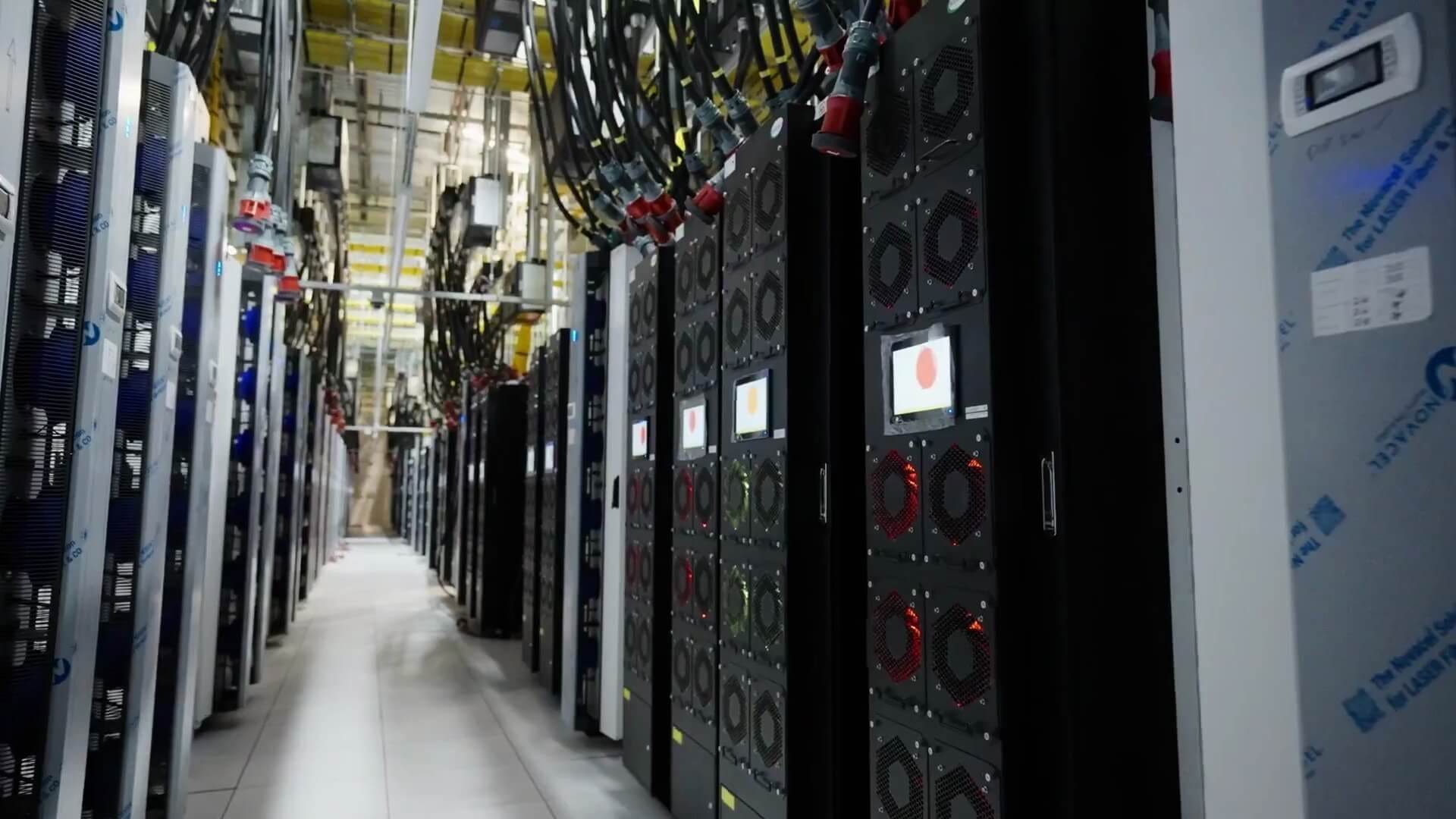
Colossus 1’s cooling is retrofitted into the Electrolux shell and built around liquid cooling at the rack level. Each rack combines two methods: direct-to-chip cooling, which circulates coolant through cold plates placed directly on the GPUs, and rear-door heat exchangers — liquid-cooled coils in the back of the rack that capture the heat the servers exhaust.
Source: Space Exploration Technologies Corp.
Together direct-to-chip cooling and the rear-door heat exchangers handle roughly 30–40 kW per rack, rising past 50 kW when the rear doors’ fans are engaged. A Supermicro coolant distribution unit (CDU) at the base of each rack isolates this rack loop from the building’s water and drives it through a redundant pair of pumps.
Because the rear doors absorb the exhaust heat, each rack is “room-neutral” — it adds no net heat to the data hall, sparing the building the room-scale air handlers a conventional data center relies on. That rack-level liquid path is also what makes the brownfield strategy work: at roughly 130 kW apiece, the densest GB200/GB300 NVL72 racks throw off more heat than any air-cooled room could remove, so only direct-to-chip cooling can pack GPUs at that density into a shell never designed for the load.
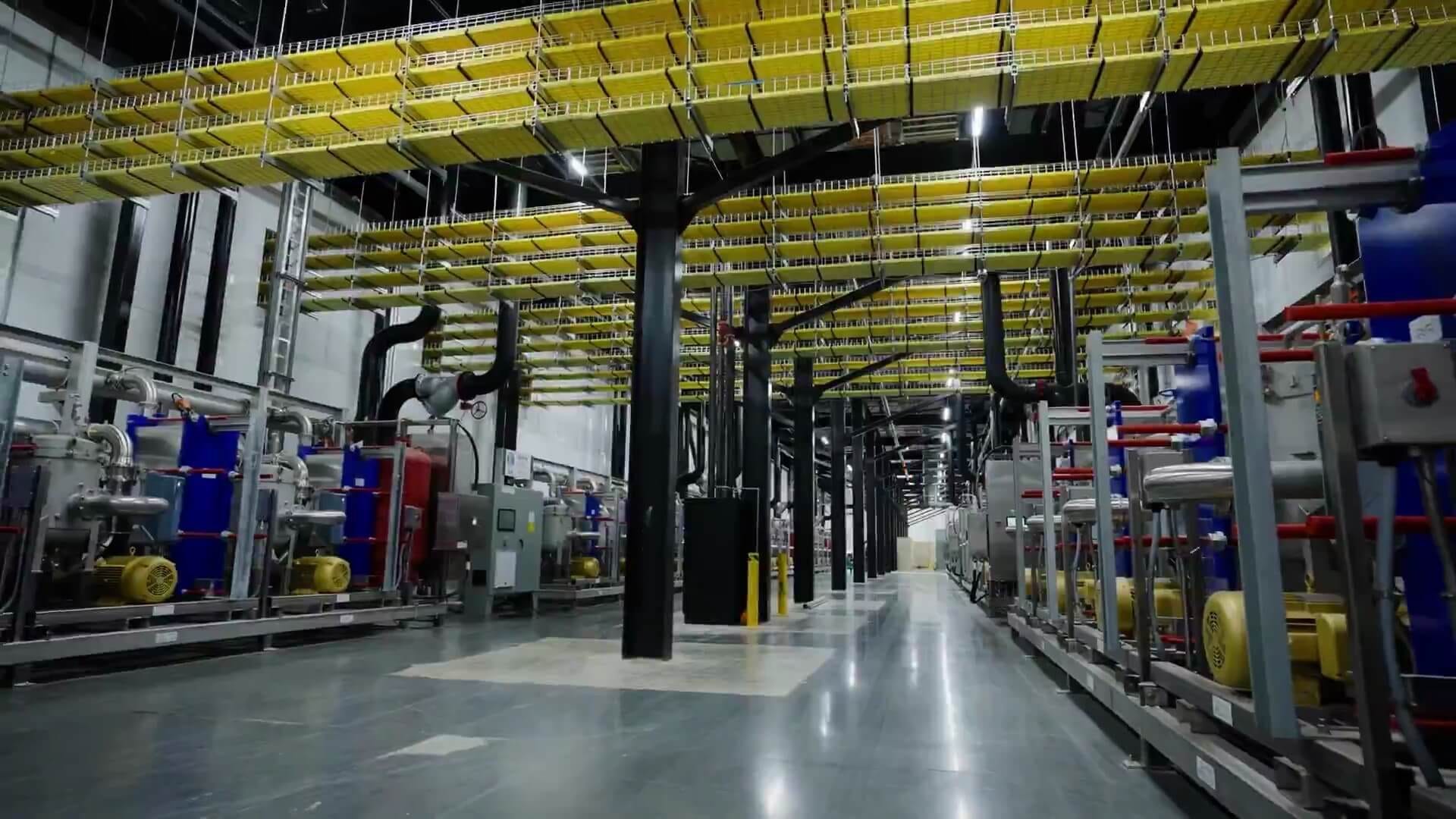
At the facility level, the captured heat is rejected outdoors through a hybrid of wet and dry equipment. Colossus 1 pairs open-loop evaporative cooling towers and water-cooled chillers with air-cooled chillers that shed heat straight to the air; the chillers need only drop the loop temperature a few degrees before the water recirculates.
Source: Space Exploration Technologies Corp.
Colossus 2 carries the same wet-and-dry logic into a newer design — its central utility plants house a hybrid of dry coolers and adiabatic cooling units, which run dry for most of the year and switch to evaporative assist only on the hottest days.
Aquifer Draw Today
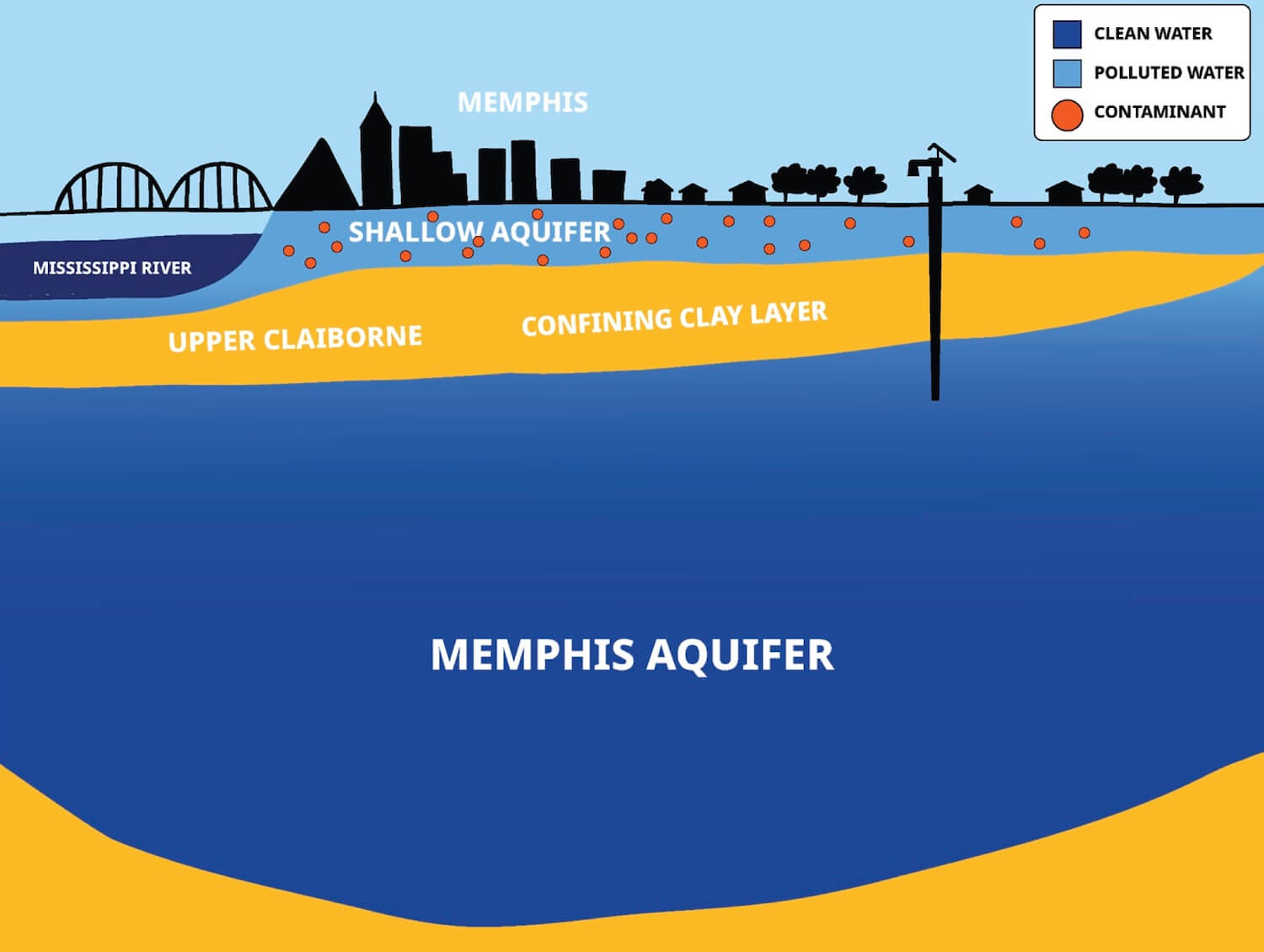
Today, the Colossus cluster’s cooling still runs on potable water from the Memphis Sand Aquifer — the same source that supplies the region’s drinking water — and it does so by deliberate design rather than by drilling private wells.
Source: Protect Our Aquifer.
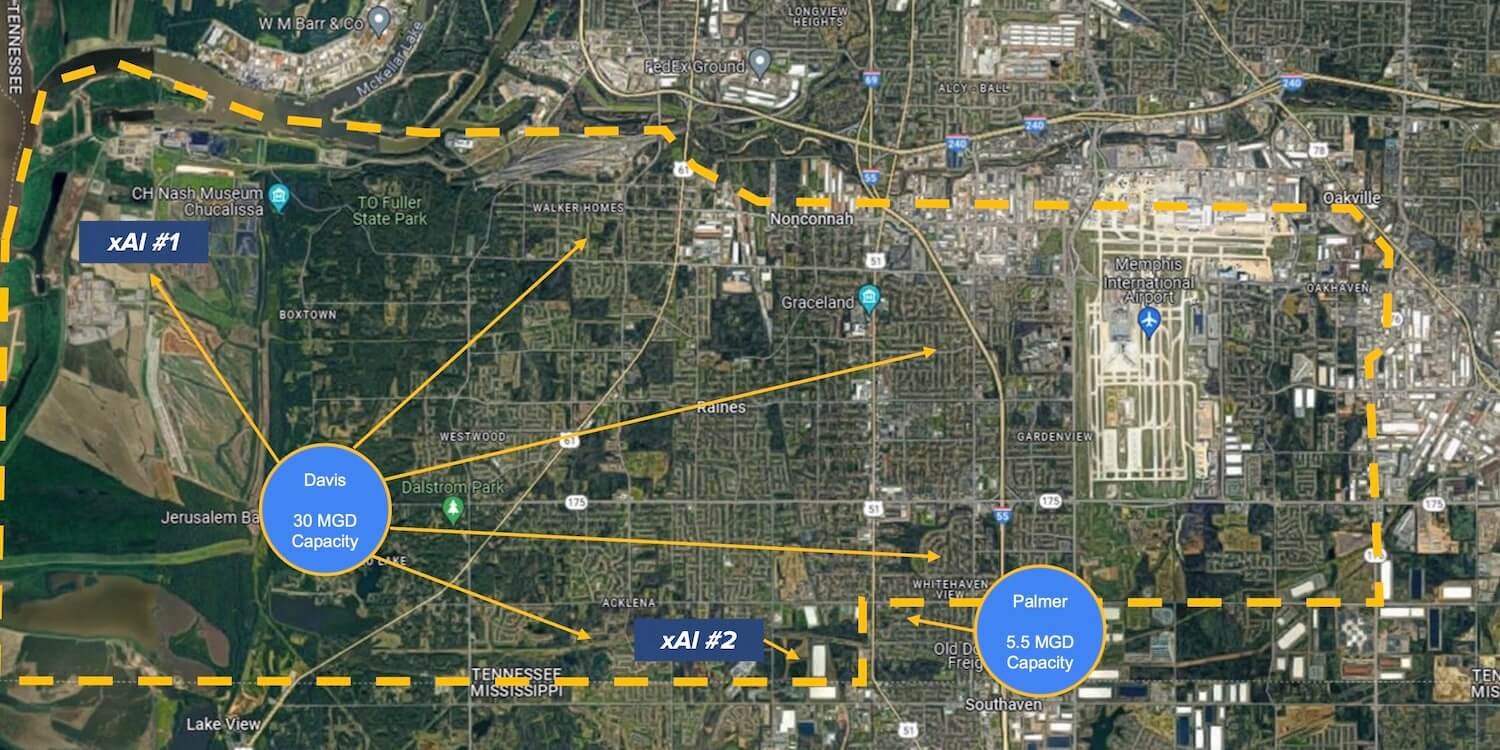
When xAI arrived in 2024, MLGW steered it away from sinking its own wells, which would have pulled unmetered groundwater, and toward buying metered municipal water instead. xAI agreed, tapping an existing water main at Colossus 1 that already had spare capacity, and it pays the standard commercial rate with no incentive. Its roughly 1 million-gallon-a-day draw adds only marginally to MLGW’s Davis Wellfield, which already pumps well over 20 MGD (and has a 30 MGD capacity).
Source: Protect Our Aquifer.
Colossus reaches the aquifer through the municipal system, not through wells of its own. Most of that water is consumed as makeup water for evaporative cooling, replacing what boils off Colossus 1’s cooling towers. xAI’s stated design demand is 1.1–1.3 MGD, but its actual draw is harder to pin down. The clearest public read comes from the advocacy group Protect Our Aquifer, which in June 2026 said MLGW’s own meter data showed the Colossus facilities using over 800,000 gallons a day — approaching 1 million, and rising sharply over the prior year even as the Colossus Water Recycling Plant meant to offset that draw sat unfinished.
Colossus Water Recycling Plant
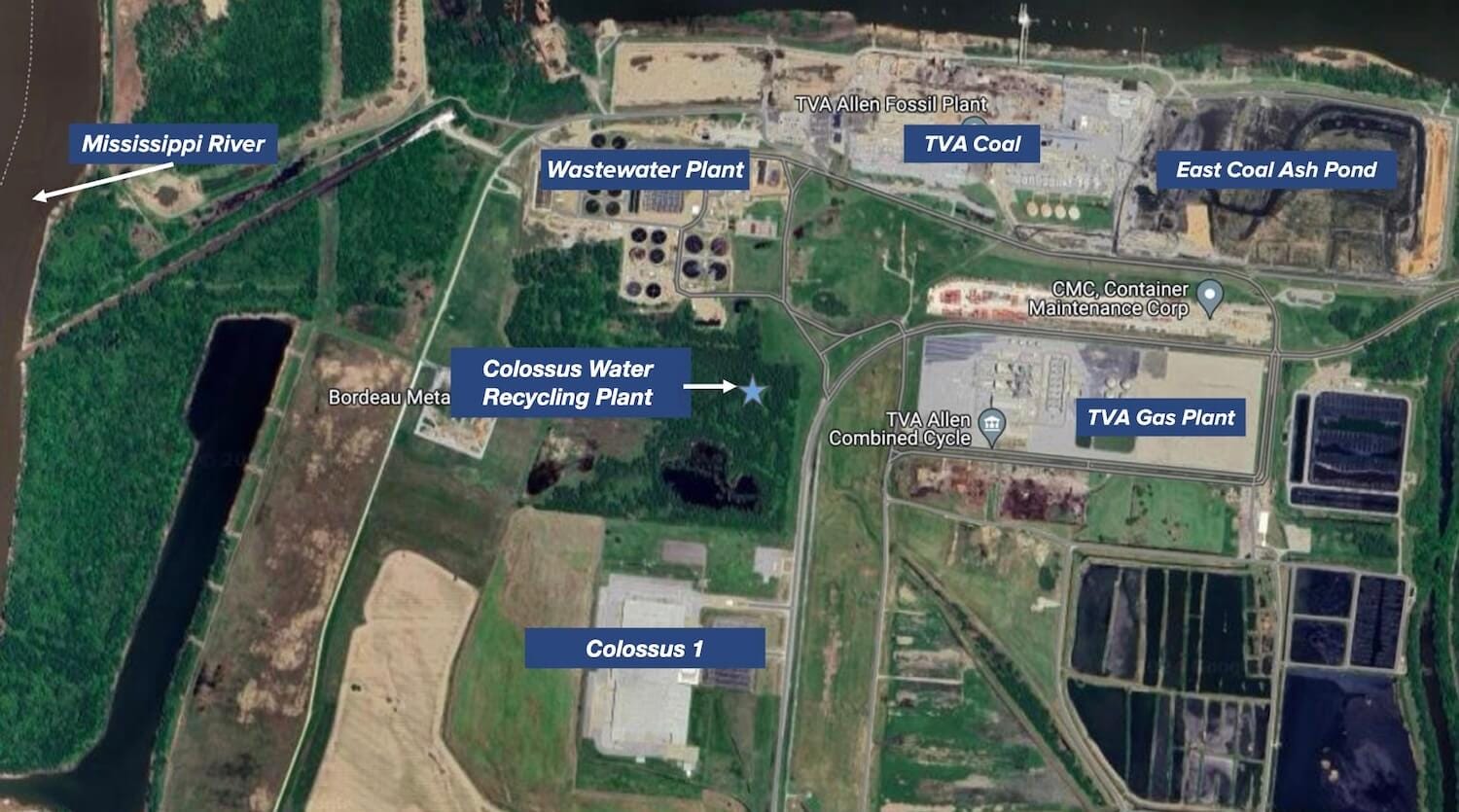
The asset meant to take the cluster off the aquifer is the Colossus Water Recycling Plant, a water-reclamation facility that xAI’s CTC Property LLC is building at 3644 Riverport Road in Memphis.
Source: Protect Our Aquifer.
Permitted by the state of Tennessee as a non-potable reuse system, it is designed to take up to 13.5 MGD of treated effluent from the City of Memphis’s T.E. Maxson Wastewater Treatment Facility and treat it into industrial-grade reclaimed water — cutting the cluster’s aquifer withdrawals by up to 13 MGD. It is a zero-discharge plant — and a substantial one: the engineering plans show a full membrane-bioreactor (MBR) treatment complex with biological anoxic and aerobic stages, closer to a municipal wastewater plant than the simple filtration tie-in the word “recycling” might suggest.
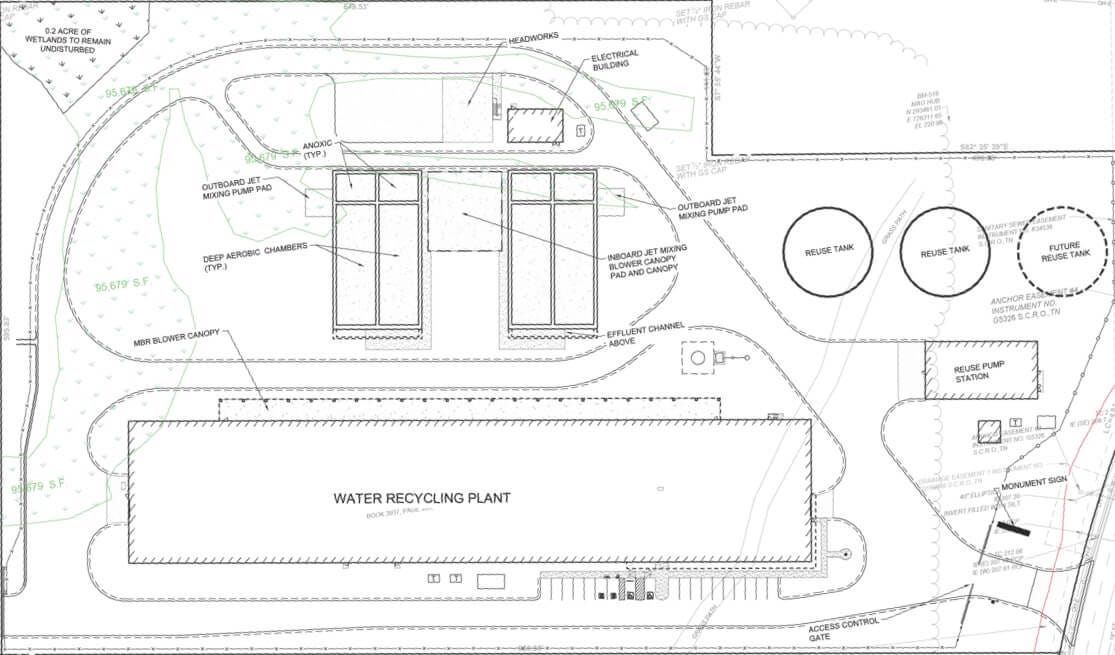
Source: City of Memphis.
Once running, the plant would feed the permanent water-cooled chillers and cooling towers that replace today’s interim setup, supplying reclaimed water in place of aquifer draw — enough, in principle, for Colossus 2 to run as a net-zero-water data center. xAI puts the aquifer offset at roughly 13 MGD, or about 4.75 billion gallons a year (13 MGD × 365).
xAI would build, own, and operate the plant at its own expense. The company puts its own investment at well north of $80 million, but MLGW’s President and CEO, Doug McGowen, told the Memphis City Council in April 2026 that the plant now looks likely to cost closer to $200 million. The reclaimed water would not serve Colossus alone. The state permit names the TVA Allen Combined Cycle Plant as a second end user alongside the data center, with a slot held open for a third, as-yet-unnamed user.
For now, none of this is happening. xAI broke ground on October 27, 2025, but by April 2026 the work had stopped — an indefinite pause, with crews redirected to other sites.
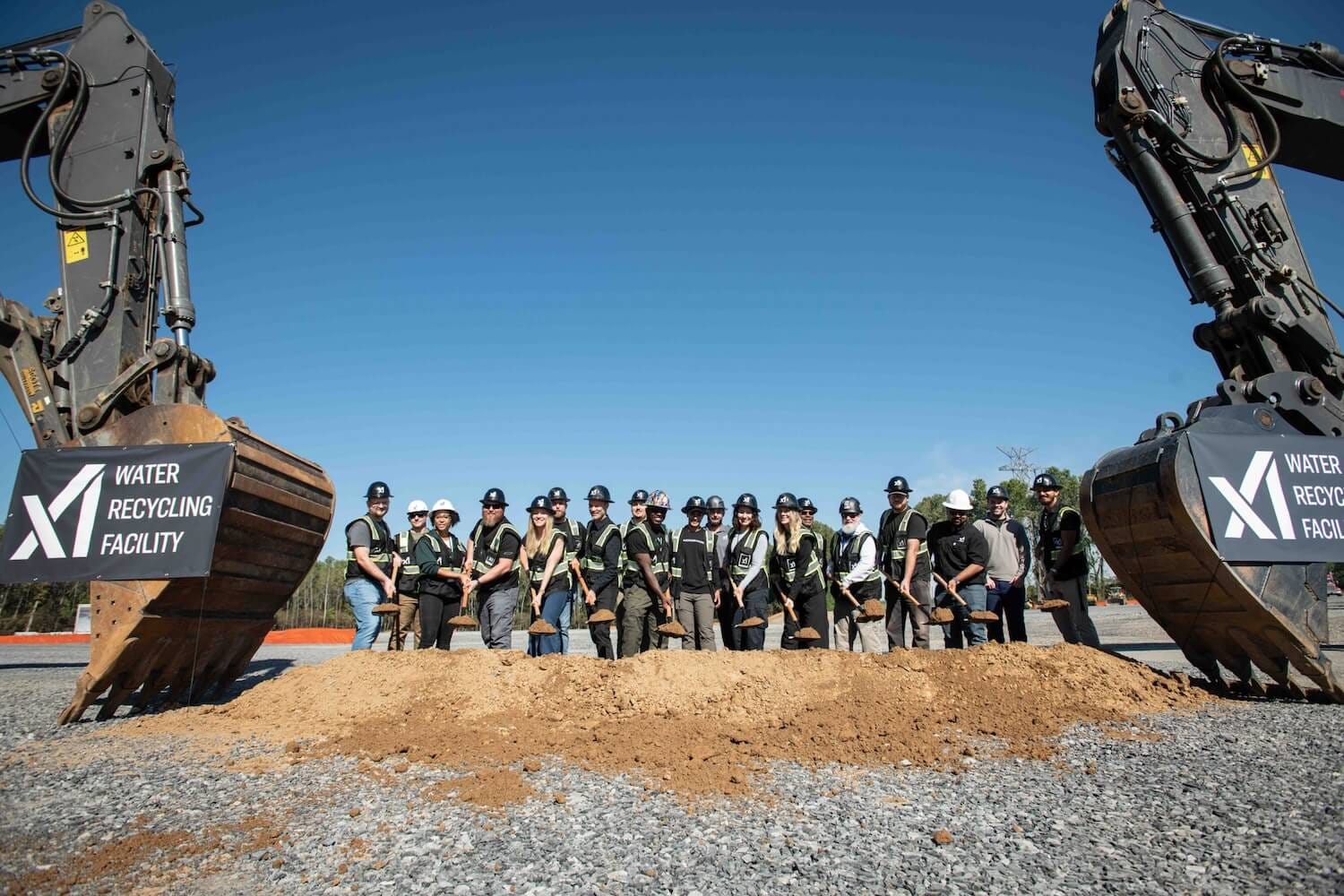
Source: X, @xAIMemphis.
As Musk put it: “We need to focus on finishing Colossus 2 and ensuring it is extremely stable, then we will build the water recycling plant.” Until the plant runs, the interim water-cooled and rental air-cooled chillers carry the cooling load, and the makeup water keeps coming from the aquifer.
VII. Fiscal: Two States, Two Opposite Bargains
The cluster sits in two states that struck opposite bargains to host it. Tennessee gave xAI essentially nothing and collects full freight; Mississippi assembled a sales-tax exemption and fee-in-lieu deals around a pledge it calls its largest economic-development project ever. The contrast is the fiscal expression of a single cluster split across a state line.
Tennessee — No PILOT, Full Freight
Tennessee’s posture is unusual for a multi-billion-dollar build: no payment-in-lieu-of-taxes (PILOT) and no abatement. The Shelby County Assessor’s office put it plainly — “they did not get a PILOT … so they pay full freight” — and Shelby County Assessor Javier Bailey confirmed “xAI did not get a PILOT nor any other kind of tax rebate … no abatement whatsoever,” where a standard PILOT would have meant “a 75% decrease.” The Greater Memphis Chamber’s Dr. Bobby White explained why: “PILOTs don’t work for startups … they don’t have a lot of property” to abate.
Tennessee did, however, attach a binding community-benefit mechanism. Memphis Ordinance No. 5953 passed 11-0 on August 19, 2025, routing 25% of xAI’s AI-property tax revenue into a South Memphis Revitalization Action Plan fund within a five-mile radius, capped at $100 million, plus 1% for education and marketing. xAI-funded items to date include $750,000 to restore two Boys & Girls Club afterschool programs, and MLGW separately spent about $22 million on Orange Mound electric-reliability upgrades.
Mississippi — Sales-Tax Exemption and Fee-in-Lieu
Mississippi did the opposite. The Mississippi Development Authority (MDA) “approved xAI for its Data Center Incentive, which provides a sales and use tax exemption for all computing and equipment software” for certified data centers, and the City of Southaven and DeSoto County “are also supporting xAI’s projects through fee-in-lieu agreements,” with “MZX Tech – MDA-approved FILA Fully Executed” entered into the county record on March 2, 2026. Governor Tate Reeves and the MDA framed the stakes accordingly, announcing “investment exceeding $20 billion … the largest economic development project in Mississippi’s history” on January 8, 2026.
DeSoto County and Southaven granted MZX Tech two separate 30-year fee-in-lieu agreements — one covering the data center, with a projected capital investment north of $10 billion and at least 20 jobs, and one covering the power plant, effective November 21, 2025, scaling from over 400 MW to more than 1.2 GW, with over $900 million invested and at least 10 jobs. On the power plant, the fee is fixed at one-third of the taxes it would otherwise owe, and while the term runs 30 years, no single asset is abated for more than 10 years. Where Tennessee abated nothing, Mississippi forgives two-thirds of the gas plant’s tax bill — the price it paid to be the state that took the turbines.
Property-Tax and Utility Revenue
The investment claims split sharply by state — Tennessee’s TVA board memo cites Colossus 1 as “$5 billion … of capital with over 200 high-tech jobs,” while Mississippi’s pledge exceeds $20 billion. Tennessee’s property tax revenue is real and growing: the Shelby County Assessor estimated about $13.5 million of new county revenue for FY2025 (personal property only, since the building was leased prior to its purchase by xAI in May 2026). City building permit valuations corroborate the order of magnitude xAI is spending — the single largest is a $1.8 billion permit for the Colossus 2 main building alteration.
The cleanest local upside is utility revenue, and it is unsubsidized. MLGW expects xAI’s electric bill to run $7 million per month, exceeding cost-to-serve, and the added sales contribute ~$500,000 of additional PILOT payments annually to the City of Memphis (a municipal-utility PILOT, not an xAI tax break). xAI is on the customary commercial rate / published industrial rates with “no … incentives being sought for taxes,” and funds its own service infrastructure (the transmission-line upgrade at xAI expense, Section V).
On jobs, the official counts are only claims — Tennessee figures range from “over 200” (TVA) to “~300+” (MLGW) to “hundreds of permanent jobs” (xAI), while Mississippi claims “hundreds of permanent jobs,” and “in excess of 100 immediately” for Colossus 3.
VIII. Regulatory and Litigation: The Bill for the Off-Grid Bet
The off-grid choice that bought the speed also bought the legal exposure. The Southaven Gas Plant is the crux: an as-built turbine fleet that bears little resemblance to the one Mississippi permitted, the basis for a Clean Air Act citizen suit — and, in turn, for an extraordinary federal intervention to keep the plant running on national-security grounds.
Permitted vs. As-Built — the Turbine Gap
On paper, Southaven is a 41-turbine fleet of about 1.2 GW under a Mississippi Department of Environmental Quality (MDEQ) Prevention of Significant Deterioration (PSD) permit issued March 11, 2026:
17 Solar PGM-130 (16.5 MW each)
16 Solar Titan 350 (35 MW each)
8 ProEnergy 6000PE (50 MW each)
10 PLUM T6500 pressure-reduction systems
Every permitted turbine carries SCR plus an oxidation catalyst, with NOx BACT at 2 ppmv under NSPS Subpart KKKKa, and the plant is classified a PSD major source; its PSD application’s potential-to-emit table (Trinity Consultants) lists NOx 423.39 tpy, VOC 417.40, CO 364.16, SO2 156.53, and CO2e 6,410,729 tpy.
But that permit covers the permanent plant, still under construction. The turbines actually running at Southaven are a separate, temporary bridge: in a July 29, 2025 letter, MDEQ found these portable, trailer-mounted units exempt from permitting altogether as “mobile sources” — so long as each stays affixed to a flatbed trailer and on-site under twelve months — and xAI began deploying them the following month to supply the off-grid sites until the permanent plant is finished. Whether that exemption holds is what the suit actually turns on.
The bridge fleet is mechanically different, too: it grew over time from 18 → 27 → 33 → 46 → 57 units of different makes and models — and kept growing, the defendants’ own June 2026 declaration reporting 59 on-site, with a 60th expected by the end of the month. As of the May 15 count, “none of the 57 turbines … are included in that permit.” That fleet of 57 — as the plaintiffs’ expert (Kim Laufenberg, of the Environmental Integrity Project) classified the Trinity Consultants inventory against aerial imagery — breaks down as:
14 Solar SMT-130 — Solar Turbines (Caterpillar) Titan 130, ~16.5 MW; the only units fitted with SCR
27 GE Vernova TM2500 — aeroderivative, mixed Gen 4/6/7/8
1 M35 — GE LM2500+G4 engine, ~35 MW (mobile-package brand not named in the record)
3 Jereh JT35 — GE LM2500+G4 engine
12 Mitsubishi FT8 — Mitsubishi Power package, Pratt & Whitney FT8 engine
Per Laufenberg, none of these 57 units are among the 41 the MDEQ permit authorizes. The defense — and Trinity’s own list — classify the lone M35 and the 3 JT35 as TM2500s instead.
Because emissions are measured in tonnage, not turbine count, the NOx figures span an enormous range strictly by basis: 87.14 tons of NOx per year is the Colossus 1 permit limit; 423.39 tpy the Southaven permanent-plant PTE (from the PSD application); and a plaintiff expert (Laufenberg) puts the unpermitted Southaven fleet’s potential-to-emit at 1,732.71 tpy (27 turbines, March 3, 2026), 2,507.96 tpy (33 turbines, April 14, 2026), and 5,300.54 tpy (57 turbines, May 15, 2026).
At roughly 5,300 tpy, the plaintiff calls Southaven the largest NOx emitter across Mississippi, Tennessee, and Arkansas and in the top 0.1% of about 52,000 U.S. facilities — against Memphis International Airport at 1,077 tpy and the comparable 1.1 GW TVA Allen plant at 230 tpy (a plaintiff estimate, not adjudicated).
Colossus 1 set the precedent. Its own temporary fleet peaked at about 35 turbines (~421 MW) by the Southern Environmental Law Center’s (SELC) March 31, 2025 aerial count — largely unpermitted, “the largest industrial emitter of NOx in Memphis,” having begun as “up to 18 gas turbines in June and July of 2024.” SELC demanded a cease order and $25,000/day penalties, and the temporary units were demobilized from about May 2025 as grid power and the permitted 15 came online. The same permitted-versus-as-built pattern then reappeared, larger, in Mississippi.
NAACP v. X.AI and the DOJ Intervention
The dispute became NAACP v. X.AI Corp. & MZX Tech, a Clean Air Act citizen suit — and then something far less ordinary. On June 15, 2026, the United States moved to intervene as plaintiff and to dismiss the case with prejudice, arguing that the NAACP’s suit “threatens American national, economic, and energy security.” The government’s filing leans on the cluster’s defense role: a Department of War CDAO declaration ties the “Grok Gov” model in Maven Smart Systems to the same Operation Epic Fury mission and Top-Secret workload described in Section I, now invoked as grounds to keep the plant powered.
The defendants — represented by Butler Snow, Vinson & Elkins, and Boyden Gray — confirmed on the record what the cluster runs and for whom: the Colossus 2 and Colossus 3 facilities operate “Grok, and other frontier AI models, including Anthropic’s Claude and Google’s Gemini,” hold “approximately 550,000 GPUs,” and serve the tenant contracts set out in Section I. Mississippi’s governor weighed in alongside them: Tate Reeves’ May 29 letter framed the project as the state’s largest-ever investment (Section VII), called the turbines exempt “mobile sources,” and cited “vital contracts with the War Department.”
The result is a federal posture without much precedent in data center permitting — the executive branch moving to dismiss an environmental suit so that a private, off-grid power plant can keep a gigawatt of AI compute online.
IX. What to Watch
Source: Space Exploration Technologies Corp.
Most of what comes next at Colossus turns on a handful of public markers — a federal docket, a TVA decision, a permit, and a scale-up.
The NAACP / DOJ docket. The decisive near-term event is whether the court grants the United States’ June 15, 2026 motion to intervene and dismiss with prejudice. The outcome determines whether the as-built Southaven fleet keeps running as-is, or whether the Clean Air Act claim over the allegedly unpermitted plant — 57 turbines at the May 15 count, since grown to 59 — proceeds.
The Colossus cluster’s scale-up toward ~2 GW. Cluster IT compute stood at about 1 GW as of March 31, 2026; Musk’s ~2 GW projection rides on Colossus 3 scaling up. Its progress is the clearest gauge of whether the off-grid pair reaches its stated ceiling.
Whether the recycling plant restarts. The Colossus Water Recycling Plant is permitted and partly built but on “indefinite pause.” A restart — and approval of the Reclaimed Wastewater Management Plan “required prior to operation” — is what would finally take the cluster’s cooling off the Memphis aquifer; the aquifer draw remains the live number.
Google’s September 30, 2026 delivery gate. If xAI fails to deliver access to the committed ~110,000 GPUs by September 30, 2026, then after a one-month grace period (end of October 2026) Google may either walk away or accept the GPUs delivered at a pro-rata-reduced fee — the first hard test of whether xAI’s build speed can keep its merchant commitments on schedule.
Grok-5. Grok-5’s training run at Colossus 2 and 3 is the in-house workload against which the rented capacity competes for the same machine. Having slipped past Elon Musk’s Q1 and Q2 2026 targets, Grok-5 is now expected to launch in the second half of 2026.
Measured AI provides institutional-grade analysis of the physical infrastructure powering AI data centers. For access to our full research library, regulatory intelligence, and weekly briefings, visit MeasuredAI.com.