

Neoclouds: AI's $150 Billion Middle Layer That Owns Almost Nothing
Six companies hold the GPUs and leases at the center of the AI buildout. Converted bitcoin miners own the buildings; NVIDIA and Google guarantee the rent — Microsoft simply buys the compute.

A neocloud is a specialized high-performance compute provider that owns and operates GPU fleets and sells dedicated AI compute capacity on contract — mostly out of buildings someone else owns. That last detail is the part this article is about.
Consider the two ends of the category. CoreWeave, the largest pure-play neocloud, reported a revenue backlog of $99.4 billion as of March 31, 2026, to be delivered from 49 data centers — essentially all of them leased from third parties, with a first self-build not due online until later this year. Fluidstack, one of the smallest of the six companies profiled here, operates five U.S. sites totaling roughly 1.4 GW of contracted critical IT capacity and owns none of the buildings; at all five of the locations, Google has guaranteed the lease obligations so that the landlords could borrow against them. One company carries a hundred-billion-dollar order book on rented floors. The other has made rented floors into its entire business model, with a hyperscaler’s balance sheet standing behind the rent.
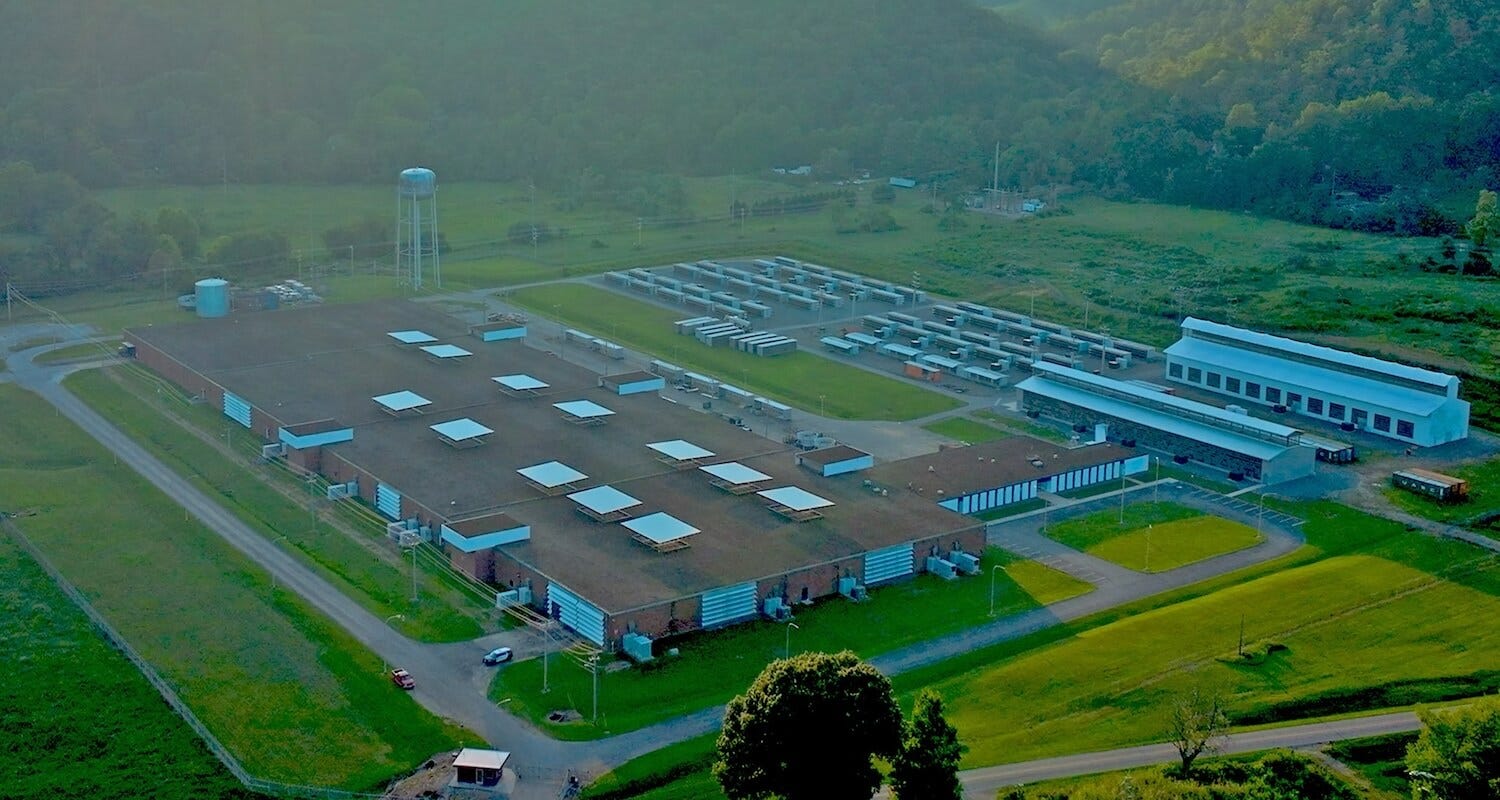
Source: Core Scientific.
The prize is large and compounding. Neocloud category-wide revenue stands at ~$12 billion a quarter as of mid-2026 — a ~$48 billion annualized run-rate — and, on our forecast, reaches $300 billion by 2030, a ~50% compound annual growth rate. Those figures cover the whole category; the six companies profiled here — Crusoe, Nebius, Nscale, CoreWeave, Lambda, and Fluidstack — make up the vast majority of that revenue and are collectively valued at over $150 billion, with a next tier already signing leases behind them.
What organizes this cohort is not chips or software. It is ownership. The six neoclouds arrange themselves along a spectrum that runs from a company that builds power plants down to a company that owns nothing but GPUs and contracts — and underneath every point on that spectrum sits the same load-bearing structure: landlords who own the power, neoclouds who hold the lease, and anchor customers who increasingly co-sign the obligations of the layer below them. The neocloud layer scales precisely because the demand side of the market has agreed to underwrite the supply side.
I. GPU Demand Outran the Hyperscalers, and a New Layer Formed to Catch It
A neocloud sells dedicated GPU capacity in large contracted blocks. That is a demand shape the hyperscalers’ general-purpose clouds were not architected for: AI labs and enterprises do not want elastic instances by the hour; they want thousands of interconnected accelerators, reserved for years, delivered on a date. The deals are bilateral multi-year contracts that run from tens to hundreds of megawatts, the largest of them covering roughly 100,000 GPUs. The differentiators are speed-to-capacity and a willingness to sign single-tenant, single-site commitments that a general-purpose cloud cannot justify.
Source: Nebius.
The economics of GPU rental pricing have held up better than the glut narrative suggested. SemiAnalysis’s NVIDIA H100 GPU rental index rose roughly 36% between May 2025 and May 2026, from about $1.95 to $2.65 per GPU-hour on one-year rental terms. This is a seller’s market renting scarce capacity, not a commodity spot market.
II. Three Layers Deep: Landlords Own the Power, Neoclouds Hold the Lease, Customers Guarantee the Rent
The Stack, Bottom to Top
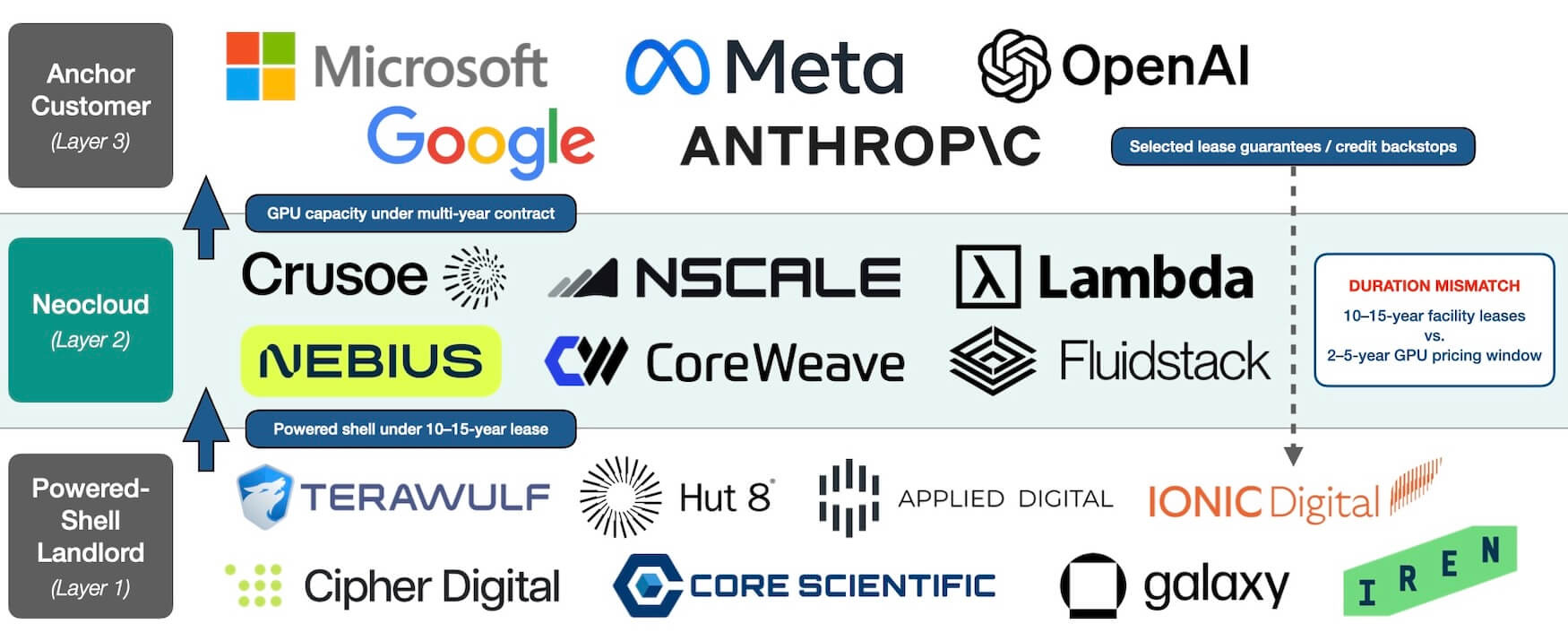
Layer 1 is the powered-shell landlord, and in this cohort it is predominantly a converted bitcoin miner: TeraWulf, Cipher Digital, Hut 8, Core Scientific, Applied Digital, Galaxy, IREN, and Ionic Digital. These companies own what is scarce — energized land, interconnection positions, substations — and they learned to monetize megawatts in the crypto era.
Layer 2 is the neocloud: Crusoe, Nebius, Nscale, CoreWeave, Lambda, and Fluidstack. They sign 10–15-year leases on those shells and fill them with GPU assets whose premium-pricing window runs two to five years. That duration mismatch is the structural fact of the business model, and Section V returns to it.
Layer 3 is the anchor customer — Microsoft, Google, Meta, OpenAI, Anthropic — which increasingly does something anchor tenants in ordinary commercial real estate never do: it guarantees the obligations of the layers below it.
Case Study: A Landlord Built for Nscale and Microsoft
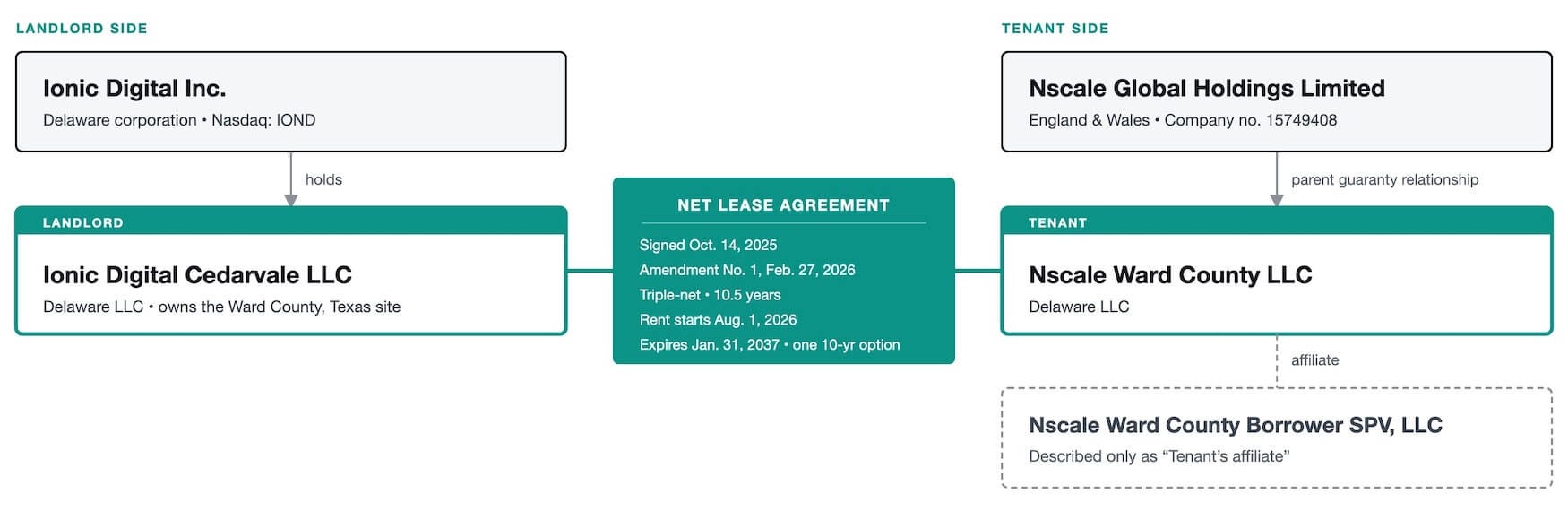
One neocloud lease by Nscale shows the whole machine. Ionic Digital was formed in January 2024 out of the Celsius Mining bankruptcy; its Ward County, Texas site mined bitcoin until the rigs were decommissioned in Q4 2025. In mid-October 2025, Ionic signed a 10.5-year triple-net lease with neocloud Nscale’s subsidiary Nscale Ward County LLC, covering an original 234 MW with about $1.95 billion in contracted revenues.
At the same time, Nscale announced it would deploy approximately 104,000 NVIDIA GB300 GPUs in this Ward County, Texas data center, with phased delivery of NVIDIA AI infrastructure services to Microsoft from Q3 2026.
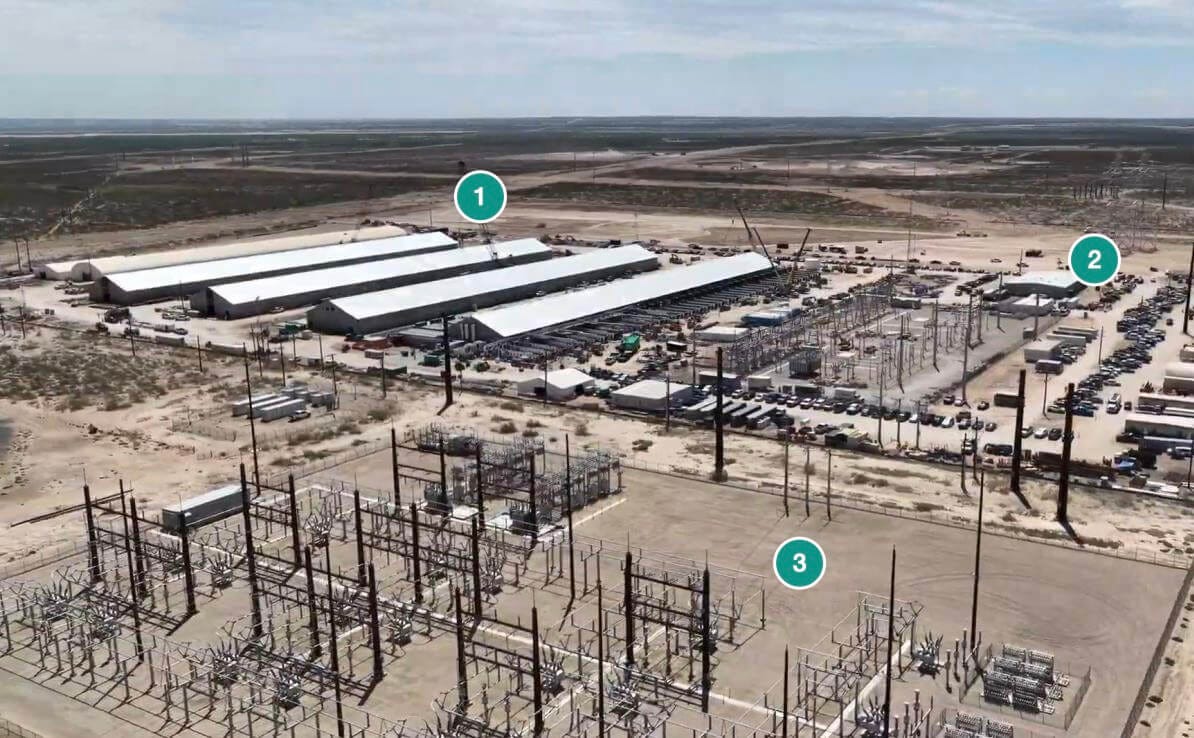
Ionic Digital’s Ward County, Texas site showing 1) Data Hall Cluster, 2) Ionic Substation, and 3) TNMP Transmission Substation. Source: Ionic Digital.
A February 2026 amendment added 89 MW that lifts the lease to 323 MW and roughly $2.6 billion in contracted revenues — contingent on Ionic actually delivering the additional capacity, which it expects in the second half of 2027. Base rent is $65 per kW per month on gross power ($90/kW-mo critical-IT equivalent at an assumed 1.4 PUE), escalating 3% annually after year five. Cash rent starts in August 2026.
In this triple-net lease the tenant, Nscale, bears taxes, insurance, maintenance, and construction. So Ionic’s rent is close to pure yield on its power position — the site’s West Texas electricity runs around $0.05/kWh, and the lease even obligates the tenant to apply for Qualified Operator status under Texas’s data center tax regime: a contract term dressed as regulation.
Above the lease sits the guarantor layer, priced: NVIDIA bought $60 million of Nscale warrants and, as consideration for the warrants, guaranteed the first five years of Nscale’s rent up to $860.3 million — a rent guarantee, not a construction commitment — with Nscale’s parent guaranteeing the rent from year six.
If Nscale becomes insolvent, its anchor customer, Microsoft, may step into the lease within 30 days. And Microsoft holds an option on additional Ward County power starting in late 2027, on a property whose path runs to roughly 700 MW (323 MW contracted plus a tenant right of first refusal on 377 MW more).
Landlord, neocloud, chipmaker, hyperscaler: every layer named and priced in one lease.
Ionic’s Nasdaq direct listing is the first landlord flotation built on a single neocloud lease.
Why the Guarantor Layer Exists
No lender will finance hundreds of millions of dollars of single-purpose construction against the unsecured promise of a private company founded a few years ago. So the credit reaches down the stack from whoever has it: the chipmaker guarantees the rent, the hyperscaler backstops the lease, and the landlord borrows against the guarantee rather than the tenant’s credit. Section IV prices that layer deal by deal.
III. The Spectrum Runs from Power Plants to Pure Tenancy
The defining variable for this neocloud cohort is physical-asset ownership, and the six companies are arranged below on a descending ladder: the Power-First Builder (Crusoe), the Self-Builder (Nebius), the Campus Acquirer (Nscale), the Leased Giant (CoreWeave), the GPU Veteran (Lambda), and the Pure Tenant-Operator (Fluidstack).
The order is the argument: each rung down, the company owns less of what it operates, and the external credit propping up the structure matters more. The ladder lands on Fluidstack, whose entire model is a preview of Section IV. One timing fact is worth noting: every owned gigawatt-scale campus in this section — Independence, Butler Township, Monarch — delivers first power in 2027 or later, while essentially every floor operating today is rented.
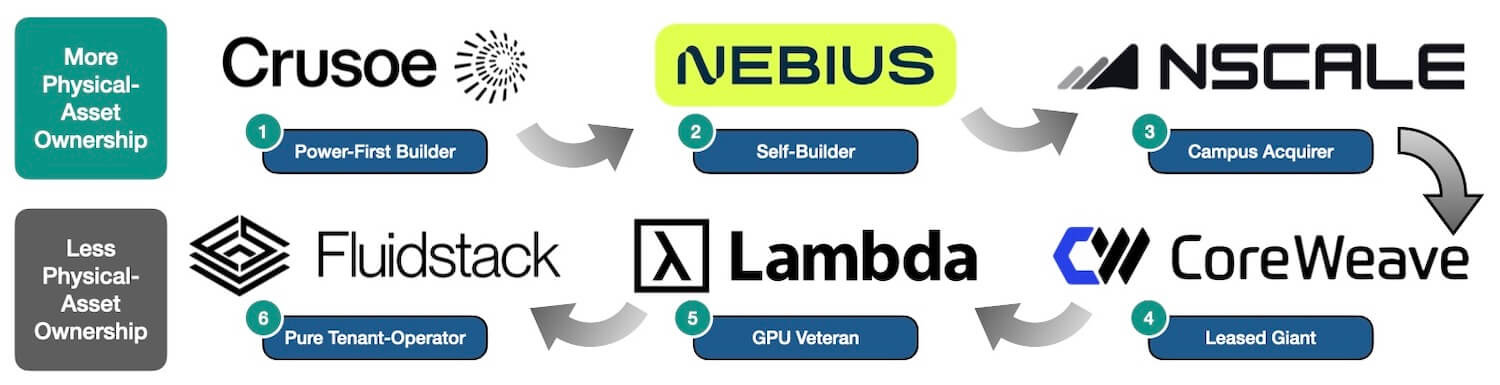
One table carries the breadth of the cohort:
Crusoe — 4.9 GW Contracted, One Stargate Built (The Power-First Builder)
Crusoe is the one neocloud that builds generation. Founded in Denver, Colorado, in 2018 by Chase Lochmiller and Cully Cavness, it began as a flare-gas company — capturing stranded natural gas at oil wells to power modular data centers on site — and that energy-first DNA survived even after Crusoe sold the original flare-gas and bitcoin business to NYDIG in June 2025 to focus entirely on AI.
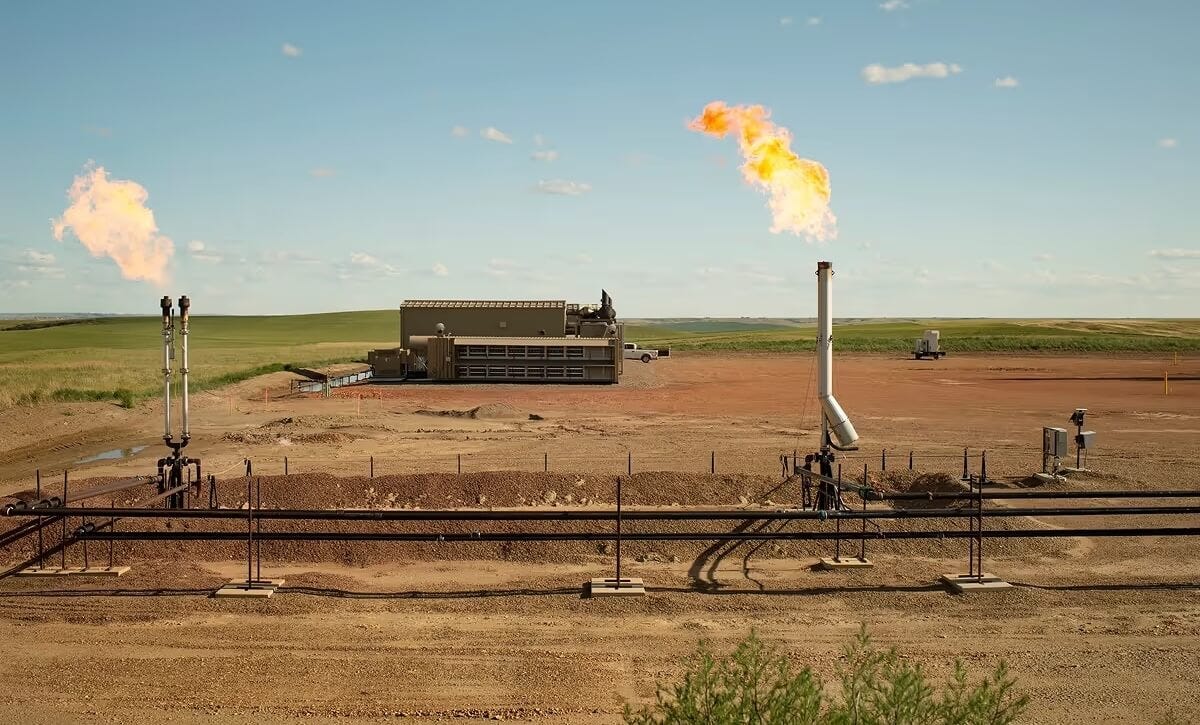
Source: Crusoe.
Crusoe has contracted 4.9 GW of power, 13.6 million square feet of buildings, and 3,000 acres across its campuses — against a pipeline it puts above 40 GW.
Crusoe has exited its development-partner role on the 1.8 GW Project Jade in Cheyenne, Wyoming. Table also excludes Crusoe Cloud deployments in Houston, Texas; Ashburn, Virginia; and Sparks, Nevada.
Crusoe’s footprint is the most hyperscale-shaped in the neocloud cohort. Crusoe built the Abilene, Texas Stargate campus, live since September 30, 2025, on Oracle Cloud Infrastructure under a 15-year Oracle lease serving OpenAI. Each of the campus’s eight buildings is designed to run up to 50,000 NVIDIA GB200 GPUs in NVL72 systems on a single network fabric; Oracle — not Crusoe — supplies and installs the chips, and began delivering the first racks in June 2025.
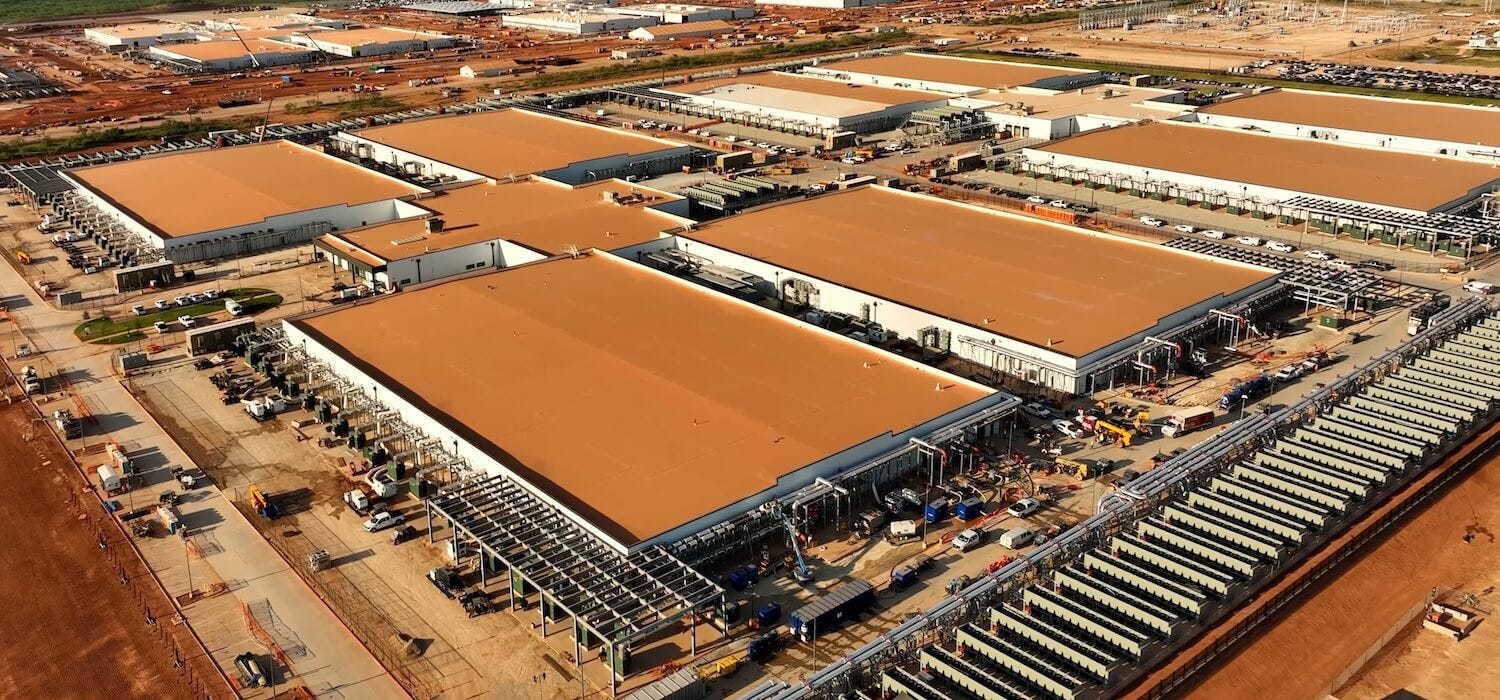
Source: OpenAI.
In March 2026, Microsoft signed for 900 MW across a second Abilene campus — two buildings totaling 672 MW of critical IT plus an on-site power plant — taking the site’s projected total to 2.1 GW when Microsoft’s portion energizes from mid-2027. A 1 GW campus at Childress, Texas, followed, and in June 2026 Meta signed for roughly 1.6 GW combined across Childress and a new Warrenton, Missouri site.
Beyond those projects, Crusoe is developing a 1 GW campus for Google at Claude/Goodnight, Texas, and a campus of up to 1.5 GW near Bloomington, Texas, at the Port of Victoria, whose tenant remains undisclosed and whose power is slated to come from Blue Energy.
Crusoe calls itself an “AI factory company,” and its distinguishing asset is a procured generation fleet: 155 gas turbines and gensets — GE Vernova, Boom Supersonic, PROENERGY, Bergen Engines, and Solar Turbines units — totaling about 3.8 GW of nameplate capacity across its portfolio. At Abilene, the >350 MW Longhorn plant was commissioned with the initial campus, and Microsoft’s 900 MW on-site power plant is under development.
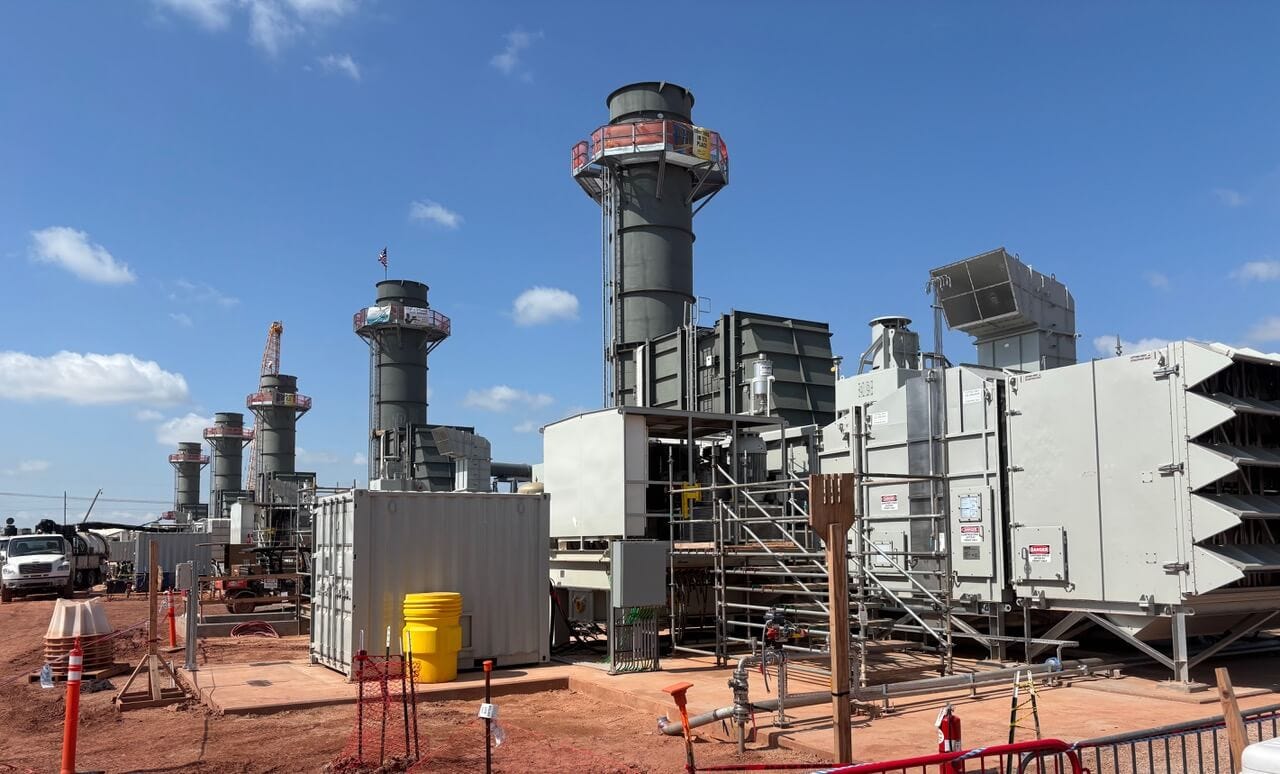
Source: GE Vernova.
Although Crusoe is a power-first builder, some of the power behind its campuses is partner-owned or grid-supplied, so it is best understood as a developer that treats generation as part of the product, not a utility.
The financing hallmark is a $1.375 billion Series E closed in October 2025 at a valuation above $10 billion (Valor and Mubadala co-leading), with talks ongoing for roughly $3 billion more at about a $30 billion valuation as of July 2026.
What Abilene shows about the archetype is Crusoe’s actual long-term stance: it doesn’t own the majority of its flagship project. On October 11, 2024, Crusoe sold 92.3% of the campus joint venture to Blue Owl’s real-estate arm, retaining 7.7% and a $13 million development fee. The power-first builder, in other words, monetized the real estate the moment it could — and kept the development role. Childress, energizing next with Meta’s capacity, is where the model’s next test runs.
Nebius — A $19.4 Billion Microsoft Anchor in a Building Someone Else Owns (The Self-Builder)
Nebius is the cohort’s self-builder — with an asterisk that turns out to be the interesting part. The company is the renamed Yandex (Amsterdam-headquartered; Nasdaq: NBIS since its 2024 re-listing), which divested its Russian businesses in May 2024 and redeployed the remainder — and a very large balance sheet — into AI infrastructure.
Excludes Nebius’s planned colocation data center sites in Minnesota and Oklahoma.
Nebius ended Q1 2026 with roughly $9.3 billion in cash after a $6.3 billion quarter of raises — including $4 billion of convertible notes issued in March — and in July 2026 added a $775 million MUFG-led GPU-backed term loan, the company’s first secured debt. Management guides to a $7–9 billion annual recurring revenue run-rate by the end of 2026 against a backlog above $20 billion.
The owned footprint is real: Nebius broke ground May 12, 2026, on a 400-acre campus it owns in Independence, Missouri, sized at up to 1.2 GW with first power expected in October 2027.
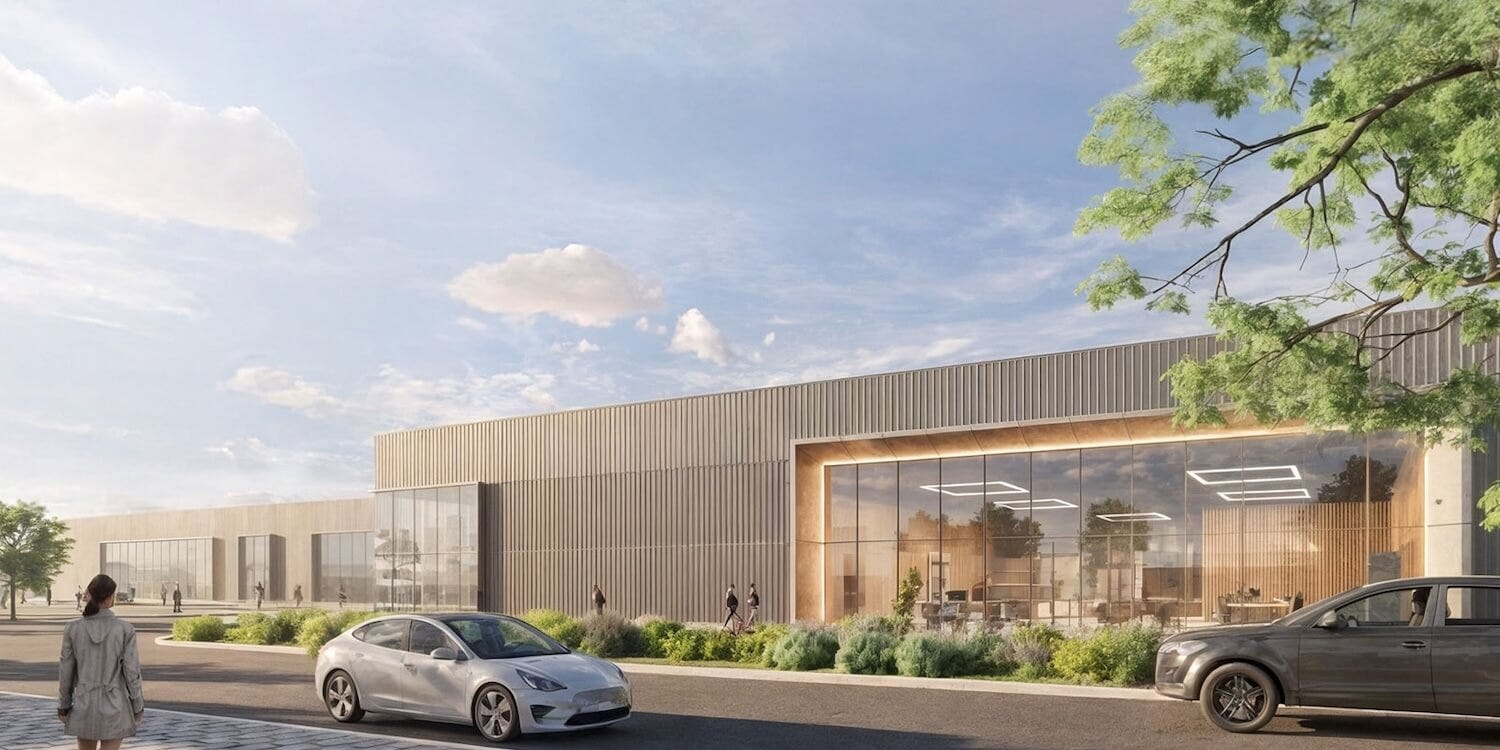
Source: Nebius.
The company announced a second owned gigawatt-scale greenfield data center project in Butler Township, Schuylkill County, Pennsylvania, with 1.2 GW of power at completion and initial phase capacity of 260 MW expected to be operational by October 2027.
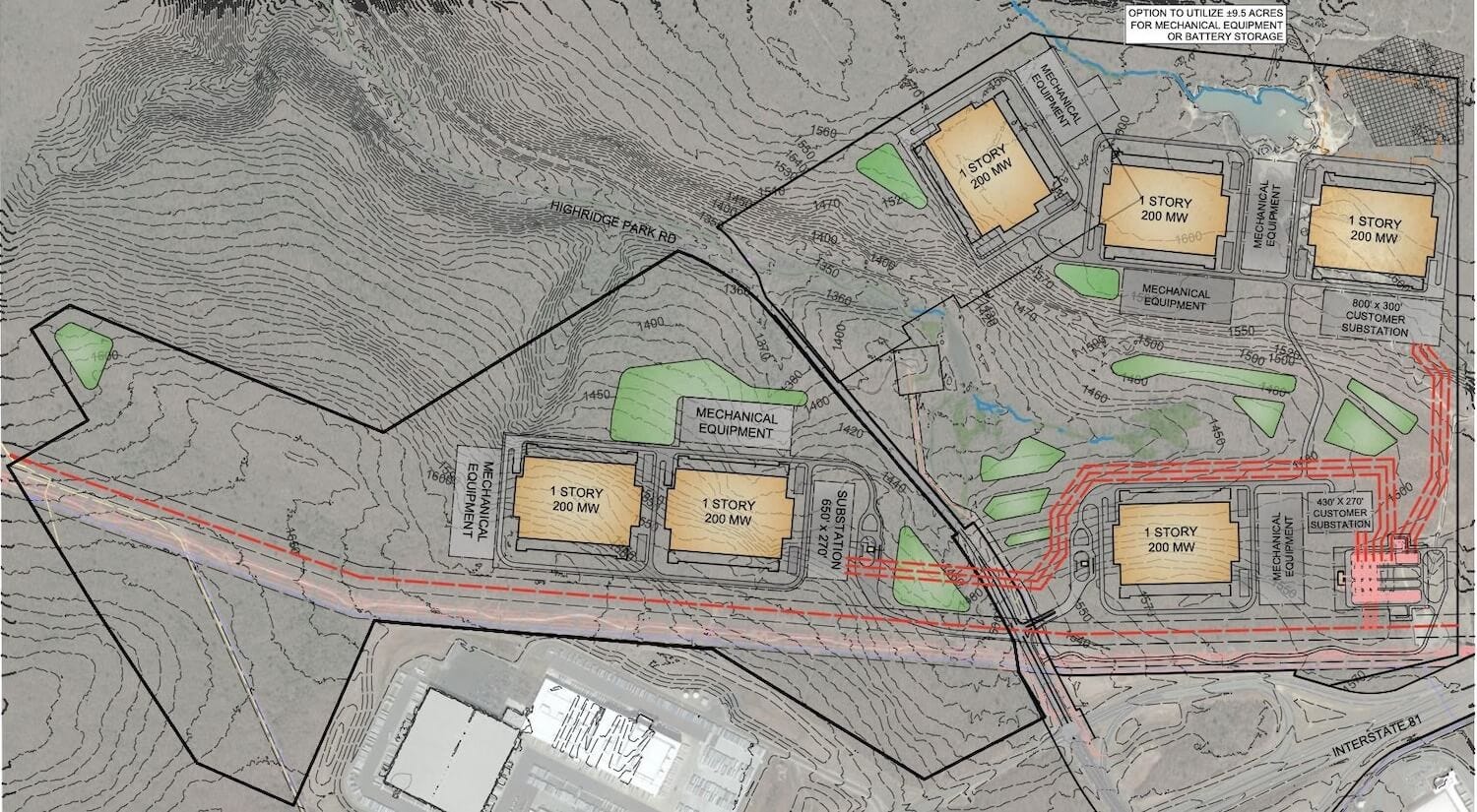
Source: Nebius.
Nebius is also in the early construction phase, with foundations going in at its two-building AI data center campus on 79 acres in Birmingham, Alabama, sized at up to 300 MW. No other company of the six is self-building at that scale in the U.S.
And yet the flagship is a building Nebius does not own. The Vineland, New Jersey facility, being developed by DataOne at up to 300 MW, follows what Nebius itself describes as a build-to-suit model: a developer owns the land, secures the power, and builds the shell; Nebius leases the result. Vineland is where Microsoft anchored the company: a five-year deal signed September 8, 2025, worth $17.4 billion through 2031, expandable to about $19.4 billion — reportedly more than 100,000 NVIDIA GB300 chips delivered in nine tranches, in a building Nebius says is dedicated solely to Blackwell-architecture GPUs, with liquidated damages if Nebius delivers late.
The first tranche went live in November 2025. So the self-builder’s largest contract rides on delivery milestones inside a leased building — construction risk without ownership, which is precisely the trade the rest of the neocloud cohort makes everywhere.
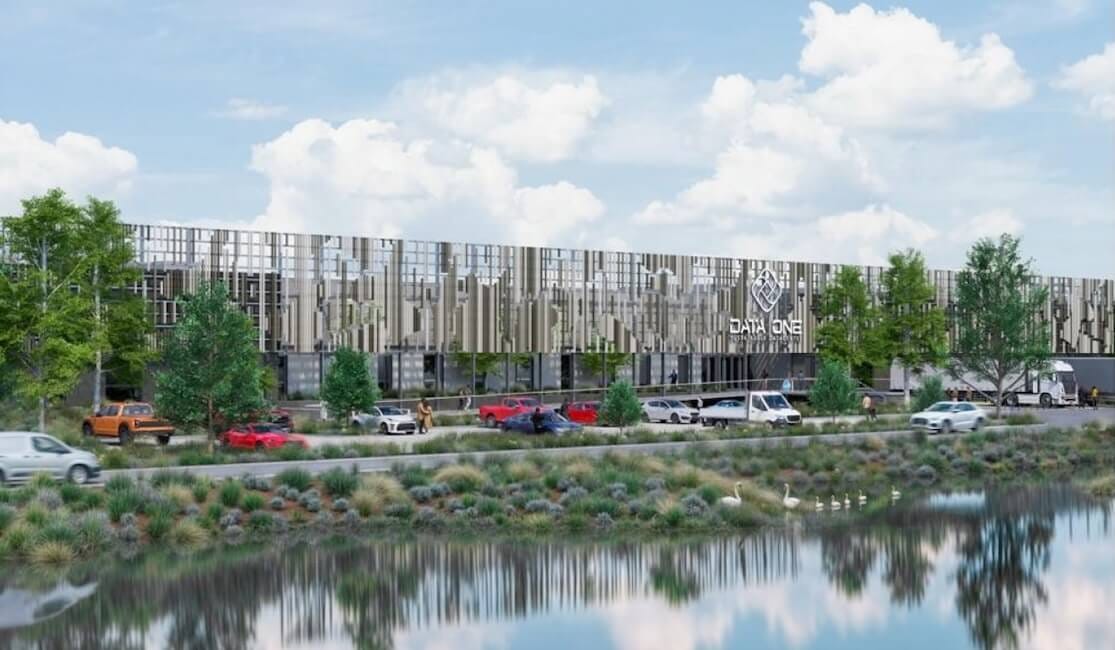
Source: Nebius.
Nebius struck a deal with Meta in March 2026 spanning multiple locations, worth up to $27 billion — $12 billion of dedicated capacity, one of the first large-scale NVIDIA Vera Rubin platform deployments delivering from early 2027, plus a $15 billion option structured against unsold capacity.
In July 2026, Nebius signed a $1 billion-plus capacity agreement with Reflection AI.
Nebius’s Kansas City origin site (~5 MW leased in a local colocation facility in November 2024, with a path to 40 MW) shows how fast the ladder gets climbed: from five megawatts of rented colocation to two owned gigawatt campuses in under two years.
Nscale — 1.35 GW for Microsoft at Monarch (The Campus Acquirer)
Nscale is the article’s thesis expressed in a single company: owner in one state, tenant in another. The company grew out of bitcoin miner Arkon Energy’s data center business and now sits under a UK corporate structure. Norwegian investment company Aker ASA initially put in $100 million and then a further $350 million of cash across two rounds and, at 22.8%, is the largest shareholder, calling Nscale its second-largest asset.
Nscale’s anchor customer, everywhere, is Microsoft: a company barely two years past launch now supplies Microsoft capacity in three states (West Virginia, Texas, and North Carolina) and even four countries, with contracts in Portugal ($10 billion), Norway ($6.2 billion), and the UK that are outside the scope of this U.S.-focused article.
In West Virginia, Nscale owns. It acquired the Monarch Compute Campus outright in Point Pleasant, Mason County, and Microsoft signed a letter of intent for up to 1.35 GW of AI compute there — specified as NVIDIA’s next-generation Vera Rubin NVL72 systems, delivered in tranches beginning in late 2027; initial site power of roughly 2 GW is targeted for the first half of 2028, on a property Nscale describes as having more than 8 GW of runway. Microsoft rents the whole stack; Nscale owns everything — the full breakdown is in Measured AI’s Microsoft Monarch West Virginia analysis.
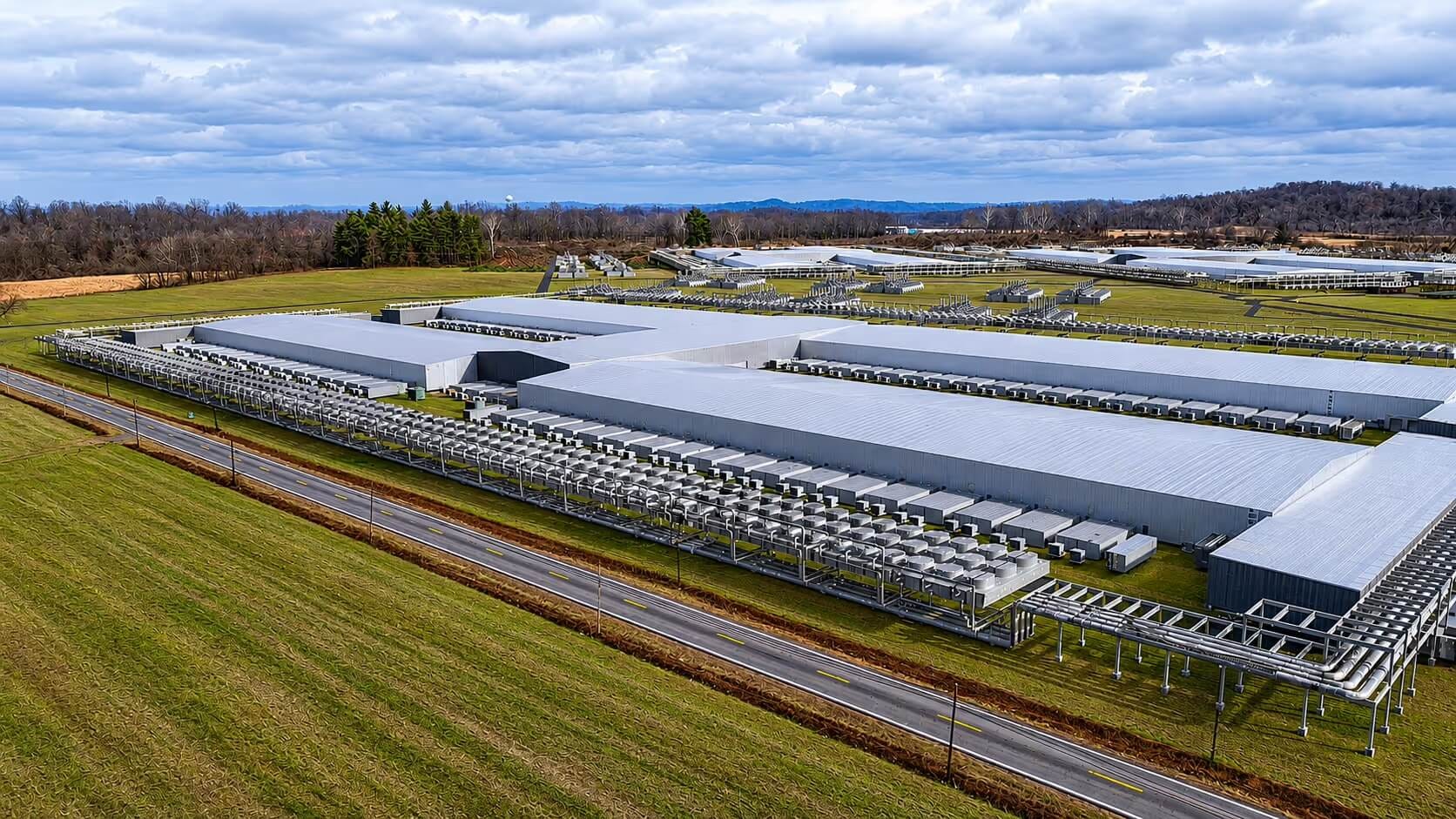
Source: Nscale.
In North Carolina and West Texas, Nscale rents. On November 22, 2025, Nscale signed a master services agreement with WhiteFiber for 40 MW of critical IT load in two 20 MW phases in Madison, North Carolina, worth about $865 million over a 10-year term, an implied ~$157/kW-mo of critical load in year one. It is structured as a license rather than a lease — modified-gross, with electricity, PUE, and property taxes passed through, a 3% annual escalator, and a $70.6 million Nscale prepayment.
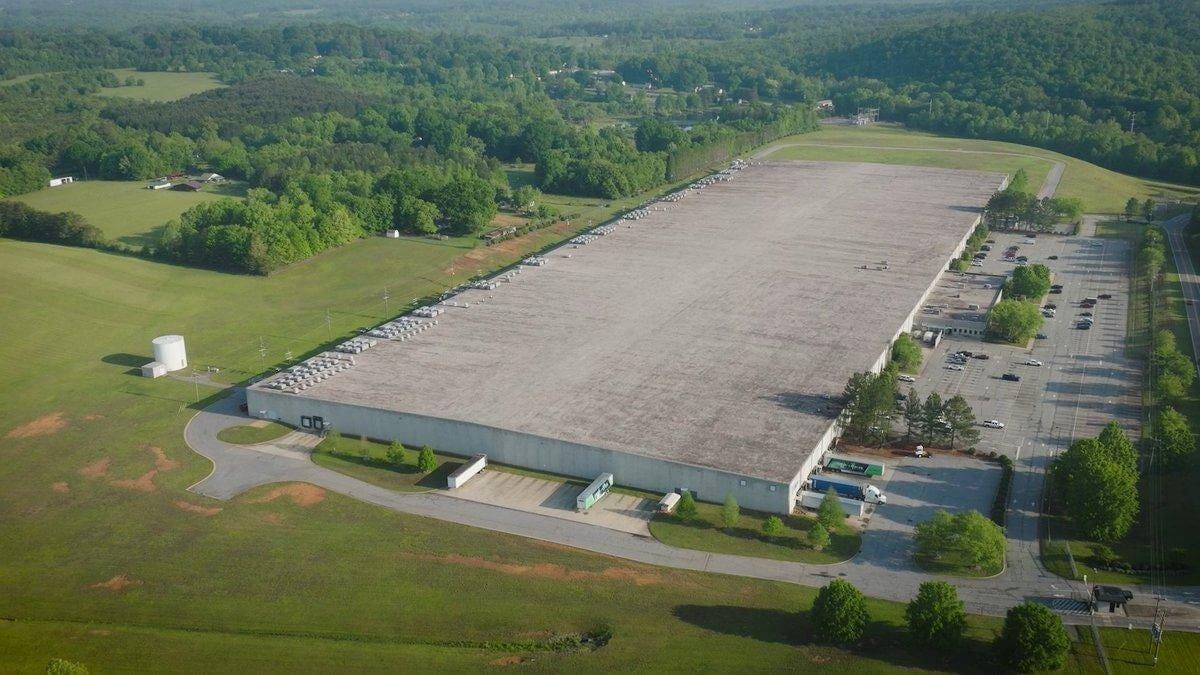
Source: WhiteFiber.
Nscale’s Ward County, Texas lease is the Section II case study; Nscale is Ionic Digital’s only tenant.
The credit architecture is the point: NVIDIA’s $860.3 million five-year rent guarantee — part of what NVIDIA paid for its $60 million of Nscale warrants — is what made a first-of-its-kind landlord financeable, and Microsoft’s option on additional Ward County power from late 2027 means the customer layer reaches down this stack three times, in three states. The same company that owns a campus Microsoft merely intends to rent is, 1,800 miles away, a rent-guaranteed tenant on a bitcoin mine conversion. That all three structures serve the same customer is the clearest evidence that the spectrum in this section is a set of financing choices, not business models.
NVIDIA, meanwhile, runs through Nscale as both supplier and guarantor: early access to Vera Rubin silicon and roughly 200,000 GB300s planned across the Microsoft footprint (~104,000 in Texas, ~52,000 in Norway, ~23,000 in the UK, ~12,600 in Portugal), alongside the Ward County rent guarantee it gave as consideration for its $60 million warrant purchase. Per Nscale’s recent UK Companies House confirmation statements, NVIDIA also held about 6% of the preferred shares outstanding.
CoreWeave — Nearly $100 Billion Backlog Across 49 Data Centers (The Leased Giant)
CoreWeave is the scale case for pure tenancy. Founded in September 2017 and public since March 2025 — a $1.5 billion IPO at $40 a share, roughly a $23 billion valuation — it reported Q1 2026 revenue of $2.1 billion with more than 1 GW of active power and over 3.5 GW contracted, entirely through long-term leases across 49 data centers (~42 in the U.S.). Its stated ambition is more than 8 GW of active power by 2030, and its 2026 capex guidance is $30–35 billion.
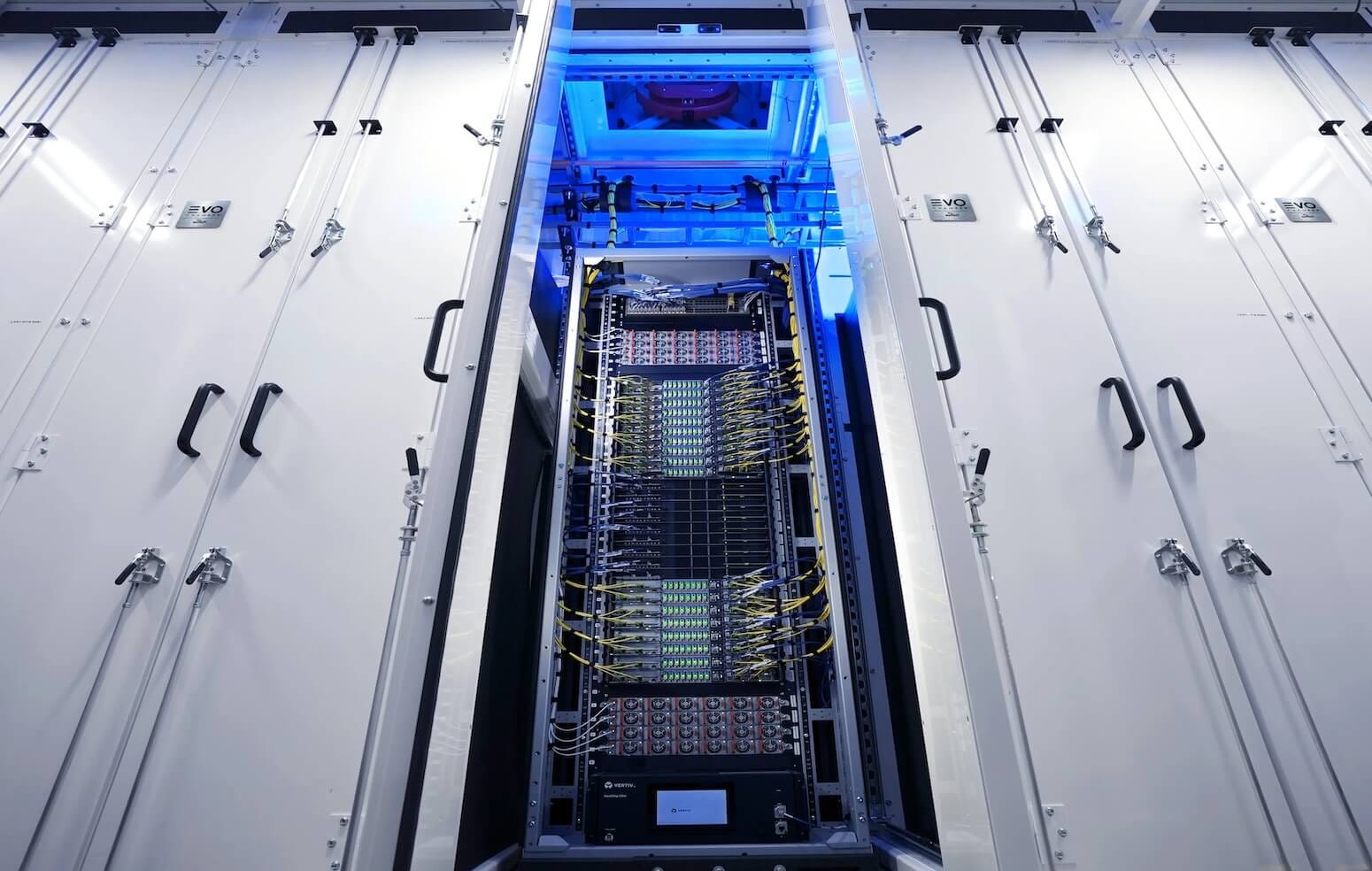
Source: Switch Inc.
Excludes a 180 MW data center expansion in Hammond, Lake County, Indiana, because the development agreement expired on June 30, 2026. CoreWeave also exited its agreement to anchor Poolside’s planned 2 GW Horizon data center campus in Texas’s Permian Basin after Poolside failed to bring the initial GPU cluster online by CoreWeave’s deadline.
CoreWeave’s largest planned data center site is Galaxy’s Helios campus in Dickens County, Texas, which will provide 526 MW of critical IT capacity and 800 MW of gross power across three phases.
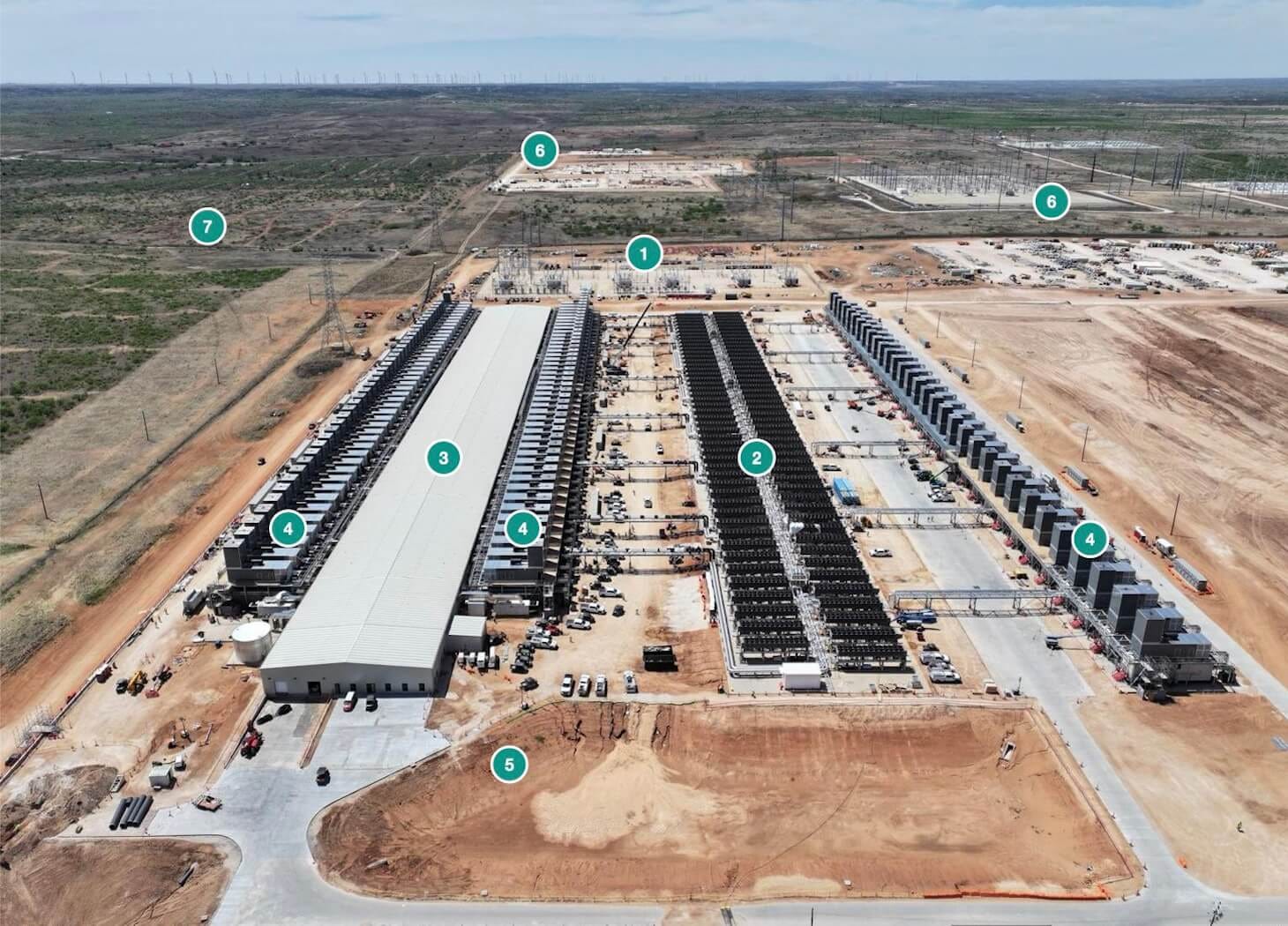
Galaxy’s Helios data center campus showing 1) Galaxy’s 345 kV Substation, 2) Chiller Yard, 3) Data Center Building, 4) Electrical Yards, 5) Water Facilities, 6) Pitchfork and Cottonwood 345 kV Substations, and 7) Helios Campus Footprint. Source: Galaxy.
The demand side is extraordinarily concentrated at the top: Microsoft alone was about 67% of CoreWeave’s FY2025 revenue, OpenAI’s commitments stack to roughly $22.4 billion, Meta’s commitment expanded to approximately $21 billion through 2032, and Jane Street signed a $6 billion capacity agreement. The backlog behind all of it: $99.4 billion as of March 31, 2026.
The financing hallmark is the delayed-draw term loan (DDTL) assembly line: $2.3 billion, $7.6 billion, $2.6 billion, and $3.0 billion facilities, then DDTL 4.0 in March 2026 — $8.5 billion for GPU purchases, backstopped by the Meta contract, and CoreWeave’s first investment-grade-rated debt at roughly 5.9%. A DDTL 5.0 followed by May.
NVIDIA sits on both sides of the book — committed to buy $6.3 billion of cloud services through 2032 (a “rent-back” that absorbs unsold capacity) and added a $2 billion equity purchase at $87.20 a share in January 2026. The symbiosis shows in sequencing: CoreWeave was first to market with H100, H200, GB200, and GB300, and in June 2026 took delivery of the world’s first Vera Rubin NVL72 rack from Dell.
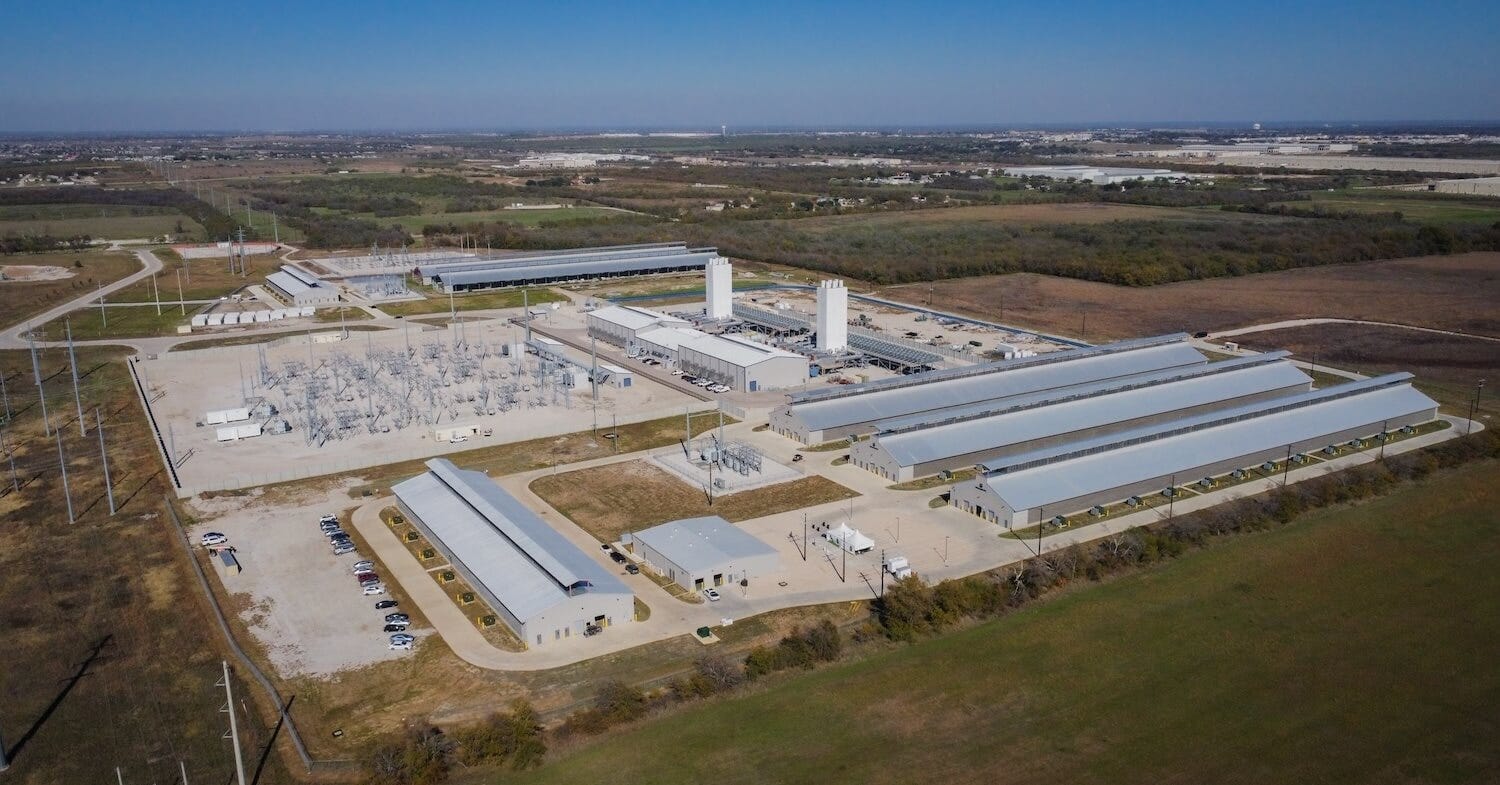
Denton, Texas, showcases CoreWeave’s “leased giant” landlord dynamic in one campus. CoreWeave’s hosting relationship with Core Scientific dates to 2019 and escalated through 2024 from 16.5 MW at Austin to hundreds of megawatts across the fleet, adding a 70 MW Denton node in February 2025 (a 262 MW critical IT site in total). CoreWeave tried twice to simply buy its landlord: an unsolicited $5.75-a-share cash offer rejected on June 6, 2024, then a $9 billion all-stock agreement on July 7, 2025, at a 66% premium — $20.40 a share — which Core Scientific’s shareholders voted down on October 30, 2025, terminating the deal. It was never revived.
Source: Core Scientific.
In March 2026, the Denton, Texas site reached roughly 130 MW, carrying more than 50,000 Grace Blackwell GPUs, with about 15,000 more at Marble in Cherokee County, North Carolina — still CoreWeave, now leasing about 590 MW across five Core Scientific sites. That failed takeover explains, in one campus, why CoreWeave is now mid-pivot toward ownership, with its first self-build due online later in 2026 and a $322 million acquisition of the NEST facility in Kenilworth, New Jersey, already closed.
Lambda — Founded 2012, Under 100 MW Deployed, 3 GW Promised (The GPU Veteran)
Lambda is the cohort’s elder: founded in 2012 by Stephen and Michael Balaban, it spent a decade selling GPU hardware and cloud to researchers before the AI boom found it. That heritage shapes the model — deep GPU operations expertise, a hardware business, and a footprint assembled almost entirely from colocation rather than campuses.
The financing ledger: a Series E above $1.5 billion led by TWG Global in November 2025 (valuation undisclosed; the February 2025 Series D printed a $2.5 billion valuation), a J.P. Morgan-led senior secured credit facility upsized nearly fourfold to $1 billion in May 2026, and NVIDIA on the demand side with two rent-back agreements — $1.3 billion over four years (“Project Comet,” 10,000 GPUs) plus $200 million more for another 8,000 GPUs.
The customer book gained its anchor on November 3, 2025: a multi-billion-dollar Microsoft agreement for tens of thousands of NVIDIA GPUs, including GB300 NVL72 systems. Hudson River Trading followed with a dedicated HGX B200 deployment.
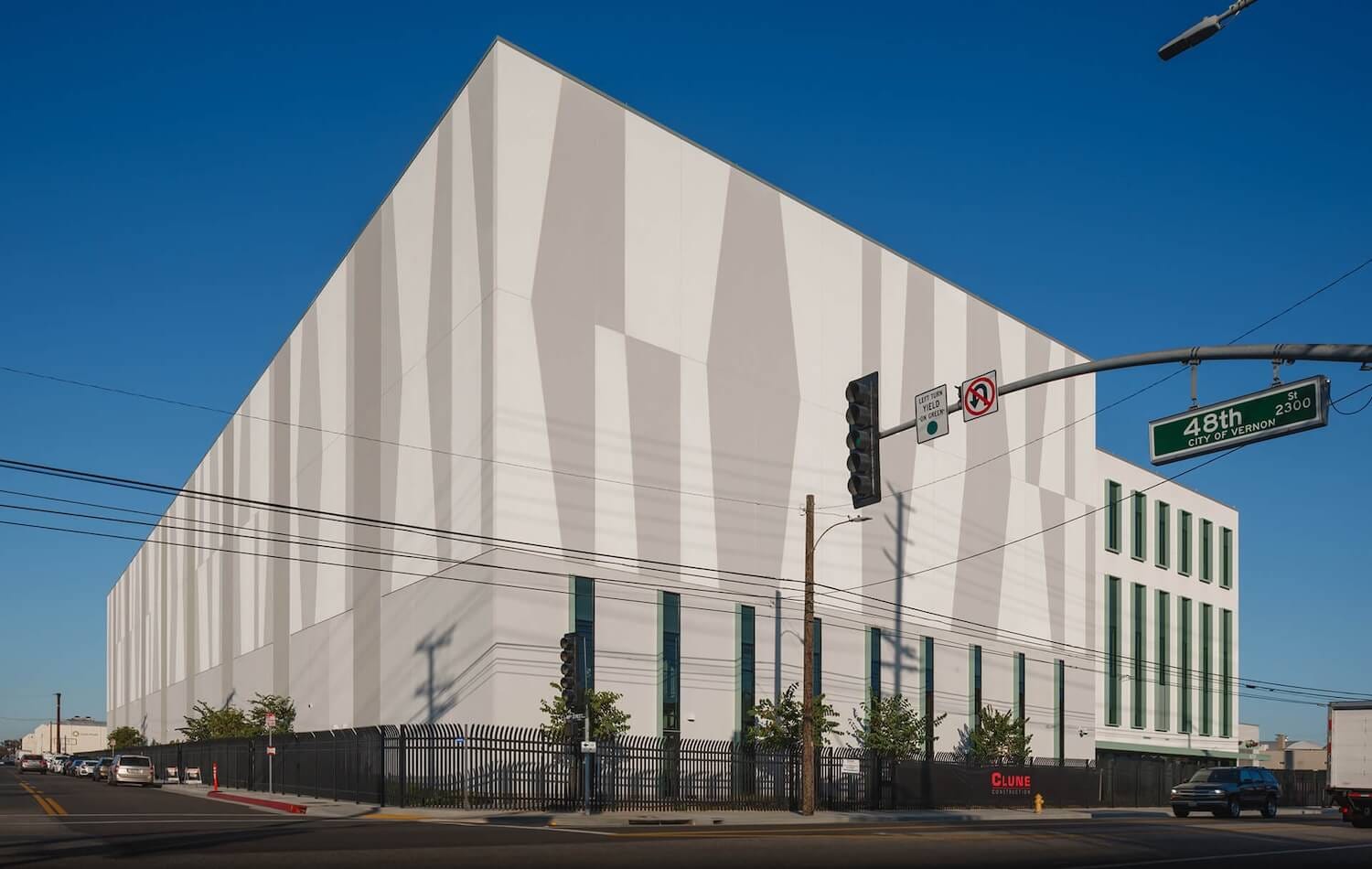
The spotlight belongs to Lambda’s pivot from opportunistic colocation leasing to purpose-built, single-tenant data centers. For years Lambda took existing colocation capacity where it could find it — most recently space at Aligned’s DFW-04 in Plano, Texas (May 2025), Cologix’s COL4 in Columbus (live June 2025), and a 21 MW lease at Prime Data Centers’ LAX01 in Vernon, California (November 2025).
Source: Prime Data Centers.
In August 2025, Lambda flipped the relationship: EdgeConneX is building two dedicated, single-tenant data centers for Lambda — a 23 MW purpose-built data center in Chicago and its twin in Atlanta with more than 7 MW of capacity. The colocation-taker became an anchor tenant worth building for.
The gap for Lambda is between measured and promised: Lambda’s deployed footprint sits under 100 MW, while the company talks about nearly 3 GW by 2030 — a target it has not explained how to reach. A planned Kansas City “AI Factory,” starting at 24 MW and growing past 100 MW “in the future,” is the next increment — more than 10,000 NVIDIA Blackwell Ultra GPUs at launch, dedicated to a single unnamed customer.
Fluidstack — Five U.S. Sites, Zero Owned Buildings (The Pure Tenant-Operator)
Fluidstack is the pure case: the neocloud as tenant-operator, nothing else. Founded in 2017 at Oxford University by Gary Wu and César Maklary, it announced in December 2025 that it was moving its headquarters from London to New York, and it now manages more than 100,000 GPUs for customers including Anthropic, Mistral, Character.AI, Poolside, and Black Forest Labs.
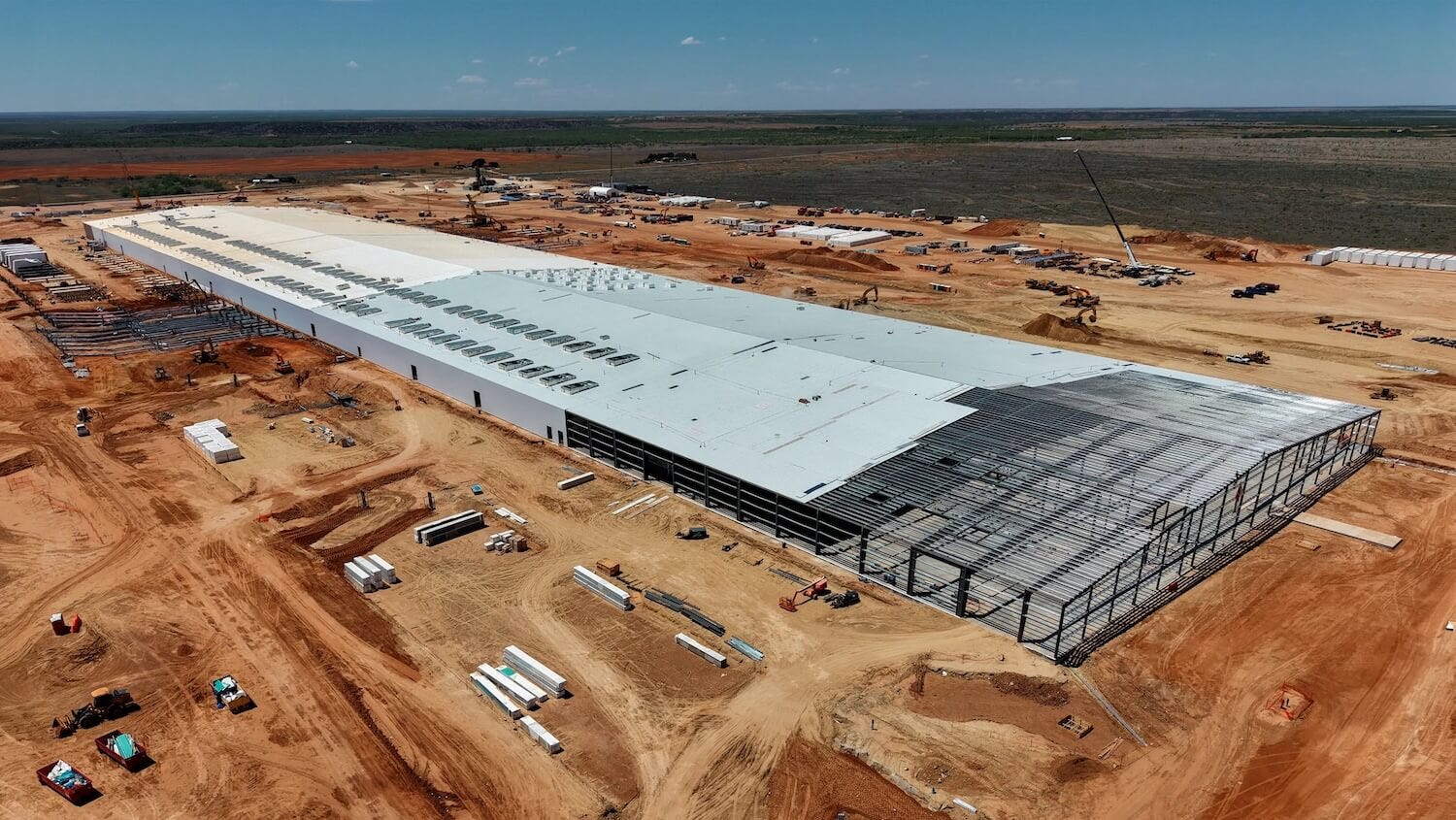
Fluidstack’s U.S. buildout runs through five leased sites, five bankruptcy-remote tenant SPVs, and zero owned buildings. The tenant that anchors $15 billion of landlord debt is nearly invisible in the county record of the sites themselves.
Source: Cipher Digital.
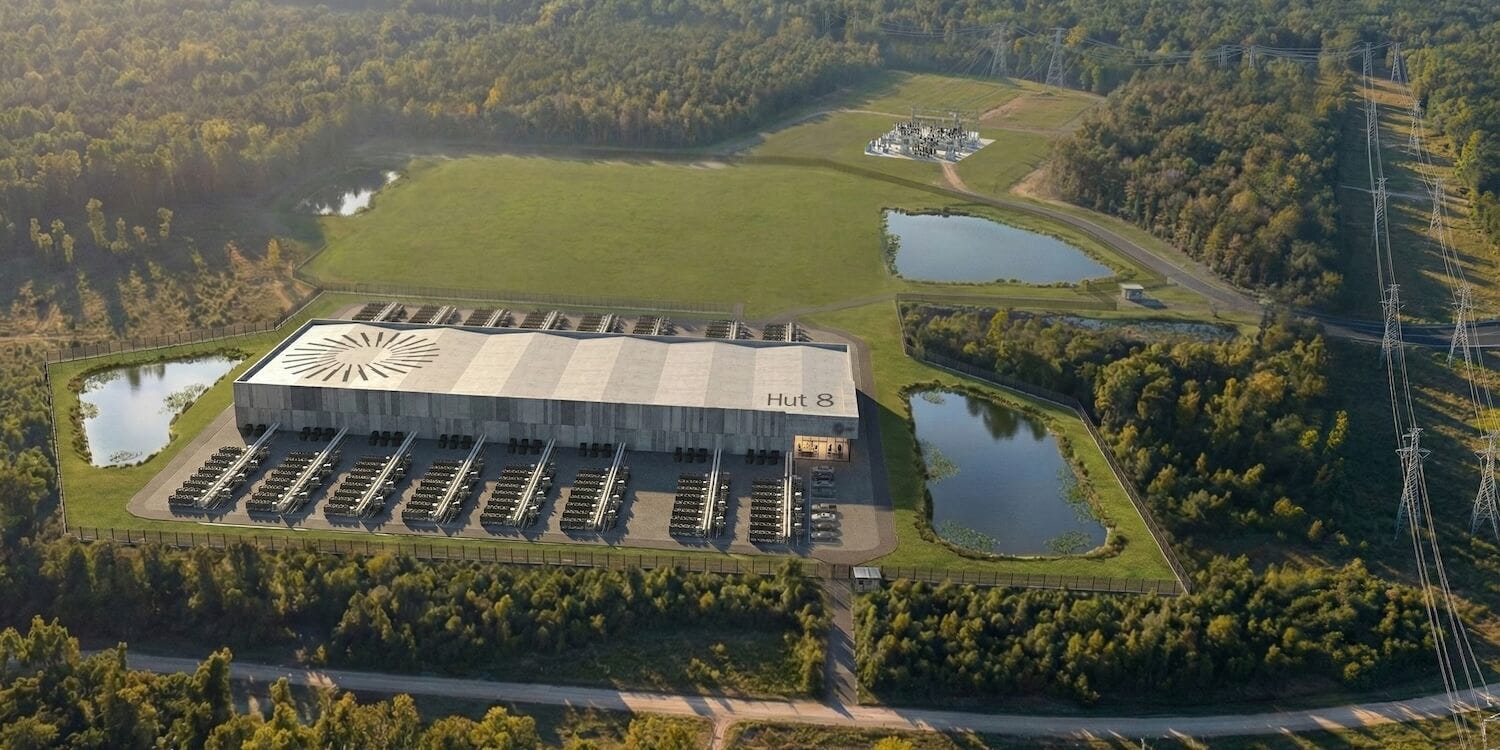
The anchor is Anthropic, whose announced $50 billion U.S. data center investment plan started with Fluidstack sites in Texas and New York. Through Hut 8, the relationship extends to as much as 2.3 GW of capacity for Anthropic on Fluidstack-operated clusters. Notably, no disclosure for the five U.S. sites names an NVIDIA GPU model — the silicon documented on these floors so far is Google’s, with reporting placing TPUs at Lake Mariner and, for Anthropic, at River Bend. Google’s role — backstopping the leases, taking landlord equity, supplying the chips — is Section IV’s subject.
Source: Hut 8.
The financing trail: an $830 million Series A at a $7.5 billion valuation in January 2026, a further $1.5 billion offering underway as of June, and reported talks at an ~$18 billion valuation still ongoing — Jane Street is already on the cap table.
The spotlight site is Lake Mariner, on the shore of Lake Ontario outside Buffalo — a decommissioned coal plant that became a bitcoin mine that is becoming an AI campus, all on one zoning record. Landlord TeraWulf is building Fluidstack three buildings — CB-3 (42 MW), CB-4 (162 MW), CB-5 (162 MW) — totaling 366 MW of critical IT (about 450 MW gross) under two 10-year leases worth roughly $6.7 billion in contracted payments, up to $16 billion with extensions.
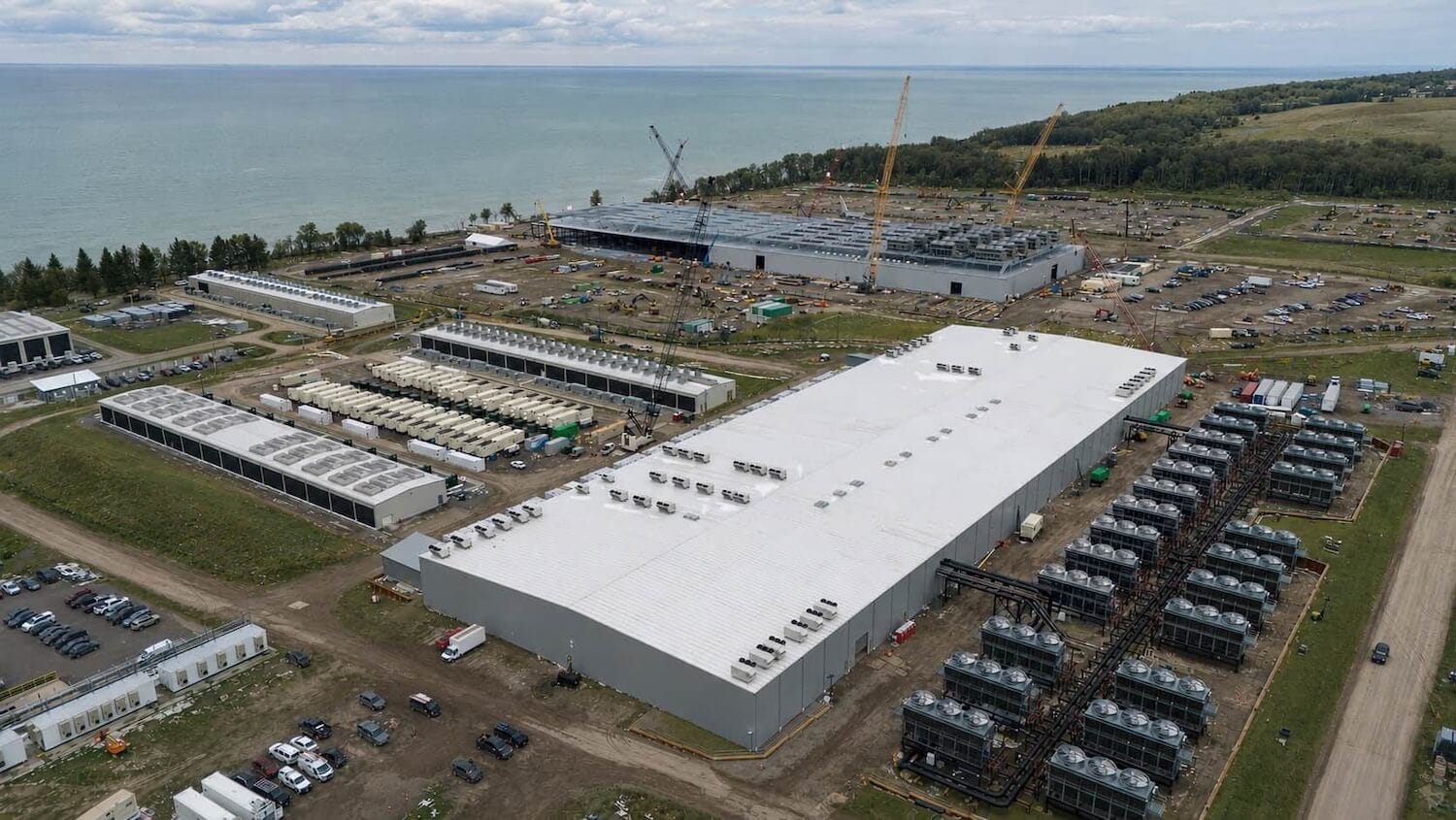
Source: TeraWulf.
Google guarantees $3.2 billion of it and took warrants that could reach about 14% of TeraWulf. Note the pattern across the five sites: five different landlord groups (Coatue’s Meridian Arc vehicle, TeraWulf, Hut 8, Cipher Digital, Aligned Data Centers), four states, one tenant. At Abernathy, even the landlord side is layered: Aligned Data Centers owns the ground, and a project JV — TeraWulf 50.1%, Fluidstack 49.9% at formation — ground-leased it and built the data center. In July 2026, Fluidstack bought out TeraWulf’s stake, leaving the pure tenant-operator owning its own landlord at one site.
The next turn was already in motion by June 2026: the Broadcom–Apollo–Blackstone XPU platform’s first gigawatt of Anthropic compute lands “in Fluidstack data centers” starting in mid-2026 — the first site has not yet been named. The platform is designed to exceed 20 GW through 2028, and its initial ~$35 billion of Apollo-led debt buys Google TPUs through an SPV that leases them to Anthropic — Broadcom backstops the senior notes — for deployment across sites in New York, Texas, Louisiana, and Indiana. Read those four states against the site table above: they are the Fluidstack map, state for state.
IV. The Backstop: Google, NVIDIA, and Microsoft Are Underwriting Their Own Suppliers
Google’s Lease Backstop: The Repeatable Template
The mechanism that finances the bottom of this market was invented, at scale, in August 2025: Google guarantees a neocloud’s lease obligations so that the landlord can issue debt against the lease. For Google it is an off-balance-sheet obligation to step in if Fluidstack cannot pay its data center rent. After the first TeraWulf deal, it became repeatable. The anatomy at the three warrant deals: Google backstops the lease, takes warrants or shares in the landlord (up to ~14% of TeraWulf; ~5.4% of Cipher), and secures a path to capacity in the TPU era; the landlord then sells senior secured notes to fund construction.
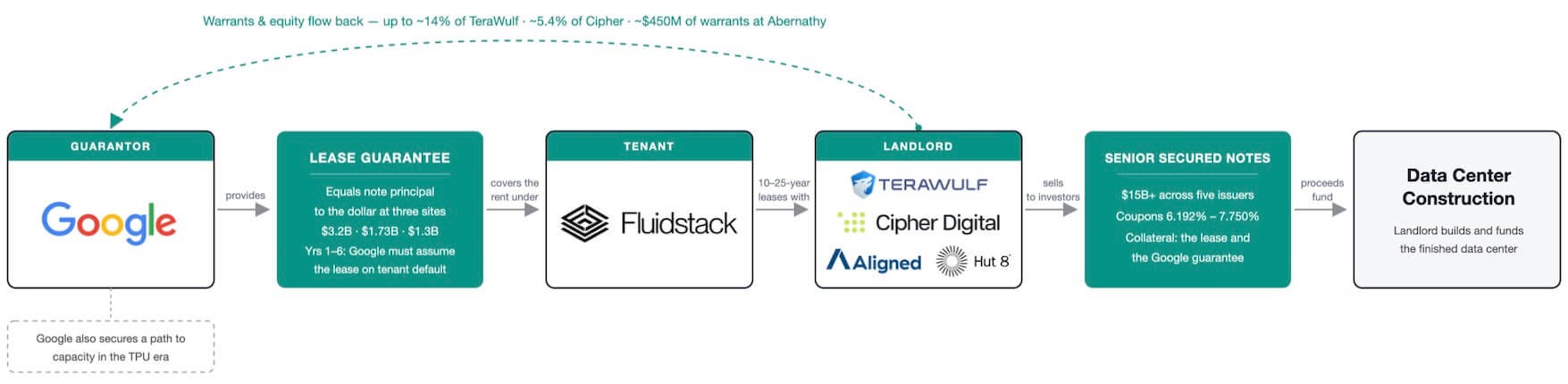
The path to capacity has a customer attached. In October 2025, Anthropic announced plans to use up to one million Google TPUs — well over a gigawatt coming online in 2026, worth tens of billions of dollars — and in April 2026 it expanded the commitment with Google and Broadcom by multiple further gigawatts from 2027. The NVIDIA-invested neoclouds have little incentive to host rival silicon, which leaves the converted miners and Fluidstack as the floors where those TPUs physically land. Google — itself a roughly 14% shareholder in Anthropic — is guaranteeing the real estate that houses its own chip business.
The math is the revealing part. At Lake Mariner, Barber Lake, and Abernathy, Google’s guarantee equals the landlord’s note principal to the dollar — $3.2 billion, $1.73 billion, $1.3 billion — which is only 0.14×–0.48× the rent those leases nominally owe. Google is not insuring the lease; it is collateralizing the bond. The structure has teeth for six years — during that window Google must assume the lease outright if Fluidstack defaults — and only afterward can it exit by paying a termination fee pegged to the remaining debt.
New Lebanon, financed without landlord warrants, inverted the pattern: Meridian Arc’s $5.7 billion of notes (the largest single raise in the set) carry a Google guaranty that tracks the rent, peaking around $7.8 billion — 1.37× the debt, consistent with the lease’s $18 million-per-MW rent cap. River Bend runs further still: an all-rent guarantee with no disclosed cap, plus a springing Alphabet guarantee if Google’s share of Alphabet’s consolidated revenue ever falls below 51%.
NVIDIA’s Rent-Back and Guarantee Book
NVIDIA’s version of the same instinct — Jensen Huang has said NVIDIA “cultivated” the neoclouds — comes in three instruments.
Rent-Back: commitments to buy capacity its customers can’t sell — $6.3 billion from CoreWeave through 2032 (a contract CoreWeave says is for GB300s) and $1.5 billion from Lambda across two agreements.
Guarantee: Nscale’s Ward County, Texas structure from Section II, where the price NVIDIA paid for its Nscale warrants was $60 million in cash plus an $860.3 million five-year rent guarantee for Ionic’s benefit — which covers roughly a third of the lease’s ~$2.6 billion contracted revenue, front-loaded onto exactly the years before the site has operating history.
Equity Participation: direct investments in CoreWeave ($2 billion of common stock), Nebius (~$2 billion of common stock), and Nscale (~$777 million for ~6% of preferred shares), plus participation in Crusoe’s Series D and Series E rounds and Lambda’s Series D, although NVIDIA’s individual contribution to those financings was not disclosed.
The Landlord Debt Stacked on Top
Against Fluidstack’s five leases alone, five separate issuers have sold over $15 billion of senior secured notes:
Notably, Hut 8 DC is the only investment-grade deal in the set (Fitch BBB−) because the notes fully amortize inside the lease term while the others leave 60–85% balloons.
Microsoft: The Anchor That Needs No Guarantee
Microsoft anchors the cohort from the customer side at a scale that needs no guarantee: up to 1.35 GW intended at Monarch in West Virginia, up to $19.4 billion at Vineland in New Jersey, 900 MW at Abilene in Texas, roughly two-thirds of CoreWeave’s revenue, and a multi-billion-dollar Lambda deal. Denominated in silicon, that book already runs to roughly 200,000 GB300s contracted from Nscale worldwide — ~104,000 of them in Texas — and a reported 100,000-plus from Nebius. Five of the six companies have Microsoft as an anchor customer; the sixth has Google guaranteeing its rent.
What the Middle Layer Actually Pays
The leases with clean disclosure let us derive it (contracted rent ÷ term ÷ critical MW):
The $65 and $100 are year-one contract rates; $/MW-yr figures — and the parenthetical ~$/kW-mo equivalents — are contracted rent ÷ term ÷ critical MW: term averages, escalators included. Ionic’s $65 is on gross power (≈$90/kW-mo critical IT at 1.4 PUE); Core Scientific’s $100 is year one, so its term average runs higher.
The spread down the column is not a bargain ladder — it is scope.
At Ward County the tenant takes a powered shell and pays for its own data center fit-out (triple-net, on ~$0.05/kWh West Texas power).
Core Scientific sits in the middle: it builds the data center, but CoreWeave funds the construction and recovers it through a credit capped at $1.5 million per MW, applied as a 50% offset against each monthly license fee until exhausted — $859 million of credits across the five sites.
At the Fluidstack sites the landlord builds and funds the finished data center, which is exactly why those landlords needed $15 billion of guaranteed debt.
Same product name — “rent” — three different products.
V. What Breaks First: Concentration, Duration, and the Landlord’s Second Tenant
Concentration Runs Both Ways
Start with concentration. Anthropic sits across the entire Fluidstack chain — the $50 billion plan that starts there, the 2.3 GW via Hut 8, the first XPU gigawatt.
Microsoft’s version of concentration runs the other way: it anchors five of the six, which means the cohort’s largest single risk factor is one customer’s capital-allocation committee.
The Landlord’s Second Tenant
Anthropic, meanwhile, has already shown it can skip the middle layer: its Kentucky campus deal — roughly $19 billion over 20 years — is signed directly with TeraWulf, the same landlord Fluidstack fronts at Lake Mariner, with no neocloud and no Google backstop in between.
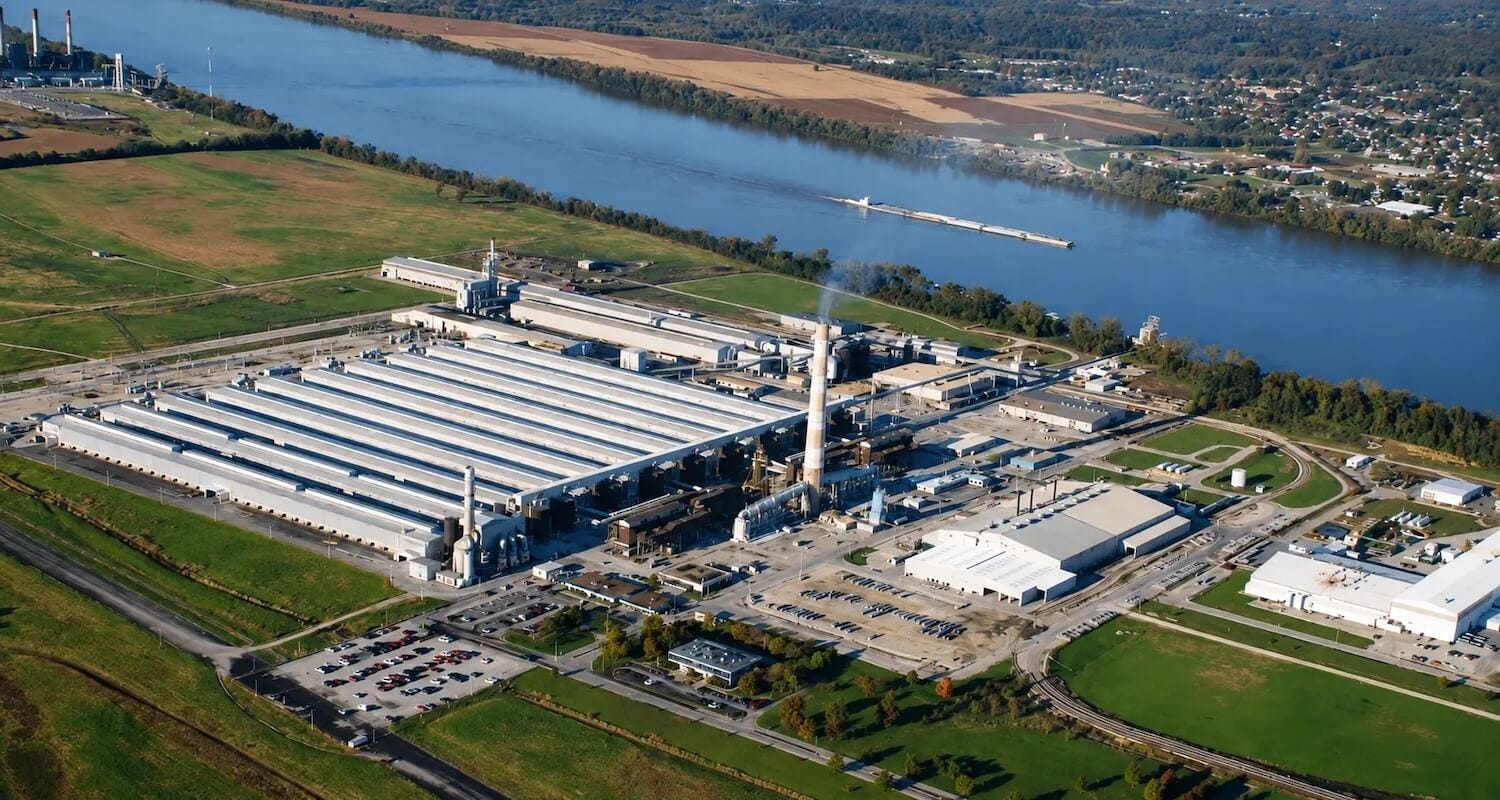
Source: TeraWulf.
The squeeze runs from below, too. IREN, one of the converted miners in Layer 1, monetizes its power differently — a vertically integrated AI cloud whose customer list, per a July 2026 contracts announcement, now includes Fluidstack itself. When the landlord class sells compute directly, the neocloud shows up as its customer, not its tenant.
Ten-Year Leases on Two-to-Five-Year Silicon
The duration mismatch is capital structure, not silicon commentary. GPU contracts in this market run two to three years, five at the upper end, while data center developers underwrite seven-to-nine-year paybacks — and the leases the neoclouds sign run 10 to 15 years. A 10.5-year lease like Ward County’s spans roughly three of those GPU contract cycles: the tenant must refill the same building with newly financed silicon three times or more before its rent obligation ends, in whatever price environment prevails. The churn is already observable inside the buildings: Core Scientific describes its CoreWeave halls stepping from H100 through GB200 to GB300 platforms in barely two years.
Measured AI provides institutional-grade analysis of the physical infrastructure powering AI data centers. For access to our full research library, regulatory intelligence, and weekly briefings, visit MeasuredAI.com.
CoreWeave carries a $99B backlog on buildings it mostly doesn't own, while Google guarantees Fluidstack's lease so landlords can borrow against it.
Infrastructure structured like a financing product.
The charts and the data are really helpful - thanks a ton!
Thank you for this write up.